
- The Truth About Quick Fixes and Weight Regain
- What Researchers Found About Rapid vs. Gradual Weight Loss
- Why Sustainable Weight Loss Works Differently
- The Health Risks Nobody Talks About
- What Actually Works for Long-Term Success
- Making Your Choice
- Frequently Asked Questions
You’ve seen the ads. Lose 15 pounds in 2 weeks! Melt belly fat overnight! Quick fixes promise everything, but here’s what they don’t tell you: most people regain that weight—and then some. The science on sustainable weight loss tells a different story, one that’s more interesting than the marketing hype. Let’s break down what researchers have discovered about losing weight and keeping it off.
The Truth About Quick Fixes and Weight Regain
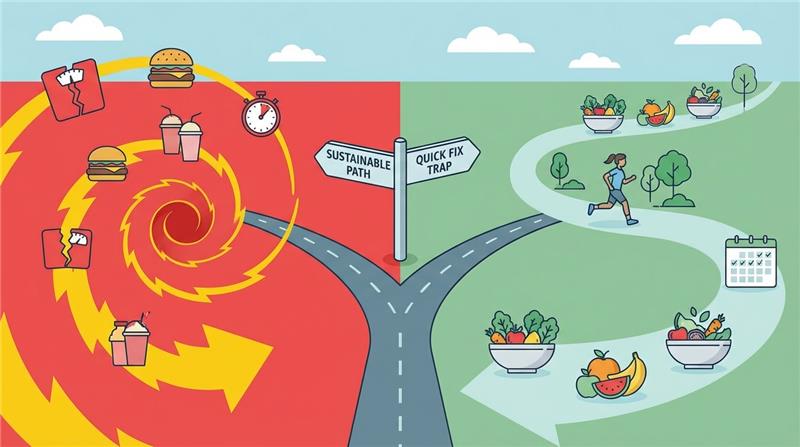
Quick fix diets work. Temporarily.
You drop water weight first, which feels amazing on the scale. But here’s the catch: after 144 weeks, 71% of people in both rapid and gradual weight loss groups regained their lost weight. Same result, regardless of speed. The real problem isn’t how fast you lose it—it’s whether you build habits that stick.
Crash diets create a cycle. You restrict heavily, lose weight quickly, hit a plateau when the water weight is gone, then rebound because the approach was never sustainable. Sound familiar? This yo-yo pattern can actually mess with your metabolism and create psychological stress around food.
What Researchers Found About Rapid vs. Gradual Weight Loss
Here’s where it gets interesting. Studies have challenged the old “slow and steady wins the race” advice. Research shows fast initial losers achieved greater weight reduction and maintained it long-term compared to slow losers. Wait, what?
Turns out, rapid weight loss done right can actually boost motivation and adherence. When you see results quickly, you’re more likely to stick with behavioral changes. Professor Susan Jebb from the University of Oxford notes that rapid weight loss doesn’t lead to faster regain, and more people achieve their target weight with fewer dropouts.
But there’s a huge distinction here. These studies used medically supervised programs with meal replacements and behavioral support—not fad diets that eliminate entire food groups or drop calories dangerously low.
The Direct Trial Results
The Direct trial found that 24% of people on an 800-calorie program lost more than 15kg at 12 months, compared to 0% in the control group. These participants reversed diabetes and improved blood pressure. The rapid group hit their target in just 12 weeks, while the gradual group took 36 weeks. That early success kept people engaged.
Why Sustainable Weight Loss Works Differently
Sustainable weight loss isn’t about speed. It’s about building a lifestyle you can maintain without feeling deprived or exhausted.
Think about balanced meals with adequate protein, regular movement you enjoy, and realistic expectations. No eliminating carbs forever. No juice cleanses. Just consistent habits that fit your actual life. The research on gradual weight loss shows it better preserves resting metabolic rates, which matters for long-term maintenance.
Your body adapts to extreme restriction by slowing metabolism. Go too hard, too fast without proper support, and you’re fighting your own biology. Gradual changes let your body adjust without triggering survival mechanisms that make weight maintenance harder.
The Health Risks Nobody Talks About
Quick fixes come with costs beyond weight to regain. Nutrient deficiencies. Digestive problems. Loss of muscle mass along with fat. Some people develop unhealthy relationships with food after cycling through restrictive diets.
Honestly? The psychological toll might be worse than physical risks. The hope-disappointing cycle of trying another diet, losing weight, regaining it, then blaming yourself creates serious emotional damage. That’s not sustainable weight loss—that’s self-sabotage wrapped in marketing.
What Actually Works for Long-Term Success
So, if both rapid and gradual can lead to similar regain rates, what’s the answer? It’s about what happens after the initial loss.
- Build habits during weight loss, not after
- Focus on adding healthy foods, not just restricting
- Include strength training to preserve muscle
- Get adequate sleep and manage stress
- Set small, achievable milestones instead of just a final number
The people who maintain weight loss treat it as a lifestyle shift, not a temporary project. They don’t return to old eating patterns once they hit their goal. That’s the real difference between sustainable weight loss and quick fixes—it’s not about the journey; it’s about the destination becoming your new normal.
Making Your Choice
Look, both approaches can work if—and this is critical—you focus on what happens after the scale hits your target. Professor Tom Sanders from King’s College London points out that both groups were equally poor at maintenance in many studies. The weight loss method matters less than whether you’ve built lasting change.
Ask yourself: Am I learning to eat differently, or just eating less? Am I building habits I can maintain, or white knuckling through restriction? Can I see myself living this way in five years?
Those questions matter more than whether you lose 2 pounds or 5 pounds per week.
The Bottom Line on Sustainable Weight Loss
The research dismantles some myths. Rapid loss doesn’t automatically mean faster regain. Slow loss isn’t automatically more sustainable. What matters is the foundation you build during the process.
Quick fixes fail not because they’re fast, but because they’re unsupported and unrealistic. Sustainable weight loss succeeds not because it’s slow, but because it creates genuine behavioral change. You can start quickly if you have proper support, but you must finish with habits that last.
Stop chasing the next diet trend. Start building a life where your healthy weight is just a natural result of how you live. That’s what the research really says.
Frequently Asked Questions
Is rapid weight loss always unhealthy?
Not necessarily. Medically supervised rapid weight loss programs can be safe and effective when combined with proper nutrition and behavioral support. The key is having professional guidance rather than attempting extreme restriction on your own.
How much weight loss per week is considered sustainable?
Traditional advice suggests 1-2 pounds per week, but research shows that faster initial loss with proper support can be equally sustainable. What matters more is building lasting habits during the process.
Why do most people regain weight after dieting?
Weight regain typically happens because people return to old eating patterns once they reach their goal. Sustainable weight loss requires permanent lifestyle changes, not temporary restriction.
Can you maintain rapid weight loss long-term?
Yes, if you transition properly to a maintenance phase and build sustainable habits. Studies show that rapid loss with behavioral support can be maintained as effectively as gradual loss.
What’s the biggest mistake people make with weight loss?
Treating weight loss as a temporary project rather than a lifestyle change. The most successful approach focuses on building habits you can maintain forever, not just reaching a number on the scale.
Not sure where to start?
Take the 7 day Nutri Trial and see what a plan built around your own kitchen actually feels like.
Start your trial