
- Start with the protein—every single meal
- Get your portions right (this matters more than you think)
- Choose your vegetables strategically
- Oil control is non-negotiable
- Swap refined grains for whole grains
- Sample daily plan that actually works
- Weekly variety keeps you consistent
- Tools that make healthy cooking easier
- What to do when you eat out or visit family
- The reality: consistency beats perfection
- Frequently Asked Questions
Indian home cooking already has everything you need for healthy eating. Seriously. The dal, sabzi, roti, and rice your grandmother made? Those meals were balanced long before anyone started counting macros. The problem isn’t the food itself—it’s what happens in modern kitchens. Too much oil. Oversized portions. And somehow, potatoes sneak into every meal.
You don’t need to ditch your favorite dishes to create healthy nutrition plans. What you need is a smarter approach to what’s already in your kitchen. Think of it as getting back to basics, but with a few strategic tweaks that make all the difference.
Start with the protein—every single meal
Here’s where most people mess up. They load their plates with rice and roti, add some sabzi, and call it balanced. But where’s the protein?
Your body needs protein at every meal to feel full, maintain energy, and actually lose weight if that’s your goal. According to Piping Pot Curry, focusing on protein is the foundation of any successful healthy nutrition plan using Indian food.
Breakfast could be masala oats with nuts, egg bhurji, or besan chilla. Lunch needs paneer curry, rajma, or grilled chicken alongside your roti. Dinner? Dal becomes your best friend—chana dal, moong dal, or mixed lentils with vegetables.
Vegetarian? You’ve got options. Paneer, tofu, sprouts, dal, chickpeas, and Greek yogurt all work. Mix them throughout your week so you don’t get bored.
Get your portions right (this matters more than you think)
Nobody wants to hear about portion control. But here’s the reality: even healthy food makes you gain weight when you eat too much of it.
For rice, stick to 3/4 cup cooked. That’s it. Roti? Two medium-sized phulkas per meal, max. Sounds strict, but you’ll actually feel satisfied when you balance it properly with protein and vegetables.
Think of your plate like this: half covered in vegetables, one quarter protein (dal or paneer or chicken), and one quarter carbs (rice or roti, not both). This simple visual makes healthy nutrition plans way easier to follow than counting calories or measuring everything obsessively.
Choose your vegetables strategically
All vegetables aren’t created equal when you’re trying to eat healthier. Potatoes, sweet potatoes, and yams are starchy—they spike your blood sugar like rice does.
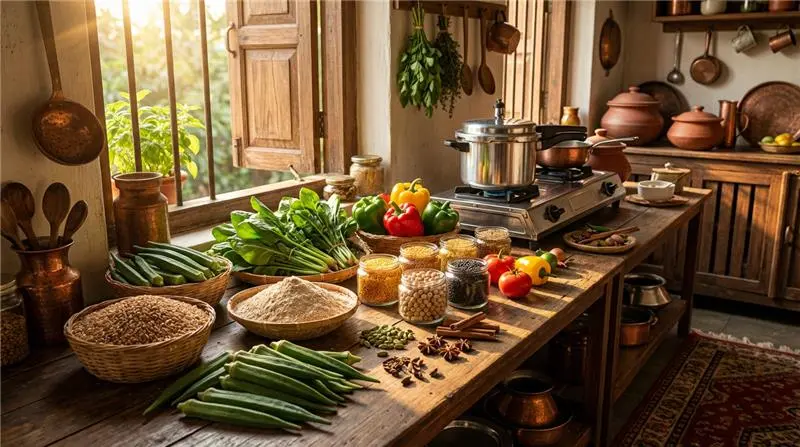
Go for low-carb options instead. Bhindi (okra), palak (spinach), lauki (bottle gourd), karela (bitter gourd), cauliflower, beans, and bell peppers should become your regular rotation. These fill you up without the extra carbs.
Every meal needs vegetables. Not as an afterthought—as the star of your plate. Aim for at least two cups of cooked vegetables daily. Stir-fry them, make dry sabzis, or throw them into your dal. Just get them in there.
Oil control is non-negotiable
Indian cooking uses a lot of oil. Traditional recipes call for tempering, sautéing, and sometimes deep frying. That’s where the calories sneak in.
Cook with less oil—way less. Home-cooked food controls oil and sugar better than anything else, which is exactly why it works for weight loss. Use 1-2 teaspoons per dish instead of pouring straight from the bottle.
Skip the creamy kormas and butter-heavy gravies. Make stir-fried vegetables instead. Use tomato-based gravies. Try steaming, grilling, or air-frying when possible. Your taste buds will adjust faster than you expect.
Swap refined grains for whole grains
White rice and maida-based rotis give you quick energy, then leave you crashed and hungry an hour later. Whole grains keep you full longer and provide actual nutrients.
Brown rice is the obvious swap. Quinoa works too, though it’s pricier. For rotis, use whole wheat atta—your chapatis are probably already whole grain if you make them at home. Lark Health recommends incorporating more whole grains as a foundational strategy for healthy eating.
Missi roti made with besan and wheat flour adds protein while cutting some carbs. Oats are incredible for breakfast—make them savory with vegetables and you’ve got a filling meal that doesn’t need much prep.
Sample daily plan that actually works
Planning sounds tedious until you realize it saves you from making bad decisions when you’re starving at 2 PM.
Breakfast: Masala oats with vegetables and nuts, or two-egg bhurji with one slice of whole wheat toast.
Mid-morning snack: A handful of almonds or roasted chana.
Lunch: Two rotis, one cup palak paneer or bhindi masala, cucumber salad, and a small bowl of curd.
Evening snack: Green tea with roasted makhana or a small fruit.
Dinner: Two rotis with dal (any type), one cup of vegetable sabzi, and salad.
This isn’t rigid. Mix it up based on what you like. The framework stays the same: protein, vegetables, controlled carbs, minimal oil.
Weekly variety keeps you consistent
Eating the same dal-roti-sabzi combination every single day gets old fast. That’s when people quit and order pizza.
Archana’s Kitchen offers mix-and-match meal plans that rotate different regional dishes throughout the week. Monday could be South Indian with oats dosa and sambar. Wednesday brings North Indian with rajma and brown rice. Friday might feature Bengali-style vegetables and fish curry.
Plan your meals weekly. Prep your dal and sabzi in batches if you’re busy. Store them in portions so you just heat and eat. Realistic planning beats perfect execution that never happens.
Tools that make healthy cooking easier
You don’t need fancy equipment, but a few smart tools help. A good non-stick pan lets you cook with minimal oil. An electric cooker or Instant Pot speeds up dal and rice cooking significantly. Air fryers are legitimately useful for making crispy foods without deep frying.
Measuring cups and spoons matter more than you think. Eyeballing portions is how you end up eating way more than you intended. Measure for two weeks until you know what proper portions actually look like.
What to do when you eat out or visit family
Life happens. You’ll eat at restaurants. You’ll go to family dinners where refusing food feels rude. That’s fine—healthy nutrition plans need flexibility or they fall apart.
At restaurants, order grilled or tandoori proteins. Ask for less oil. Skip the naan and go for one roti instead. Fill up on salad and raita. Share dessert if you want it.
At family gatherings, take smaller portions of everything. Load your plate with salads and vegetables first. Have one small serving of the rich dishes. Nobody will notice or care that you’re not going back for thirds.
The reality: consistency beats perfection
You’re going to have days where you eat too much. Festivals happen. Birthdays come around. One meal or even one day doesn’t ruin your progress.
What matters is getting back to your healthy eating pattern the next day. Not tomorrow, not Monday, not next month. The very next meal. That’s how people who successfully maintain healthy nutrition plans actually do it—they don’t quit after one slip-up.
Indian home cooking gives you incredible variety, familiar flavors, and complete nutrition. You just need to approach it thoughtfully. Control your portions. Load up on vegetables. Choose proteins wisely. Go easy on the oil. Do this consistently, and the results follow naturally. No fancy diets required—just smarter versions of what you already love eating. If you need personalized guidance on building healthy nutrition plans tailored to your lifestyle, working with the best nutritionist in Bangalore can help you create sustainable eating habits that actually stick.
Frequently Asked Questions
Can I follow healthy nutrition plans while eating only vegetarian Indian food?
Absolutely. Indian vegetarian cuisine offers plenty of protein sources like dal, paneer, tofu, chickpeas, sprouts, and Greek yogurt. The key is including protein at every meal and balancing it with vegetables and whole grains.
How much oil should I use in Indian cooking for healthy meals?
Limit oil to 1-2 teaspoons per dish. Use non-stick pans to reduce the amount needed. Focus on steaming, grilling, or air-frying methods instead of deep frying whenever possible.
Is brown rice necessary, or can I eat white rice on a healthy nutrition plan?
Brown rice is better because it keeps you full longer and provides more nutrients. However, if you prefer white rice, control your portion to 3/4 cup cooked and balance it with plenty of protein and vegetables.
How do I handle Indian sweets and festivals while maintaining healthy eating?
Enjoy sweets in moderation during festivals. Have a small portion, share with others, and return to your regular healthy eating pattern at the very next meal. One day doesn’t derail your progress.
What’s the easiest way to meal prep Indian food for the week?
Cook dal and sabzi in batches at the beginning of the week. Store them in individual portions for easy reheating. Make fresh rotis daily or prepare dough in advance. This saves time while keeping meals fresh and healthy.
Not sure where to start?
Take the 7 day Nutri Trial and see what a plan built around your own kitchen actually feels like.
Start your trial