
- The Indian Thali: Your Blueprint for Balance
- Protein Without the Panic
- The Whole Grain Revolution (That’s Actually Not New)
- Fat: The Misunderstood Friend
- Vegetables: More Than a Side Thought
- The Lunch Revolution
- Processed vs. Real Food
- The Digestion Connection
- Making It Sustainable (Not Perfect)
- Frequently Asked Questions
Let’s be real—most diet advice out there feels like it was written for someone living in California, not Chandigarh. Green smoothies for breakfast? What about poha? Kale salads? Where’s the dal and sabzi? If you’re trying to figure out what healthy eating actually looks like for your Indian family in 2026, you’re probably tired of translating Western nutrition advice into something that works with roti and rice.
Here’s the good news: you don’t need to abandon your thali to be healthy. Actually, the traditional Indian diet—when done right—is one of the healthiest eating patterns on the planet. The plant-based foundation of Indian cooking has been linked to lower rates of heart disease, diabetes, and even Alzheimer’s. Thing is, not all Indian meals are created equal.
The Indian Thali: Your Blueprint for Balance
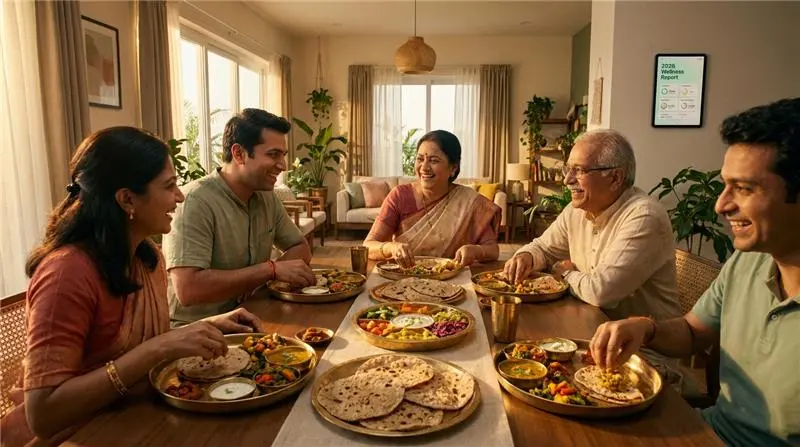
Think about the last time you ate a proper home-cooked thali. Rice or roti. Dal or rajma. A vegetable sabzi. Some curd. Maybe a little pickle. That structure? It’s basically a nutrition program disguised as tradition.
A truly healthy Indian thali in 2026 looks like this: whole grains (brown rice or whole wheat roti), a protein source (dal, chole, rajma, or paneer), seasonal vegetables, a small salad, and a modest amount of ghee or oil. According to nutrition experts, this combination gives you fiber, protein, healthy fats, and all the micronutrients your family needs.
But here’s where most families mess up: portion balance. Your vegetables should take up half the plate, not be a tiny afterthought next to a mountain of rice.
Protein Without the Panic
Ever worried that your family’s vegetarian diet isn’t giving them enough protein? You’re not alone. But honestly, India’s been managing lacto-vegetarian diets for thousands of years. The secret’s in variety.
Your protein rotation should include different dals (masoor, moong, toor, chana), legumes like rajma and chole, paneer, curd, nuts, and seeds. Research from Healthline shows that plant-based proteins from these sources provide excellent nutrition while reducing disease risk.
Pro tip: don’t serve the same dal every day. Mix it up. Monday could be moong dal, Wednesday rajma, Friday chole. Your family gets different amino acid profiles, and nobody gets bored.
The Whole Grain Revolution (That’s Actually Not New)
White rice and maida rotis? They’re convenient, sure. But switching even half your grains to whole versions changes everything.
Try brown rice, whole wheat atta, millets like ragi and jowar, or even quinoa and barley. The 2026 dietary guidelines specifically emphasize whole grains as a foundation for heart health. These aren’t just trendy foods—they’re what our grandparents ate before polished grains became the norm.
Fat: The Misunderstood Friend
Somewhere along the way, we got scared of ghee. Meanwhile, we started buying packaged “low-fat” snacks loaded with sugar and processed oils. Ironic, right?
Healthy fats are essential. Ghee, coconut oil, mustard oil, nuts, seeds—these belong in your kitchen. According to heart health experts, keeping saturated fat to 10% or less of your daily calories is smart, but that doesn’t mean eliminating it. A teaspoon of ghee on your dal? That’s not the enemy.
Vegetables: More Than a Side Thought
Quick question: how many vegetables did your family eat yesterday? If you’re counting potatoes and onions in your curry, that doesn’t count.
Seasonal vegetables should be the star of at least two meals a day. Bhindi, baingan, palak, lauki, tinda, karela—whatever’s fresh at your local market. Nutritionists recommend filling at least half your plate with vegetables, and they’re not exaggerating.
The Lunch Revolution
Here’s something that might change how your family eats: lunch should be your biggest meal, not dinner.
Traditional Indian wisdom has always known this. Ayurveda calls it eating with your digestive fire. Modern science backs it up—eating a substantial lunch and lighter dinner helps with weight management, sleep quality, and energy levels.
Processed vs. Real Food
Walk down any supermarket aisle and you’ll see “healthy” versions of everything. Multigrain biscuits. Protein chips. Diet namkeen. Most of it? Still processed.
A sustainable nutrition program for 2026 means getting back to basics. Experts suggest aiming for at least 80% home-cooked meals weekly. That doesn’t mean you can never eat out or enjoy packaged foods. It means most of what you eat should be recognizable as actual food.
The Digestion Connection
Your gut health determines pretty much everything else. Energy. Immunity. Mood. Weight. All of it starts with digestion.
Indian cooking already has the tools: jeera, turmeric, coriander, ginger, hing. These aren’t just for flavor—they support digestion. According to nutritionists, good digestion is the foundation of immunity and energy.
Making It Sustainable (Not Perfect)
Look, nobody’s eating perfectly all the time. Life happens. Birthdays. Festivals. Late work nights. Weekend restaurant meals.
A truly healthy diet for an Indian family in 2026 isn’t about perfection. It’s about consistency with the basics: more whole grains than refined, plenty of vegetables, varied protein sources, home cooking most days, and eating mindfully.
One nutrition expert puts it perfectly: “A sustainable diet is not about eating less. It is about eating in a way your body feels safe, nourished, and supported. When that happens, health follows naturally.”
Frequently Asked Questions
What is the healthiest traditional Indian meal structure?
The traditional thali with whole grains, dal or legumes, seasonal vegetables, curd, and a small amount of ghee provides balanced nutrition with fiber, protein, and essential nutrients your family needs.
How can vegetarian Indian families get enough protein?
Rotate between different dals (moong, masoor, toor, chana), legumes (rajma, chole), paneer, curd, nuts, and seeds throughout the week to ensure varied amino acid profiles and complete nutrition.
Should lunch or dinner be the main meal?
Lunch should be your largest meal of the day. This aligns with traditional Ayurvedic wisdom and modern research showing better digestion, weight management, and sleep quality when eating a substantial lunch and lighter dinner.
Are whole grains necessary or just a trend?
Whole grains like brown rice, whole wheat, and millets aren’t new—they’re what previous generations ate. They provide fiber, stabilize blood sugar, and keep you satisfied longer than refined grains.
How much ghee is healthy to consume daily?
A teaspoon or two of ghee daily fits within healthy fat guidelines. The key is keeping total saturated fat to 10% or less of daily calories while avoiding processed oils in packaged foods.
What makes a nutrition program sustainable for Indian families?
Sustainability comes from eating foods your family enjoys—traditional Indian meals made with whole ingredients, home-cooked 80% of the time, with flexibility for celebrations and dining out without guilt.
Not sure where to start?
Take the 7 day Nutri Trial and see what a plan built around your own kitchen actually feels like.
Start your trial