
Rice is bad. Roti causes inflammation. Ghee is a superfood. Seed oils are poison. Dairy is destroying your skin. If you’ve spent even ten minutes on Instagram looking up what to eat, you’ve probably seen all of this. And it’s exhausting, right? One reel tells you to ditch wheat forever, the next tells you to eat two chapatis with every meal. So what’s actually true?
Here’s what I want to do in this piece: separate the real evidence from the noise. We’ll look at the Indian foods that genuinely drive chronic inflammation, the ones unfairly blamed for it, and how to build an anti-inflammatory diet that still looks like Indian food (not quinoa bowls and kale smoothies). No fearmongering, no blanket bans. Just what the research actually says, and what to do about it in your kitchen.
First, What Does “Inflammation” Even Mean?
Quick clarification before we blame anything. Inflammation isn’t bloating after rajma. It’s not that heavy feeling after too many gulab jamuns. Those are digestive responses.
Chronic low-grade inflammation is different. It’s a persistent, low-level immune activation linked to things like type 2 diabetes, heart disease, PCOS, and joint problems. You usually can’t feel it directly. It shows up on blood markers like CRP, IL-6, and TNF-alpha. Clinical reference material on anti-inflammatory diets explains that pro-inflammatory dietary patterns tend to be high in refined carbs, saturated fat, and ultra-processed foods, and low in fruits and vegetables.
So when someone says “this food is inflammatory,” ask: based on what? A gut feeling, or actual markers in human studies?
The Real Villain: Ultra-Processed Food, Not Your Grandmother’s Cooking
Here’s the uncomfortable truth most wellness influencers skip. The single biggest driver of inflammation in the modern Indian diet isn’t rice. It isn’t roti. It’s the enormous shift toward packaged, ultra-processed stuff that didn’t exist in Indian kitchens 40 years ago.
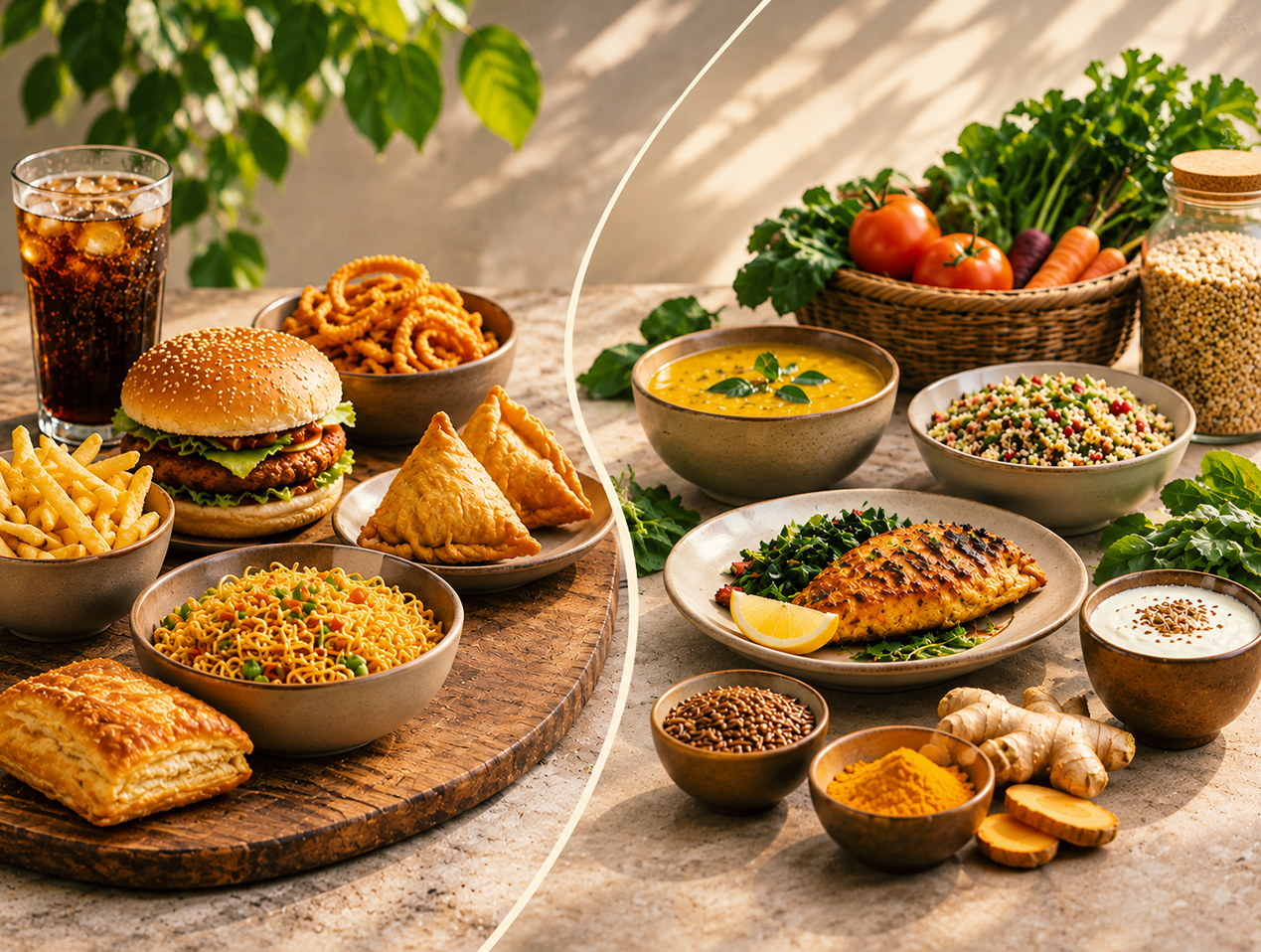
Think biscuits with every chai. Namkeen by the kilo. Instant noodles. Bakery breads loaded with maida. Fruit-flavored drinks. Mass-produced sweets fried in reused oil. These foods combine refined flour, added sugar, poor-quality fats, and chemical additives in ways that push inflammatory markers up, mess with gut bacteria, and crash your metabolic health.
A 2024 study on dietary inflammation in southern India found that higher dietary inflammatory potential was linked to a greater burden of cardiometabolic and mental-health multimorbidity. The problematic pattern? Simple carbs plus saturated fat, without the protective pull of fruits, leafy greens, legumes, and whole grains.
Translation: the problem isn’t one food. It’s the whole pattern.
Does Rice Cause Inflammation? Honest Answer
No. Not on its own.
Rice has been eaten across India for thousands of years, by communities with historically low rates of the chronic diseases we’re worried about today. What’s changed isn’t the rice. It’s what rice shows up next to.
A bowl of rice with dal, a sabzi, some curd, and a vegetable? That’s a balanced plate with fiber, protein, and plant diversity. A heaped plate of white rice with just a sugary pickle and a fried snack, washed down with a cold drink? That’s a glucose rollercoaster. The rice didn’t become evil. The company it kept did.
If you have insulin resistance, PCOS, or diabetes, portion matters a lot. Pair rice with protein and vegetables, keep servings moderate, and you’re fine. Celebrity nutritionist Rujuta Diwekar has made this point repeatedly in Indian media, arguing that staples like rice and roti aren’t the villains they’re painted to be.
Is Roti Inflammatory? What About Gluten?
Also no, for most people.
Here’s where it gets nuanced. Gluten is genuinely harmful if you have celiac disease — an autoimmune condition where gluten damages your small intestine. That’s roughly 1% of people globally, and it requires a medical diagnosis and strict avoidance. Non-celiac gluten sensitivity exists too, though it’s trickier to pin down.
But the idea that every human should avoid wheat? Not supported by the evidence. What is worth watching: the shift from freshly ground atta made at home to heavily refined, bleached maida used in bakery products, biscuits, pizzas, pav, and burger buns. Maida strips the bran and germ, spikes blood sugar faster, and shows up in almost every ultra-processed Indian snack.
So the question isn’t “roti or no roti.” It’s “whole wheat atta or maida?”
Ghee: Health Food or Hype?
Real talk — ghee is having a moment. And it’s a decent cooking fat with a high smoke point, some fat-soluble vitamins, and cultural significance. Use it. Enjoy it.
But the claim that a spoon of ghee daily reduces inflammation and balances hormones? A fact check on this exact claim found no strong human clinical evidence to support it. Ghee is still mostly saturated fat. If you’re drowning your food in it to “heal” your gut, you’re probably just adding calories without the benefits promised.
Use ghee like your grandmother did: a drizzle for flavor, not a therapeutic dose.
Seed Oils: The Internet’s Favorite Enemy
Seed oils are the current villain of the moment. Sunflower, soybean, refined vegetable oil blends — all supposedly inflammatory because of their omega-6 content.
Here’s what the actual evidence says. Cleveland Clinic’s review of seed oil research notes that controlled human trials don’t show dietary seed oils independently raising inflammatory markers. The real issue is that seed oils show up heavily in ultra-processed foods — chips, packaged namkeen, bakery items, repeatedly reused frying oil at street stalls. The context is inflammatory. The oil itself, used moderately at home, is largely neutral.
What I’d actually worry about:
- Vanaspati and partially hydrogenated fats (actual trans fats — avoid)
- Deep-fried foods made with oil reused for days
- Ultra-processed foods packed with cheap refined oils plus sugar plus salt
Rotate between mustard, groundnut, coconut, and sesame depending on your region and cooking style. Use oils in reasonable quantities. Move on with your life.
Sugar and Refined Carbs: Where the Evidence Is Strong
If there’s one place to tighten the belt, it’s added sugar and refined flour. The evidence here isn’t ambiguous.
Constant blood sugar spikes drive insulin resistance, which is directly linked to chronic inflammation. Mithai every evening, two chais with four biscuits each, cold drinks with lunch, bakery items at tea time — this is the quiet, cumulative damage.
And “natural” sweeteners like jaggery, honey, or coconut sugar? They have slightly better nutrient profiles, sure. But metabolically, your body treats them similarly. Portion still matters.
Dairy, Nightshades, and Other Falsely Accused Foods
A quick round-up of foods people love to blame:
Dairy: Individual tolerance varies. If dairy clearly worsens your acne, bloating, or joint symptoms, test it with a short, structured elimination. For most people without lactose intolerance or a specific sensitivity, plain curd and moderate milk are fine — and curd actively supports gut health.
Nightshades (tomato, potato, brinjal): The nightshade-arthritis link is largely anecdotal. No strong human evidence supports blanket avoidance. If you personally notice a flare, that’s your signal — not a universal rule.
Dal and legumes: Honestly? Among the most anti-inflammatory foods in Indian cuisine. Fiber, plant protein, resistant starch, polyphenols. Eat them daily.
What an Anti Inflammatory Diet Looks Like in an Indian Kitchen
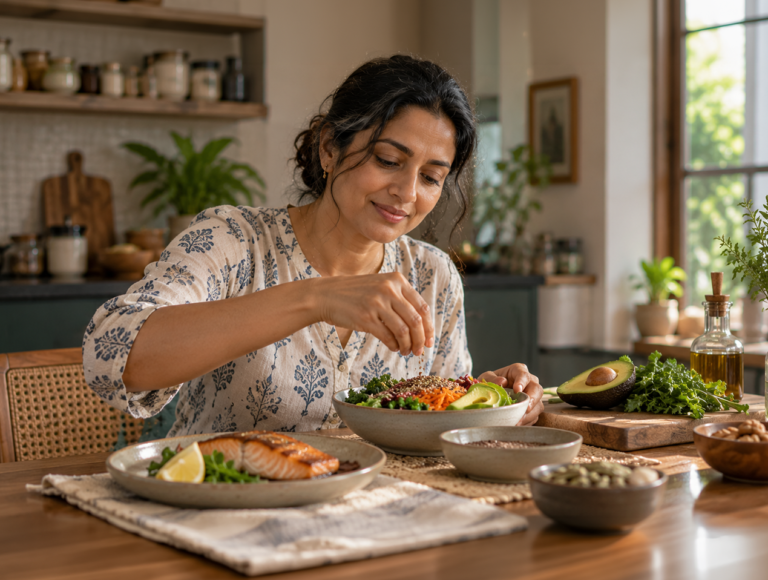
Forget the Pinterest-perfect smoothie bowls. An anti inflammatory diet, Indian-style, looks a lot like how your great-grandmother ate. Research on an Indian-adapted Mediterranean approach essentially describes this: whole grains, legumes, seasonal vegetables, fruits, nuts, healthy fats, fish where appropriate, and plenty of spices like turmeric, ginger, and garlic.
Here’s what that looks like practically:
- Whole grains and millets — jowar, bajra, ragi, hand-pounded rice, whole wheat atta
- A dal or legume at least once daily
- Two to three vegetables across the day, including something green
- Fresh fruit as a snack, not fruit juice
- Nuts and seeds — a handful, not a bag
- Curd or buttermilk if tolerated
- Home-cooked meals using mustard, groundnut, sesame, or coconut oil in moderation
- Spices generously — turmeric, ginger, garlic, cumin, coriander, black pepper
- Fish or eggs if non-vegetarian; limit red and processed meat
What to actively cut back on: biscuits, namkeen, bakery items, sugary drinks, instant noodles, deep-fried street food (occasional is fine, daily is a problem), vanaspati, and anything with “partially hydrogenated” on the label.
Common Mistakes People Make
I see these all the time:
- Giving up rice while still eating Parle-G twice a day
- Going gluten-free without testing for celiac disease
- Dumping turmeric into everything expecting it to cancel out a bad diet
- Confusing bloating with inflammation
- Eliminating five food groups at once and having no idea what helped
- Treating “organic” or “cold-pressed” labels as a free pass
The point isn’t to eat perfectly. It’s to shift the overall pattern in a direction that supports your body.
When to Actually See a Professional
If you have persistent symptoms — unexplained joint pain, chronic skin issues, GI problems that won’t quit, suspected autoimmune disease, PCOS, diabetes, or heart disease — don’t try to crowdsource your diet from Instagram. Blood tests, elimination done properly, and medical context matter.
This is where working with someone like Anupama can save you months of trial and error. A dietary pattern tuned to your body, your condition, your regional cuisine, and your actual life beats any generic “avoid these 10 foods” list.
Conclusion
The modern Indian diet isn’t inflammatory because of rice and roti. It’s inflammatory because ultra-processed snacks, refined flour, excess sugar, trans fats, and reused frying oils have quietly taken over kitchens, offices, and tea breaks across the country.
An anti inflammatory diet in India doesn’t require giving up your culture. It asks you to eat more like your grandparents did — whole grains, dals, vegetables, fruits, moderate fats, home cooking, and far fewer packaged foods. Keep the ghee. Keep the rice. Keep the chapati. Lose the biscuits-with-every-chai habit.
Pay attention to the pattern, not the panic. Watch what’s on your plate across a week, not what one reel told you yesterday. And if you’re dealing with a specific health condition, get real guidance — not internet guesses. That’s the shift that actually moves the needle.
Frequently Asked Questions
Does eating rice every day cause inflammation?
No, rice itself doesn’t cause inflammation. The issue is portion size and what you eat it with. When paired with vegetables, dal, and protein, rice is part of a balanced anti inflammatory diet. Problems arise when rice is consumed in large portions with minimal fiber or protein, causing blood sugar spikes.
Are all seed oils bad for inflammation?
No. While seed oils have become a popular target, controlled studies don’t show that moderate home use of refined vegetable oils directly causes inflammation. The real concern is seed oils in ultra-processed foods and repeatedly reused frying oils at restaurants and street stalls.
Should I avoid gluten to reduce inflammation?
Only if you have celiac disease or diagnosed gluten sensitivity. For most people, whole wheat roti and other whole grain sources aren’t inflammatory. The problem is refined maida in biscuits, bakery products, and packaged snacks, which spike blood sugar and lack fiber.
Is ghee anti-inflammatory?
Ghee is a traditional cooking fat with some benefits, but claims that it significantly reduces inflammation aren’t backed by strong clinical evidence. Use ghee moderately for flavor and cooking, but don’t treat it as a therapeutic supplement.
What Indian foods are actually anti-inflammatory?
Dal, legumes, seasonal vegetables, whole grains like jowar and bajra, turmeric, ginger, garlic, curd (if tolerated), fresh fruits, nuts, and seeds. These foods are rich in fiber, antioxidants, and compounds that support gut health and reduce inflammatory markers.
Can I follow an anti inflammatory diet as a vegetarian Indian?
Absolutely. Traditional Indian vegetarian cuisine is naturally rich in anti-inflammatory foods — dals, whole grains, vegetables, spices, and healthy fats. Focus on home-cooked meals, minimize processed snacks, and include plenty of plant diversity in your daily meals.
How do I know if a food is causing inflammation in my body?
True inflammation shows up in blood markers like CRP, not just how you feel after a meal. If you suspect a food trigger, work with a healthcare professional to do a structured elimination diet and proper testing rather than guessing based on symptoms like bloating.
Are nightshade vegetables like tomatoes and potatoes inflammatory?
For most people, no. The nightshade-inflammation link is largely anecdotal and not supported by strong research. If you personally notice worsening joint pain or other symptoms after eating nightshades, that’s worth exploring — but it’s not a universal issue.
Not sure where to start?
Take the 7 day Nutri Trial and see what a plan built around your own kitchen actually feels like.
Start your trial