Discover a practical PCOD diet chart for sustainable weight loss. Learn high-fiber meal ideas, low-GI carbs, and expert tips from Anupama Menon to manage insulin resistance and balance hormones.


Table of Contents
- Why High-Fiber Foods Are Non-Negotiable for PCOD Weight Loss
- Your Daily PCOD Diet Chart for Weight Loss
- The Best Low-GI Carbohydrates for PCOD
- Foods to Absolutely Avoid
- Quick High-Fiber Recipe: Vegetable Besan Chilla
- Tips for Sustainable Results
- Frequently Asked Questions
Here’s what nobody tells you about PCOD and weight loss: it’s not just about eating less. Your body’s working against you with insulin resistance and hormonal chaos that makes every diet feel impossible. But there’s good news. A targeted PCOD diet chart focused on high-fiber foods can help you lose weight sustainably without feeling like you’re starving all day.
The trick? Understanding that fiber is your secret weapon. It slows down sugar absorption, keeps you full longer, and helps balance those frustrating hormones that make weight loss so difficult with PCOD. Let’s break down exactly what you need to eat (and when) to see real results.
Why High-Fiber Foods Are Non-Negotiable for PCOD Weight Loss
If you’ve got PCOD, your body struggles with insulin resistance. That means your blood sugar spikes and crashes throughout the day, triggering cravings you can’t control. Fiber changes this game completely.
According to fertility experts, fiber slows down the absorption of sugars in your body, maintaining balanced sugar levels naturally. Think of it like a speed bump for your digestion. Instead of that sugar rush followed by a crash, you get steady energy all day.
Plus, high-fiber foods keep you feeling satisfied. No more raiding the pantry two hours after lunch because you’re starving again. When you’re eating 25-30 grams of fiber daily from vegetables, whole grains, and legumes, your hunger hormones actually start working with you instead of against you.
Your Daily PCOD Diet Chart for Weight Loss
Honestly, meal timing matters just as much as what you eat. Your body thrives on routine when you’ve got PCOD. Nutritionists recommend eating at the same times daily to regulate your hunger signals naturally.
Early Morning (6:30-7:00 AM)
Start with fenugreek seeds soaked in water overnight. Sounds simple, right? But this one habit helps stabilize your blood sugar before you even eat breakfast. Boil the seeds with the water and drink it warm.
Breakfast (8:00-9:00 AM)
This is where most people mess up. You need protein AND fiber together. Try these options:
- Vegetable besan chilla with paneer bhurji and curd
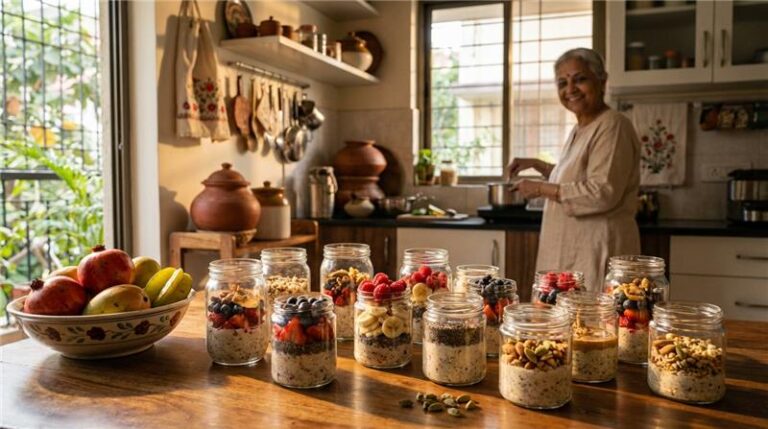
- Overnight oats topped with chia seeds, Greek yogurt, and berries
- Moong dal cheela with mint chutney and a handful of soaked almonds
- Sprouted moong dosa with coconut chutney
Notice the pattern? Each option combines protein with high-fiber carbs. That’s intentional.
Mid-Morning Snack (11:00 AM)
Keep it light but satisfying. Roasted makhana bhel, fresh seasonal fruit with a few nuts, or sprouted channa chaat work perfectly. Your goal here is preventing that pre-lunch energy crash.
Lunch (1:00-2:00 PM)
This should be your biggest meal, and here’s the formula that actually works: multigrain roti + dal + tons of vegetables + curd + salad. According to PCOD diet specialists, pairing chapati with protein-rich dal and fiber-packed veggies keeps you full for hours.
Try barnyard millet pulao with mixed vegetables and raita. Or go with bran chapati, palak dal, stir-fried bhindi, and cucumber salad. The variety keeps it interesting so you don’t get bored and quit after a week.
Evening Snack (4:30-5:00 PM)
This is crucial. Don’t skip it. When you let yourself get too hungry, you’ll overeat at dinner. Smart choices include green tea with roasted channa, vegetable soup, or chia pudding made with almond milk.
Dinner (7:00-8:00 PM)
Keep it lighter than lunch but still satisfying. The key is loading up on vegetables and keeping carbs moderate. Some winning combinations:
- Grilled paneer with sautéed vegetables and quinoa
- Moong dal khichdi with lots of green leafy vegetables
- Chickpea and aubergine stew with a small multigrain roti
- Stir-fried tofu with broccoli, bell peppers, and brown rice
The Best Low-GI Carbohydrates for PCOD
Not all carbs are your enemy. Actually, avoiding carbs completely backfires because you need them for energy and hormone production. You just need the right kind.
Low-GI carbs release sugar slowly into your bloodstream. Think quinoa, sweet potatoes, oats, barley, and barnyard millet. These won’t spike your insulin like white bread or regular pasta does. Research shows that choosing low-GI options helps stabilize blood sugar levels throughout the day, which directly impacts your ability to lose weight with PCOD.
Skip the maida products entirely. White bread, regular pasta, refined flour—these are what’s keeping you stuck.
Foods to Absolutely Avoid
Real talk: some foods make PCOD symptoms worse no matter how “healthy” you think you’re being otherwise. Cut these out completely if you want to see progress:
- Processed carbs like white bread, cookies, and packaged snacks
- High-sugar fruits like mangoes, grapes, and bananas (stick to berries instead)
- Sugary drinks including fruit juices and sodas
- Fried foods and excessive oil
- Starchy vegetables in large amounts (peas, potatoes, corn)
Yeah, it’s tough at first. But once you notice your energy stabilizing and the scale actually moving, you won’t miss them.
Quick High-Fiber Recipe: Vegetable Besan Chilla
This is my go-to breakfast because it’s fast, filling, and actually tastes good. Mix besan flour with finely chopped onions, tomatoes, spinach, and green chilies. Add turmeric, cumin, and a pinch of salt. Make a batter with water (not too thick), pour onto a hot non-stick pan, and cook both sides until golden. It takes 10 minutes max.
Pair it with mint chutney and curd. The protein from besan plus all those vegetables gives you the fiber you need to stay full until lunch. No mid-morning cravings.
Tips for Sustainable Results
Look, following a PCOD diet chart for weight loss isn’t just about the food. It’s about building habits that actually stick. Here’s what works:
Eat at consistent times daily. Your body starts expecting food at certain hours, which regulates hunger hormones naturally. Don’t make the mistake of eating breakfast at 8 AM one day and 11 AM the next.
Drink plenty of water between meals. Sometimes what feels like hunger is actually thirst. Keep a bottle with you and aim for 8-10 glasses daily.
Don’t obsess over the scale every day. With PCOD, sustainable weight loss means 0.5-1 kg per week, not 5 kg in a month. Slow progress is still progress, and it’s the kind that actually stays off.
Prep your meals ahead when possible. When you’re hungry and tired after work, you’ll grab whatever’s easiest. If healthy options are ready to go, you’ll make better choices.
Bottom Line
Managing PCOD and losing weight sustainably isn’t about extreme restriction or complicated meal plans. It’s about understanding how your body processes food differently and working with it instead of against it. High-fiber foods, low-GI carbs, consistent meal timing, and plenty of protein—these aren’t just diet tips, they’re the foundation for actually feeling better and seeing results that last.
Start with one meal at a time if the whole chart feels overwhelming. Maybe just fix your breakfast this week. Then add lunch next week. Small changes compound into big results when you stick with them. And unlike crash diets that leave you exhausted and hungry, this approach actually gives you more energy while the weight comes off.
Your hormones will start balancing, your cravings will decrease, and you’ll finally understand why everyone kept telling you that fiber matters. Because it really does.
Frequently Asked Questions
What is the best PCOD diet chart for weight loss?
The best PCOD diet chart for weight loss focuses on high-fiber foods, low-GI carbohydrates, lean proteins, and healthy fats eaten at consistent times throughout the day. Include plenty of vegetables, whole grains like quinoa and oats, legumes, and avoid processed foods and refined sugars.
How much fiber should I eat daily for PCOD weight loss?
Aim for 25-30 grams of fiber daily from vegetables, whole grains, legumes, and seeds. This helps regulate blood sugar levels, reduces insulin resistance, and keeps you feeling full longer, which are all crucial for managing PCOD symptoms and losing weight.
Can I eat fruits with PCOD?
Yes, but choose low-GI fruits like berries, apples, pears, and citrus fruits. Avoid high-sugar fruits like mangoes, grapes, and bananas as they can spike blood sugar levels and worsen insulin resistance associated with PCOD.
How long does it take to see weight loss results with a PCOD diet?
With PCOD, sustainable weight loss typically ranges from 0.5-1 kg per week. You may notice improved energy and reduced cravings within 2-3 weeks, but visible weight loss usually becomes apparent after 4-6 weeks of consistent adherence to the diet chart.
Should I avoid carbs completely with PCOD?
No, don’t avoid carbs completely. Your body needs carbohydrates for energy and hormone production. Focus on low-GI carbs like quinoa, sweet potatoes, oats, barley, and millets instead of refined carbs like white bread and pasta.