
- Why 1500 Calories Works for Indian Veg Diets
- The Simple Food Combination Rule That Changes Everything
- High-Protein Paneer Recipes
- Dal and Legume Combos for Maximum Protein
- Millets: The Underrated Carb Swap
- Sample Day on the Plan
- Smart Carb Timing for Better Results
- Making It Work Long-Term
- Frequently Asked Questions
Sticking to a 1500-calorie Indian vegetarian diet plan doesn’t mean boring salads or bland boiled vegetables. Honestly, that’s where most people give up. The real trick? Getting enough protein while keeping your meals interesting and, you know, actually tasty. Anupama Menon’s approach combines traditional Indian staples like dal, paneer, and millets into a high-protein framework that works for weight loss and sustained energy. Here’s how to make it happen without spending hours in the kitchen or eating the same thing every single day.
Why 1500 Calories Works for Indian Veg Diets
Let’s be real—a 1500-calorie diet plan is that sweet spot where you’re creating a calorie deficit without feeling like you’re starving. For most moderately active adults, this creates sustainable weight loss without extreme restrictions. But here’s the catch: those calories need to be nutrient-dense, especially protein-rich.
Most Indian vegetarian diets fall short on protein. We load up on rice, roti, and vegetables but skimp on the protein sources. That’s why Anupama Menon emphasizes combining dal (legume protein), paneer, and millets in strategic ways throughout the day. You’re not just counting calories—you’re making those calories work harder for you.
The Simple Food Combination Rule That Changes Everything
According to Health and Nutrition with Anupama Menon, the secret to better digestion and metabolism is simple: combining fewer food groups in every meal. Think one carb source (rice, roti, or millet), one protein source (dal, paneer, or soya), and one vegetable.
Why does this matter?
Your body produces limited enzymes for digestion at any given time. When you pile rice, roti, dal, paneer, two different vegetables, and pickle onto one plate, you’re overwhelming your digestive system. Metabolism suffers. Energy drops.
Instead, keep it simple. Rotis with sabzi and a dal bowl. Or millet roti with paneer bhurji and a side of cucumber. Variety comes throughout the day, not in a single meal.
High-Protein Paneer Recipes
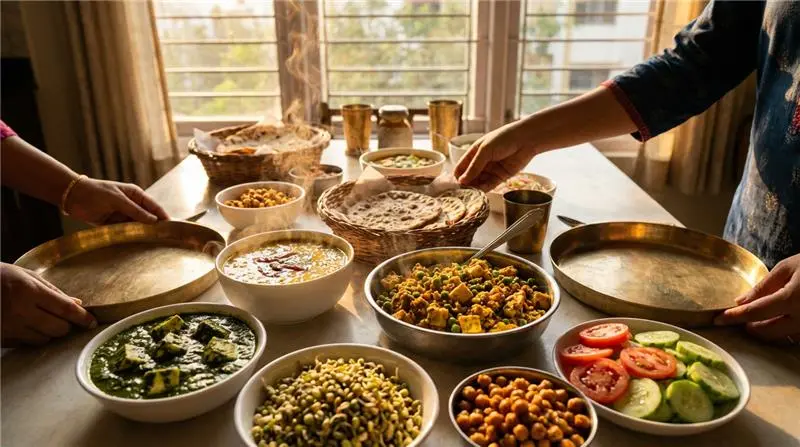
Paneer is your best friend on a 1500 calories diet plan indian veg. It’s versatile, filling, and protein-packed. Here are winning combinations:
- Paneer Bhurji: Scrambled paneer with minimal oil, onions, tomatoes, and turmeric
- Palak Paneer: Cottage cheese cubes in spinach gravy
- Grilled Paneer Cubes with Veggies: Simple, protein-rich, and satisfying
These recipes come from real meal planning data that’s been tested and tracked. The key is portion control—moderate servings of paneer throughout the day.
Pro tip: Make paneer bhurji with minimal oil, onions, tomatoes, and turmeric. Pair it with cucumber slices or a small bowl of curd. That’s a complete protein-rich meal right there.
Dal and Legume Combos for Maximum Protein
Dal isn’t just comfort food. It’s a protein powerhouse when you do it right.
A standard bowl of moong dal (cooked) provides excellent protein. Rajma? Even better for protein content. The trick is rotating your dal choices throughout the week so you don’t get bored.
Mix it up with:
- Moong dal with jeera tadka (Monday)
- Masoor dal with garlic (Wednesday)
- Chana dal dry curry (Friday)
- Rajma curry (Sunday)
Remember what Anupama Menon says: variety across the day works. Egg for breakfast (if you include eggs in your veg diet), dal for lunch, tofu or paneer for dinner. Your body gets different amino acid profiles, and you don’t feel like you’re eating the same meal on repeat.
Millets: The Underrated Carb Swap
Here’s where things get interesting. Swapping regular wheat roti or white rice for millet-based options changes the game for a 1500 calories diet plan indian veg.
Ragi (finger millet) roti or jowar (sorghum) roti have lower glycemic indexes than wheat. That means steadier blood sugar, less insulin spikes, and better fat burning. Plus, they’re higher in fiber and minerals.
Millets provide balanced nutrition with good protein and fiber content. Not massive numbers, but when combined with dal or paneer, you’ve got a balanced meal that keeps you full.
Try cauliflower rice upma with millets for breakfast. Or make khichdi with barnyard millet instead of rice. These swaps alone can save calories daily while boosting nutrition.
Sample Day on the Plan
What does this actually look like on a plate?
Breakfast: Paneer bhurji with ragi roti and cucumber slices. High protein start.
Lunch: Jowar rotis with palak dal (moong plus spinach) and a small bowl of curd. Balanced and filling.
Snack: Roasted chana (chickpeas) with green tea. Protein-rich snacking.
Evening: Curd with flaxseeds and cucumber. Probiotic boost.
Dinner: Cauliflower rice upma with mixed vegetables and rajma curry. Light yet satisfying.
This structure delivers solid protein throughout the day for a vegetarian plan without protein powders or supplements.
Smart Carb Timing for Better Results
According to Anupama Menon’s high-protein diet approach, when you eat your carbs matters almost as much as how many you eat.
Keep your heavier carb portions (roti, rice, millets) around your most active times—breakfast and lunch. By evening, shift toward protein and vegetables. This aligns with your body’s insulin sensitivity patterns and supports better fat metabolism overnight.
Plus, it’s diabetes-friendly. Lower carbs at dinner means more stable blood sugar while you sleep.
Making It Work Long-Term
Look, any diet you can’t stick with for months is just a temporary fix. The beauty of this 1500 -calorie Indian vegetarian diet plan is that it’s built on foods you already know and probably cook regularly.
The meal planning strategy Anupama suggests, includes organizing your grocery list by ingredients and setting reminders for soaking beans and dal overnight. Small stuff, but it makes weeknight cooking way less stressful.
Don’t overthink it. Stock your kitchen with basics: three types of dals, paneer (fresh or frozen), seasonal vegetables, millets, basic spices. Rotate recipes weekly, not daily. You’ll save money, reduce food waste, and actually stick with the plan.
Bottom Line
A 1500 -calorie Indian vegetarian diet plan with high protein isn’t about deprivation or weird ingredients you can’t pronounce. It’s about working smarter with dal, paneer, and millets—foods that are already part of Indian cooking culture.
Keep your meals simple with one carb, one protein, one vegetable. Hit adequate protein daily through strategic combinations. Swap regular grains for millets when you can. And remember: variety throughout the day, not complexity in every meal.
That’s the formula that actually works. No magic, no shortcuts—just consistent, protein-focused eating that supports weight loss while keeping you satisfied.
Frequently Asked Questions
Is 1500 calories enough for a vegetarian diet?
Yes, a 1500 calories diet plan can provide adequate nutrition when properly planned with protein-rich foods like dal, paneer, and millets. It creates a sustainable deficit for weight loss while meeting nutritional needs.
How much protein should I aim for on this plan?
Aim for adequate protein spread throughout the day by including dal at lunch, paneer or tofu at dinner, and protein-rich snacks like roasted chana. This helps maintain muscle mass during weight loss.
Can I eat rice on a 1500 calorie Indian diet?
Yes, but consider swapping regular rice for cauliflower rice or millet-based alternatives to increase fiber and nutrients while managing calories better. Save traditional rice for occasional meals.
What are the best millets for weight loss?
Ragi (finger millet), jowar (sorghum), and barnyard millet work excellently due to their low glycemic index and high fiber content. They keep you fuller longer than regular wheat or rice.
How do I prevent protein deficiency on a vegetarian 1500 calorie diet?
Rotate protein sources daily—dal varieties, paneer, tofu, soya, and legumes like rajma and chana. This ensures you get diverse amino acids and prevents monotony in your meals.
Should I eat the same meals every day?
No. Anupama Menon recommends variety throughout the week, not within each meal. Rotate different dals, vegetables, and preparations to keep your diet interesting and nutritionally diverse.
Not sure where to start?
Take the 7 day Nutri Trial and see what a plan built around your own kitchen actually feels like.
Start your trial