
- Why High-Protein Indian Meals Actually Work for Weight Loss
- The Five-Meal Framework That Changes Everything
- Hydration: The Missing Piece Nobody Talks About
- Why Portion Control Beats Calorie Counting
- High-Protein Indian Foods You Should Know
- The Long Game: Sustainable Weight Loss
- Beyond Weight Loss: Maintaining Your Results
- Common Mistakes to Avoid
- Making It Work in Real Life
- Frequently Asked Questions
Let’s be real scrolling through generic diet plans that tell you to eat boiled chicken and broccoli gets old fast. Especially when you’re craving dal, paneer, or your mom’s homemade chapatis. Here’s the thing: weight loss doesn’t mean giving up Indian food. Actually, Indian cuisine is packed with high-protein options that can help you shed those extra kilos while keeping your taste buds happy. What you need isn’t another cookie-cutter plan—it’s personalized guidance that fits your lifestyle, your preferences, and your body’s unique needs.
That’s where nutritionist Anupama Menon comes in. Her approach? Tailored meal plans that work with Indian foods, not against them. Think balanced meals throughout the day, proper hydration, and portion sizes that actually make sense for you. No starvation. No bland food. Just smart, sustainable eating.
Why High-Protein Indian Meals Actually Work for Weight Loss
Protein does something pretty amazing—it keeps you full longer and helps preserve muscle while you’re losing fat. But most traditional Indian meals lean heavily on carbs. Rice, roti, potatoes.
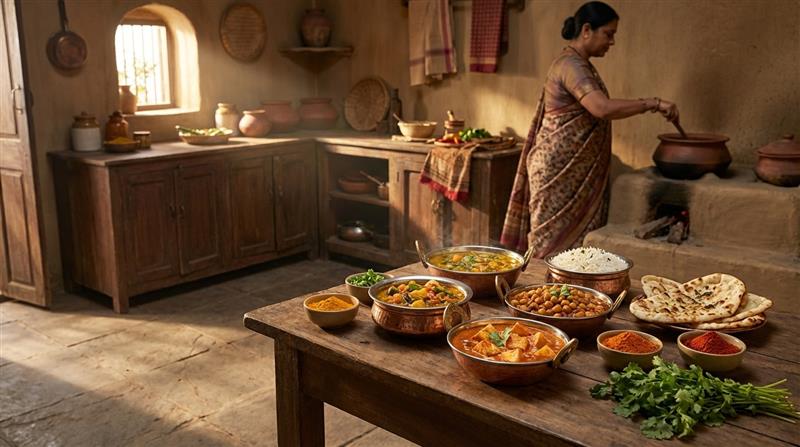
The fix? Strategic protein additions. Your breakfast could include moong dal chilla instead of plain toast. Lunch might feature rajma or chole with controlled portions of rice. Dinner could spotlight grilled paneer or fish curry. See the pattern? You’re not abandoning Indian food—you’re optimizing it.
According to Anupama Menon’s structured programs, dividing your intake into multiple daily meals—breakfast, lunch, dinner, and snacks—keeps your metabolism steady and prevents those afternoon hunger crashes that send you straight to the samosa stand.
The Five-Meal Framework That Changes Everything
Ever tried eating just a few meals a day while dieting? You probably felt either starving or guilty about snacking. Here’s a better way.
Breaking Down Your Day
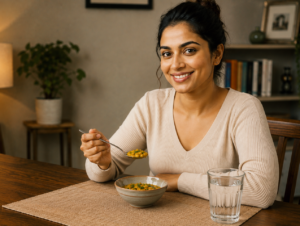
- Breakfast: Start with protein—besan chilla, sprouted moong, or Greek yogurt with nuts
- Mid-morning snack: Roasted chana, a small fruit, or buttermilk
- Lunch: Dal, sabzi, controlled roti portions, salad—balanced and satisfying
- Evening snack: Paneer cubes, egg whites, or a protein shake
- Dinner: Light but protein-rich—grilled fish, palak paneer, or dal with vegetables
This structure, emphasized in Anupama Menon’s offline sessions, isn’t about restriction. It’s about timing and balance. Your body gets steady fuel, so you’re not fighting cravings all day.
Hydration: The Missing Piece Nobody Talks About
Want to know what derails most diet plans? Dehydration masquerading as hunger.
You feel peckish, grab a snack, but what you really needed was water. Anupama Menon’s plans place huge emphasis on hydration—not just drinking water, but spacing it throughout the day. Start your morning with warm water and lemon. Sip between meals. Have coconut water post-workout.
Honestly, this one change can transform how you feel on a high-protein diet. Protein metabolism needs water. Skip it, and you’ll feel sluggish and bloated.
Why Portion Control Beats Calorie Counting
Counting every calorie is exhausting. And kind of miserable.
A smarter approach? Learn proper portions for your body. That’s where personalization matters. What works for someone shorter won’t work for someone taller. Different activity levels, different metabolisms, different needs.
The tailored portion sizes in Anupama’s programs take all this into account. You’re not following some random internet chart—you’re eating amounts that fit YOUR goals and YOUR body.
High-Protein Indian Foods You Should Know
Building a high-protein Indian diet is easier than you think. These foods become your foundation:
- Dals and legumes—masoor, moong, chana, rajma
- Paneer (cottage cheese)—versatile and protein-packed
- Greek yogurt or hung curd
- Eggs (if non-vegetarian)—boiled, scrambled, or in bhurji
- Chicken, fish, and lean meats
- Tofu and soy products
- Nuts and seeds—almonds, peanuts, chia seeds
- Sprouted grains
Mix and match these across your meals. Variety keeps you interested, and different proteins provide different amino acids your body needs.
The Long Game: Sustainable Weight Loss
Quick fixes don’t work. You’ve probably already learned that the hard way.
Real transformation takes time and support. That’s the philosophy behind Anupama Menon’s comprehensive program with regular sessions. It’s not about losing weight fast—it’s about building habits that stick. Learning to navigate social events, handling travel, managing stress eating, adjusting portions as your body changes.
Regular sessions over an extended period mean you’re not alone. You have check-ins, adjustments, accountability. This matters more than you’d think.
Beyond Weight Loss: Maintaining Your Results
So you hit your goal weight. Congrats! Now what?
This is where most people stumble. They revert to old habits and watch the weight creep back. Nutri-Maintain offers personalized plans designed for the maintenance phase—keeping you fit, energized, and healthy without constant vigilance.
Think of it as graduating from weight loss to wellness. You’re not dieting anymore. You’re just eating smart, consistently.
Common Mistakes to Avoid
Watch out for these traps:
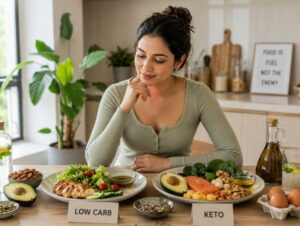
Going too low on carbs. Indian meals need some rice or roti for balance and satiety. Eliminate them completely, and you’ll feel deprived and eventually binge.
Ignoring hunger cues. If you’re genuinely hungry between planned meals, eat something small and protein-rich. Starving yourself backfires.
Skipping water. Already covered this, but it bears repeating. Hydrate.
Copying someone else’s plan. What worked for your friend might not work for you. Personalization isn’t optional—it’s essential.
Making It Work in Real Life
Theory is great. Application is where things get messy.
You’ve got work deadlines, family dinners, festivals, social obligations. How do you stick to a diet plan when life happens? Preparation and flexibility. Cook proteins in batches. Keep healthy snacks accessible. Learn to make smart choices at restaurants. Don’t aim for perfection—aim for consistency.
Most importantly, work with someone who understands these challenges. Professional nutritionist guidance helps you navigate the challenging journey between starting enthusiastically and reaching your goals.
Bottom Line
A high-protein Indian diet for weight loss isn’t about deprivation or eating food that tastes like cardboard. It’s about working smarter with the foods you already love, structuring your meals strategically, and getting personalized guidance that accounts for your unique needs.
Multiple meals throughout the day. Proper hydration. Tailored portions. Long-term support. These aren’t revolutionary concepts, but together they create sustainable results. Check out Anupama Menon’s programs if you’re ready for an approach that actually fits your life—and your palate.
Because honestly? Weight loss should feel doable, not miserable. And with the right plan, it absolutely can.
Frequently Asked Questions
Can I lose weight eating Indian food?
absolutely! Indian cuisine offers plenty of high-protein options like dal, paneer, eggs, and lean meats. The key is balancing your meals properly and controlling portions rather than eliminating foods you love.
How many meals should I eat per day for weight loss?
Multiple smaller meals throughout the day help maintain steady metabolism and prevent extreme hunger. This typically includes breakfast, lunch, dinner, and healthy snacks in between.
Do I need to count calories on a high-protein diet?
Not necessarily. Portion control based on your individual needs is often more sustainable and less stressful than obsessive calorie counting. Personalized guidance helps determine the right portions for your body.
What are the best protein sources for vegetarians?
Indian vegetarians have excellent options including various dals, paneer, Greek yogurt, tofu, nuts, seeds, and sprouted grains. These provide complete nutrition when combined properly, making it easy to build a high protein weight loss diet around familiar, everyday foods.
How important is hydration for weight loss?
Extremely important. Proper hydration supports protein metabolism, reduces false hunger signals, and helps your body function optimally during weight loss. Aim to drink water consistently throughout the day.
Why do quick weight loss diets fail?
Rapid weight loss plans are rarely sustainable. They often lead to muscle loss, nutritional deficiencies, and eventual weight regain. Long-term programs with professional support create lasting habit changes that maintain results.
Not sure where to start?
Take the 7 day Nutri Trial and see what a plan built around your own kitchen actually feels like.
Start your trial