
- Who Actually Needs 1500 Calories?
- The Macro Breakdown That Actually Matters
- Breaking Down Your Day
- Why You Actually Need a Dietitian
- The Mistakes Everyone Makes
- What Your Plate Should Actually Include
- Frequently Asked Questions
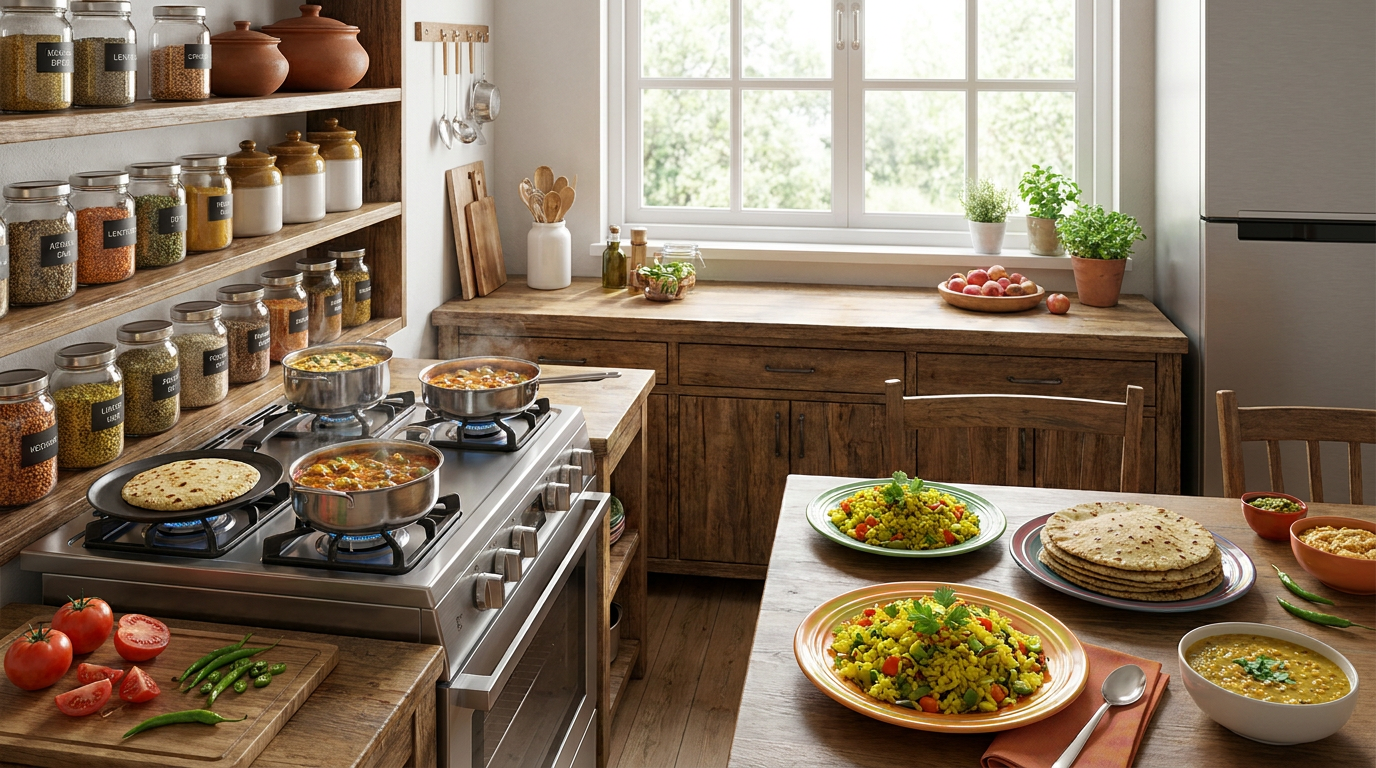
Scrolling through Instagram, you’ve probably seen those perfectly portioned meal prep containers promising weight loss on 1500 calories a day. Dal, roti, sabzi—all measured out. Looks simple enough, right? But here’s what nobody tells you: what works for your colleague or that influencer might actually backfire for your body. Before you jump on the 1500 calorie Indian diet plan bandwagon, let’s talk about whether it’s actually suited for you. Because honestly? Cookie-cutter diets rarely work long-term.
Who Actually Needs 1500 Calories?
Not everyone. That’s the short answer.
A 1500 calorie plan typically suits moderately active or sedentary women, older adults, and people with smaller body frames. According to Qua Nutrition, your caloric needs vary wildly based on age, gender, metabolic rate, and how much you actually move throughout the day. If you’re someone who hits the gym five days a week, 1500 calories will leave you dragging. Same goes if you’re constantly on your feet at work.
Your body burns a certain number of calories just existing—that’s your Total Daily Energy Expenditure (TDEE). Eating below that creates a deficit, which theoretically leads to weight loss. But go too low? Your metabolism can slow down, you’ll lose muscle instead of fat, and you’ll be cranky all the time. Nobody wants that.
The Macro Breakdown That Actually Matters
So you’ve decided 1500 calories might work. Great. But how should those calories break down?
Most experts suggest a balance of 50% carbohydrates (about 750 calories), 25% protein (375 calories), and 25% fats (375 calories) for a standard Indian diet plan. If you’re following South Indian cuisine specifically, Dr Oracle recommends tweaking that to 55-60% carbs, 15-20% protein, and no more than 30% fats.
Why does this matter? Because typical South Indian diets clock in at just 6-8% protein—way below what you need for muscle retention and fat loss. If you’re eating mostly idli, dosa, and rice without enough protein, you’ll end up losing muscle mass along with fat. Not ideal.
Breaking Down Your Day
Here’s roughly how your 1500 calories could look:
- Early morning: Warm lemon water with 4-5 almonds (50-100 cal)
- Breakfast: Vegetable poha or moong dal cheela (300-350 cal)
- Lunch: 2 whole wheat rotis with paneer bhurji and curd (400-450 cal)
- Snack: Roasted makhana or sprouted moong (150-200 cal)
- Dinner: 1 millet roti with palak paneer (350-400 cal)
- Post-dinner: Turmeric milk (50-100 cal)
Why You Actually Need a Dietitian
Look, I get it. Hiring a certified dietitian feels like an extra expense when free meal plans are everywhere online. But generic plans don’t account for your thyroid condition, your PMOS, your crazy work schedule, or the fact that you’re vegetarian with specific preferences.
A qualified professional calculates your actual TDEE instead of guessing. They factor in your activity level, your health conditions, and your food preferences. As Oliva Clinic points out, consulting a nutritionist before starting any calorie-restricted diet is vital to avoid nutritional deficiencies and ensure sustainable results.
Plus, they’ll tell you if 1500 calories is actually too low for you. Maybe you need 1800. Maybe you need 1300. You won’t know without proper assessment.
The Mistakes Everyone Makes
Based on what Netmeds research shows, here’s where most people screw up their 1500 calorie plan:
Skipping meals: Think you’ll create a bigger deficit by skipping lunch? Nope. Your metabolism slows down, and you’ll probably binge later. Eat smaller, frequent meals instead.
Too little protein: If your plan gives you only 50-60g protein daily, that’s barely enough. You need protein to maintain muscle while losing fat. Add more dal, legumes, paneer, or Greek yogurt.
Refined carbs everywhere: White rice, maida parathas, and sugary chai add up fast without keeping you full. Switch to whole grains like brown rice, millet, or whole wheat.
What Your Plate Should Actually Include
Forget restriction. Think nutrient density.
Your 1500 calorie Indian diet plan should include 7-8 servings of legumes per week—that’s your dal, rajma, chole, and other pulses. These give you protein, fiber, and keep you satisfied. Add leafy greens, colorful vegetables, whole grains, and healthy fats from nuts, seeds, and ghee in moderation.
Don’t forget dairy or alternatives. Low-fat paneer, curd, and milk provide calcium and protein. If you’re lactose intolerant, fortified plant-based options work too.
Before You Start Tomorrow Morning
Bottom line? A 1500 calorie Indian diet plan can work—but only if it’s right for YOUR body. Not your friend’s body. Not some influencer’s body. Yours.
Calculate your TDEE. Be honest about your activity level. Factor in any health conditions. And seriously, book that consultation with a certified dietitian. They’ll create a plan that fits your life instead of forcing you into a rigid template that leaves you hungry and frustrated by week two.
Weight loss shouldn’t feel like punishment. With the right approach and professional guidance, you can lose weight eating foods you actually enjoy—roti, dal, sabzi and all. Just make sure those 1500 calories are working for you, not against you.
Frequently Asked Questions Is 1500 calories enough for weight loss?
Is 1500 calories enough for weight loss?
For many women and sedentary individuals, a 1500 calorie Indian diet plan creates a sufficient deficit for weight loss. However, active individuals or those with higher metabolic rates may need more calories. Always consult a certified dietitian to determine your specific needs.
Can I follow a 1500 calorie diet without professional guidance?
While possible, it’s not recommended. A certified dietitian ensures your plan meets your nutritional needs, accounts for health conditions, and prevents deficiencies. Professional guidance significantly increases your chances of sustainable success.
How much protein should I eat on a 1500 calorie plan?
Aim for 15-20% of your calories from protein, which equals approximately 56-75 grams daily. Include dal, legumes, paneer, curd, and plant-based proteins throughout the day to maintain muscle mass during weight loss.
Will I feel hungry on 1500 calories?
Not if you eat the right foods. Focus on high-fiber options like whole grains, legumes, and vegetables that keep you full longer. Eating smaller, frequent meals throughout the day also helps manage hunger effectively.
How long should I follow a 1500 calorie diet?
This depends on your goals and body’s response. Some follow it for weeks, others for months. Regular monitoring with a dietitian ensures you adjust the plan as needed and transition to maintenance calories once you reach your goal weight.
How do age and activity level change how many calories should a woman eat per day?
Calorie needs generally decrease with age and increase with higher activity levels. For example, a sedentary woman aged 31–50 may need around 1,800 calories, whereas an active woman of the same age may require 2,200 calories or more to maintain energy balance and metabolic health.
Not sure where to start?
Take the 7 day Nutri Trial and see what a plan built around your own kitchen actually feels like.
Start your trial