
- Why Your “Just Eat More” Strategy Keeps Failing
- Step One: The Actual Assessment Process
- Creating Your Personalized Meal Frequency Blueprint
- The Calorie-Dense Food Strategy
- Liquid Calories: Your Secret Weapon
- The Protein and Strength Training Connection
- Avoiding the Refeeding Syndrome Trap
- Tracking and Adjusting Your Roadmap
- Making It Actually Sustainable
- Frequently Asked Questions
You eat constantly. You’ve tried protein shakes, late-night snacks, eating until you’re uncomfortably full. And still—the scale barely budges. Here’s what most people don’t get about weight gain: it’s not about eating more random calories. It’s about creating a strategic roadmap tailored to YOUR body. That’s where a dietitian for weight gain becomes game-changing.
Let me walk you through exactly how dietitians build personalized weight gain plans that actually work.
Why Your “Just Eat More” Strategy Keeps Failing
Your fast metabolism isn’t a curse. It’s just misunderstood.
Most underweight people make the same mistake—they load up on bigger meals thinking that’ll solve everything. But your digestive system has limits. Eating a massive dinner when you normally eat small portions? That’s asking for nausea, bloating, and eventually giving up. A dietitian starts differently. They calculate your baseline metabolic rate first, then add calories gradually. According to Medical News Today, adults should add 300-500 extra calories daily for healthy weight gain—not 1,000 overnight.
Step One: The Actual Assessment Process
Real talk—dietitians don’t guess. They measure.
Your first consultation involves calculating your BMR (basal metabolic rate) and activity level. Think of it like getting your car’s fuel efficiency tested before planning a road trip. If you burn 2,200 calories daily just existing, eating 2,100 won’t cut it. Dietitians typically aim for a 300-500 calorie surplus to start. Gentle enough to avoid digestive distress, significant enough to see results.
They’ll also check your eating patterns. Do you skip breakfast? Drink water during meals? These habits matter more than you’d think.
What About Fast Metabolism?
It’s not magic. Your body just processes energy efficiently.
A dietitian factors this into your calorie target. Someone with a naturally high metabolic rate might need 400-600 extra calories instead of 300. The key? Tracking for 2-3 weeks to see what actually moves the needle for YOUR body.
Creating Your Personalized Meal Frequency Blueprint
Forget three meals a day. That won’t work here.
Dietitians recommend eating every 2-4 hours—that’s typically three meals plus 2-3 substantial snacks. Abbey’s Kitchen calls this “mechanical eating,” and it’s brilliant for people with blunted hunger cues. You’re not waiting to feel hungry (that signal might be broken). You’re feeding your body on a schedule.
Set alarms if you need to. Seriously.
- 7am: Breakfast
- 10am: Mid-morning snack
- 1pm: Lunch
- 4pm: Afternoon snack
- 7pm: Dinner
- 9pm: Evening snack (optional but effective)
This routine retrains your hunger signals. Abbey Sharp, RD, explains that “by feeding your body regularly and routinely, you start to actually feel hunger” again.
The Calorie-Dense Food Strategy
Not all calories are created equal. Some take up way less stomach space.
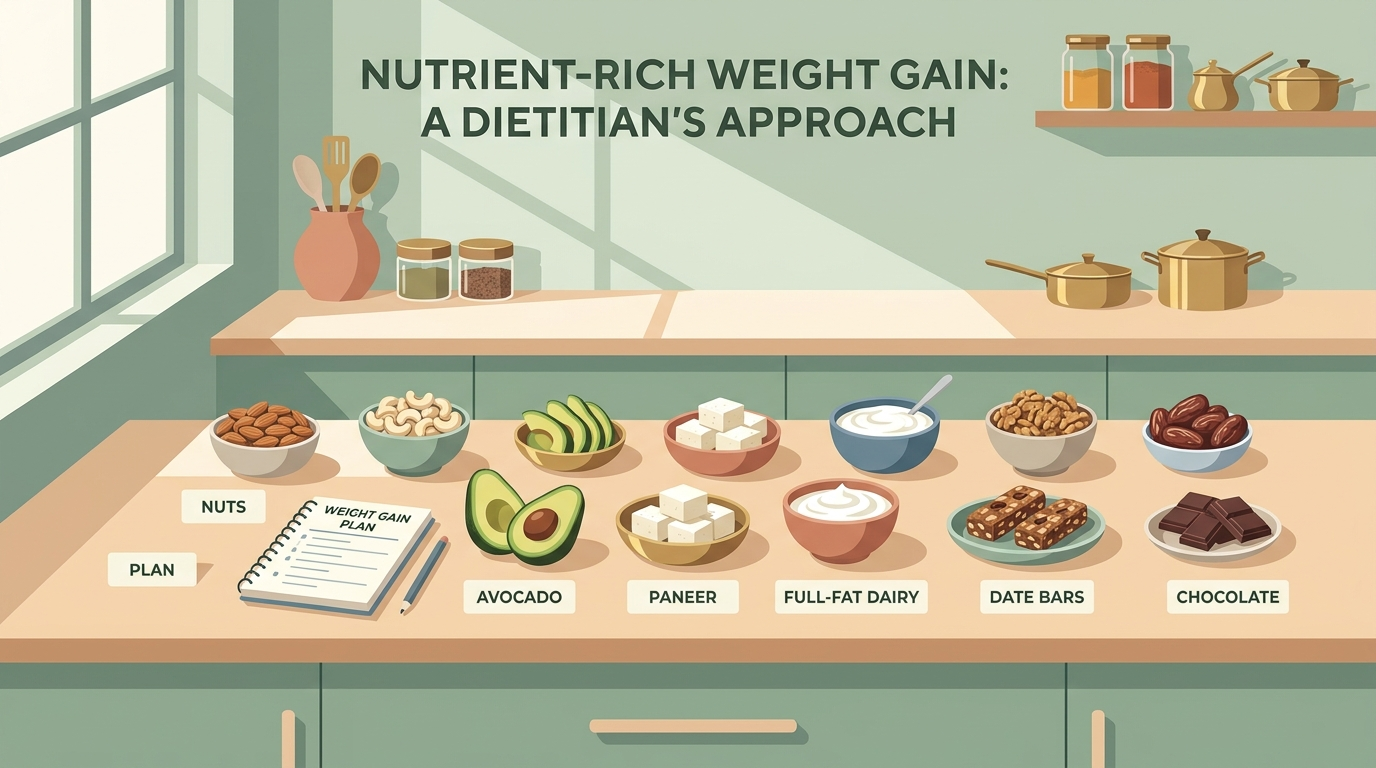
A dietitian for weight gain focuses on nutrient-dense, high-calorie foods that don’t leave you feeling stuffed and miserable. We’re talking nuts (almonds pack 600+ calories per 100g), avocados, full-fat dairy, oils, dried fruits, and nut butters. Add two tablespoons of almond butter to your morning toast? That’s 190 extra calories without increasing volume much.
Here’s the smart approach: add calorie boosters to foods you already eat. Sprinkle cheese on vegetables. Cook with olive oil or ghee instead of cooking spray. Mix powdered milk into regular milk for smoothies. Add tahini to hummus. Small tweaks, big calorie gains.
Liquid Calories: Your Secret Weapon
Drinking calories between meals is genius for low-appetite situations.
Smoothies don’t trigger fullness the same way solid food does. A properly designed weight gain smoothie—full-fat yogurt, banana, almond butter, oats, whole milk, dates—can deliver 500+ calories in one glass. Mayo Clinic experts recommend drinking high-calorie beverages between meals, not during them (liquids fill you up before you finish eating).
Just don’t replace meals with shakes. They’re supplements to your eating routine, not substitutes.
The Protein and Strength Training Connection
Want to gain muscle instead of just fat? This part matters.
The FDA recommends 50g protein daily for a standard 2,000-calorie diet, but dietitians often push higher for weight gain clients—especially those doing resistance training. Focus on protein-rich plant foods like lentils, chickpeas, paneer, Greek yogurt, and quinoa. Strength training 3x weekly signals your body to build muscle with those extra calories. According to Mayo Clinic, “exercise, especially strength training, can help you gain weight by building up your muscles.”
Plus, exercise actually stimulates appetite. Win-win.
Avoiding the Refeeding Syndrome Trap
Fair warning: increasing calories too fast can be dangerous.
If you’ve been restricting food or are severely underweight, refeeding syndrome is a real risk. Abbey Sharp warns that “introducing too many calories too quickly can put you at risk for refeeding syndrome”—a dangerous electrolyte imbalance. This is especially crucial for people recovering from eating disorders.
A qualified dietitian knows how to increase your intake gradually and safely. They monitor your progress and adjust based on how your body responds. DIY-ing this part? Not worth the risk.
Tracking and Adjusting Your Roadmap
Your plan isn’t set in stone. It evolves.
Dietitians typically have you track intake for 2-3 weeks initially. Not forever—just long enough to establish baselines and spot patterns. Maybe you’re consistently under target on weekends. Maybe certain foods cause digestive issues. These insights shape your adjustments. The goal is steady gain—about 0.5-1 pound weekly. Faster than that and you’re likely gaining more fat than muscle.
Making It Actually Sustainable
Meal prep becomes your best friend here.
Cook extra portions and freeze them. Keep pre-portioned snacks visible and accessible. Stock up on shelf-stable calorie boosters like nuts, granola, dried fruit, and trail mix. The easier you make it to eat consistently, the more likely you’ll stick with it. Nobody gains weight by being perfect for two weeks then burning out.
Bottom line? A dietitian for weight gain doesn’t just hand you a generic meal plan. They build a personalized roadmap based on your metabolism, lifestyle, appetite patterns, and health history. They adjust it as you progress. And they keep you safe while your body adapts to increased energy intake.
Frequently Asked Questions
How long does it take to see results with a dietitian for weight gain?
Most people start seeing noticeable weight gain within 2-4 weeks when following a personalized plan from a dietitian. Healthy weight gain typically ranges from 0.5-1 pound per week, though results vary based on individual metabolism and consistency.
Do I need to eat unhealthy foods to gain weight?
Absolutely not. A qualified dietitian for weight gain focuses on nutrient-dense, calorie-rich whole foods like nuts, avocados, whole grains, dairy products, and healthy oils. The goal is healthy weight gain, not just adding empty calories.
Can I gain weight without exercising?
Yes, but combining your nutrition plan with strength training helps ensure you’re building muscle rather than just adding fat. Exercise also naturally stimulates appetite, making it easier to consume the extra calories you need.
How much does working with a dietitian for weight gain cost?
Costs vary by location and provider, but initial consultations typically range from $100-$200, with follow-up sessions costing $75-$150. Many insurance plans cover nutrition counseling when medically necessary. At Anupama, we offer personalized weight gain programs tailored to your specific needs and budget.
What’s the difference between a dietitian and a nutritionist for weight gain?
Dietitians are registered healthcare professionals with specific credentials (RD or RDN) and clinical training. They can diagnose conditions, create medical nutrition therapy plans, and work with complex health issues. This expertise is crucial for safe, effective weight gain strategies.
Will I need to track calories forever?
No. Initial tracking (2-3 weeks) helps establish patterns and ensure you’re meeting targets. Once you’ve reached your goal weight and developed consistent eating habits, most people can maintain their weight without detailed tracking.
If you’ve been struggling to gain weight despite trying everything, working with a professional dietitian for weight gain might be exactly what your body needs. Because you deserve a strategy that actually works—not just another round of force-feeding yourself into misery.
Not sure where to start?
Take the 7 day Nutri Trial and see what a plan built around your own kitchen actually feels like.
Start your trial