
- Why Indian Food Can Actually Work for Diabetes
- What to Load Your Plate With: The Good Stuff
- Foods to Dodge (Or Seriously Limit)
- The Fruit Question Everyone Asks
- Perfect Diabetic Dinner Indian Options (Vegetarian)
- Building Your 7 Day Diet Plan for Diabetic Patients
- Restaurant Survival Guide
- Frequently Asked Questions
Managing diabetes doesn’t mean you need to give up Indian food. Not even close. The thing is, Indian cuisine actually offers some of the most diabetes-friendly options if you know what to pick and how to balance your plate. From fiber-rich millets to protein-packed dals, the traditional Indian kitchen has tools your grandparents used long before modern medicine came along.
But here’s where most people mess up: they assume all rice is bad, all rotis are good, and sweets are completely off the table. Reality? It’s way more nuanced than that. Whether you’re looking for a 7 day diet plan for diabetic patients or just trying to figure out what to order at your next family dinner, this guide breaks down exactly what works, what doesn’t, and the science behind it.
Why Indian Food Can Actually Work for Diabetes
Let’s be real—Indian food gets a bad rap in diabetes circles. Too many carbs, too much oil, too spicy (okay, that last one’s not really a problem). But according to nutrition experts at Manipal Hospitals, when you choose fiber-rich vegetables, lentils, beans, lean proteins, and whole grains while limiting fried foods and refined carbs, Indian cuisine fits beautifully into a diabetes-friendly plan.
The secret? Understanding glycemic index (GI)—basically how fast a food spikes your blood sugar. Research from Paras Hospitals shows that low GI Indian foods like millets, whole wheat roti, and lentils release sugar slowly into your bloodstream, preventing those scary spikes that make your doctor frown at your test results.
What to Load Your Plate With: The Good Stuff
Whole Grains That Won’t Spike You
Forget everything you’ve heard about carbs being the enemy. You need them. Just pick the right ones.
- Millets (ragi, jowar, bajra): These traditional grains are having a moment, and for good reason. Higher fiber, lower GI than white rice.
- Brown rice: Yes, rice can stay in your life. Just switch to brown or parboiled versions in controlled portions.
- Whole wheat roti: Your chapati habit is safe. Stick to multigrain or whole wheat versions.
- Oats and quinoa: Perfect for upma or breakfast bowls.
Protein: Your Blood Sugar’s Best Friend
Protein slows down glucose absorption. Simple as that. Experts recommend including protein in every single meal—not just dinner.
- Dals and lentils: Moong dal, masoor dal, chana, rajma. These are non-negotiable in any 7 day diet plan for diabetic patients.
- Paneer and low-fat curd: Great for vegetarians, just watch the portions.
- Sprouts: Cheap, easy, ridiculously healthy. Make them your go-to snack.
- Tofu and soya chunks: Excellent plant-based protein sources for vegetarian meals.
Vegetables: Half Your Plate, Every Meal
This is where you can basically go wild. Non-starchy vegetables should cover half your plate using the plate method that Nanavati Max Hospital recommends.
Load up on: spinach, methi (fenugreek leaves), bottle gourd (lauki), bitter gourd (karela), cabbage, cauliflower, okra (bhindi), beans, broccoli, bell peppers. The green and leafy stuff is your insurance policy against blood sugar chaos.
Foods to Dodge (Or Seriously Limit)
Here’s where it gets tough. Some of your favorites need to move to the “special occasions only” category.
The White Stuff
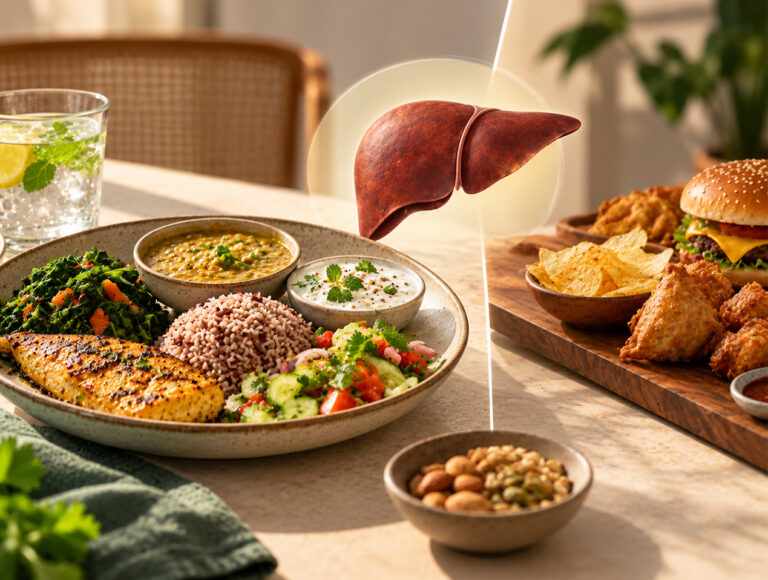
White rice, maida (refined flour), bakery items, white bread—these are glycemic bombs. Clinical guidance from Rotunda Hospital specifically warns against naan, paratha, and white rice because they release glucose way too fast.
That doesn’t mean zero rice forever. But if you’re building a 7 day diet plan for diabetic patients, limit white rice to small portions (about 1.5-2 cups cooked) mixed with dal and veggies, or switch to brown rice and basmati.
The Sweet Trap
Indian sweets are basically concentrated sugar with ghee. Jalebi, gulab jamun, laddoos, barfi—these aren’t doing you any favors. Same goes for sweetened tea, fruit juices (yes, even “fresh” ones), and those “sugar-free” sweets that still spike your glucose.
Honestly? Save them for Diwali. Like, actual Diwali. Not every weekend.
Deep-Fried Everything
Samosas, pakoras, puris, chips, namkeen—anything swimming in oil needs to exit your regular rotation. According to Manipal’s nutritionists, these combine refined carbs with excess fat, creating a perfect storm for blood sugar spikes and weight gain.
The Fruit Question Everyone Asks
Can diabetics eat fruit? Yes. Should you drink fruit juice? Absolutely not.
Stick to whole fruits with lower GI: apple, guava, papaya, pear, oranges, berries. Even traditional favorites like jamun and amla work great. But keep portions small—think one small fruit at a time, preferably with some protein or nuts to slow absorption.
Avoid or seriously limit: mango (I know, it hurts), banana, chikoo, grapes, and any fruit that comes in liquid form. Research shows that fiber in whole fruit slows sugar release; juice removes that protection.
Perfect Diabetic Dinner Indian Options (Vegetarian)
Planning a diabetic dinner Indian style doesn’t have to be complicated. Focus on these vegetarian combinations that keep blood sugar stable:
- Dal-roti combo: Two multigrain rotis with moong dal tadka and cucumber raita
- Sabzi bowl: Mixed vegetable curry (cauliflower, beans, carrots) with small portion brown rice and dal
- Paneer special: Grilled paneer tikka with sautéed spinach and one whole wheat roti
- Soup and salad: Thick mixed vegetable soup with sprouts salad and roasted chana
- South Indian light: Ragi dosa or idli with sambar loaded with vegetables
The key to a successful diabetic dinner Indian meal? Eat early (before 8 PM), keep portions moderate, and always pair carbs with protein and fiber.
Building Your 7 Day Diet Plan for Diabetic Patients
Theory is great. But what does an actual day look like?
Early morning (7 AM): Methi water or plain water with soaked almonds.
Breakfast (8-9 AM): Vegetable oats upma OR moong dal chilla with mint chutney OR ragi dosa with sambar. Pair with unsweetened tea.
Mid-morning (11 AM): Small apple or guava with a handful of nuts.
Lunch (1-2 PM): Two multigrain rotis OR small portion brown rice + dal (any variety) + mixed vegetable sabzi + salad + curd. This hits the plate method perfectly: half veggies, quarter grains, quarter protein.
Evening snack (4-5 PM): Sprouts chaat OR roasted chana OR roasted makhana OR vegetable soup.
Dinner (7-8 PM): Light diabetic dinner Indian options like roti with dal and sabzi, or brown rice with grilled paneer and vegetables.
Repeat this pattern across seven days, mixing up your vegetables, dals, and protein sources. Hospital nutrition plans emphasize regular meal timing—don’t skip meals or leave huge gaps between eating.
Restaurant Survival Guide
Eating out doesn’t have to derail everything. Studies on Indian restaurant food show you can make smart choices if you know the tricks.
Order: dal tadka, mixed vegetable curry, palak paneer (ask for less cream), small portion basmati rice, plain roti instead of naan, raita, salad.
Skip: anything “malai,” “makhani,” or deep-fried. Ask them to go easy on oil. Most restaurants will accommodate if you actually ask.
Why This Matters More Than You Think
Look, managing diabetes isn’t just about avoiding sugar highs. Clinical data shows that a proper Indian diabetic diet with 25-35 grams of fiber daily, balanced macros, and regular meal timing can significantly improve HbA1c levels and reduce medication dependency over time.
That’s the real goal. Not just surviving on boiled food. Actually enjoying your meals while keeping your blood sugar stable.
Bottom Line: Make It Sustainable
You’re not going to eat perfectly every single day. That’s not the point. The point is building a 7 day diet plan for diabetic patients that you can actually stick with for months and years, not just until your next doctor’s appointment.
Focus on the plate method, choose whole grains over refined ones, load up on vegetables and dal, watch your portions, and save the fried and sweet stuff for genuine celebrations. Your blood sugar—and honestly, your taste buds—will adjust faster than you think.
Indian food and diabetes can absolutely coexist. You just need to know which friends to invite to the table.
Frequently Asked Questions
What is the best Indian breakfast for diabetics?
Vegetable oats upma, moong dal chilla, ragi dosa with sambar, or besan cheela are excellent choices. Pair with unsweetened tea or black coffee and avoid fruit juices.
Can diabetics eat rice in their 7 day diet plan?
Yes, but choose brown rice, parboiled rice, or basmati in small portions (1.5-2 cups cooked). Always combine with dal and vegetables to lower the overall glycemic impact.
What are the best vegetarian diabetic dinner Indian options?
Dal-roti combinations, mixed vegetable curry with brown rice, grilled paneer with sautéed vegetables, ragi dosa with sambar, or vegetable soup with sprouts salad work perfectly for a diabetic dinner Indian meal.
Is jaggery or honey safe for diabetics?
No. Despite being “natural,” both jaggery and honey spike blood sugar similarly to regular sugar. Avoid them in your daily diet.
How much dal should diabetics eat daily?
One to two servings (about 1 cup cooked) of dal or lentils daily is ideal. They provide protein, fiber, and help stabilize blood sugar when included in every major meal.
Can diabetics eat paneer regularly?
Yes, paneer is a good protein source for vegetarians. Stick to grilled or lightly cooked paneer (50-100g per meal) and avoid heavy cream-based preparations like paneer butter masala.
What vegetables should diabetics avoid?
Limit starchy vegetables like potatoes, sweet potatoes, and yams. Focus on non-starchy options like spinach, cauliflower, beans, okra, and bitter gourd instead.
Is roti better than rice for diabetics?
Whole wheat or multigrain roti generally has a lower glycemic index than white rice, making it a better choice. However, portion control matters more than the specific grain.
Not sure where to start?
Take the 7 day Nutri Trial and see what a plan built around your own kitchen actually feels like.
Start your trial