
Table of Contents
- Why Most High Protein Plans Fail Indians
- How Much Protein Do You Actually Need?
- Building Your Personalized High Protein Indian Diet
- What a Day Actually Looks Like
- The Vegetarian Protein Challenge (It’s Not That Hard)
- Where People Actually Mess Up
- Making It Work Long-Term
- Frequently Asked Questions
You’ve probably tried every diet out there. The keto craze, the intermittent fasting trend, maybe even that juice cleanse your friend swore by. But here’s what most people miss: a high protein Indian diet isn’t about following some cookie-cutter plan from the internet. It’s about understanding your body—your actual body type, your lifestyle, your grandmother’s dal recipe—and building something that works long-term.
Look, I get it. You’re tired of generic meal plans that don’t fit our Indian eating habits. The good news? You don’t have to abandon paneer tikka or moong dal chilla to hit your protein goals. You just need the right approach.
Why Most High Protein Plans Fail Indians
Thing is, most protein diet plans are designed for Western eating habits. They don’t account for our vegetarian preferences, our rice-based meals, or the fact that we actually enjoy our food. When a certified dietitian builds a high protein Indian diet for you, they’re looking at factors most generic plans completely ignore.
Your body type matters. An ectomorph who struggles to gain weight needs a different protein strategy than an endomorph trying to shed kilos. Your activity level—whether you’re hitting the gym five days a week or walking 30 minutes daily—changes your requirements dramatically. And your goals? Weight loss demands a different macro balance than muscle building.
According to Anupama Menon, balanced meals with smart portions and proper hydration form the foundation. But balanced doesn’t mean boring.
How Much Protein Do You Actually Need?
Here’s where science meets your kitchen. Most active adults need between 1.2 to 2.0 grams of protein per kilogram of body weight. So if you weigh 70 kg and you’re moderately active, you’re looking at roughly 84-140 grams daily.
But don’t obsess over exact numbers right away.
Start by understanding what you’re currently eating. That dal tadka you love? About 20-25 grams of protein per cup. The paneer in your sabzi? Around 18 grams per 100 grams. A moong dal chilla packs roughly 15 grams of protein per serving. See? You’re probably getting more protein than you think—just not consistently.
Building Your Personalized High Protein Indian Diet
A certified dietitian doesn’t hand you a meal plan and wish you luck. They dig deeper. They’ll ask about your food preferences (paneer versus tofu), your cooking skills (are you making elaborate meals or need 15-minute options?), your budget (imported whey or local sources?), and any health conditions like PMOS or thyroid issues.
This personalization makes all the difference. Your coworker’s plan won’t work for you because you’re not your coworker.
What a Day Actually Looks Like
Let me break down a realistic high protein Indian diet structure:
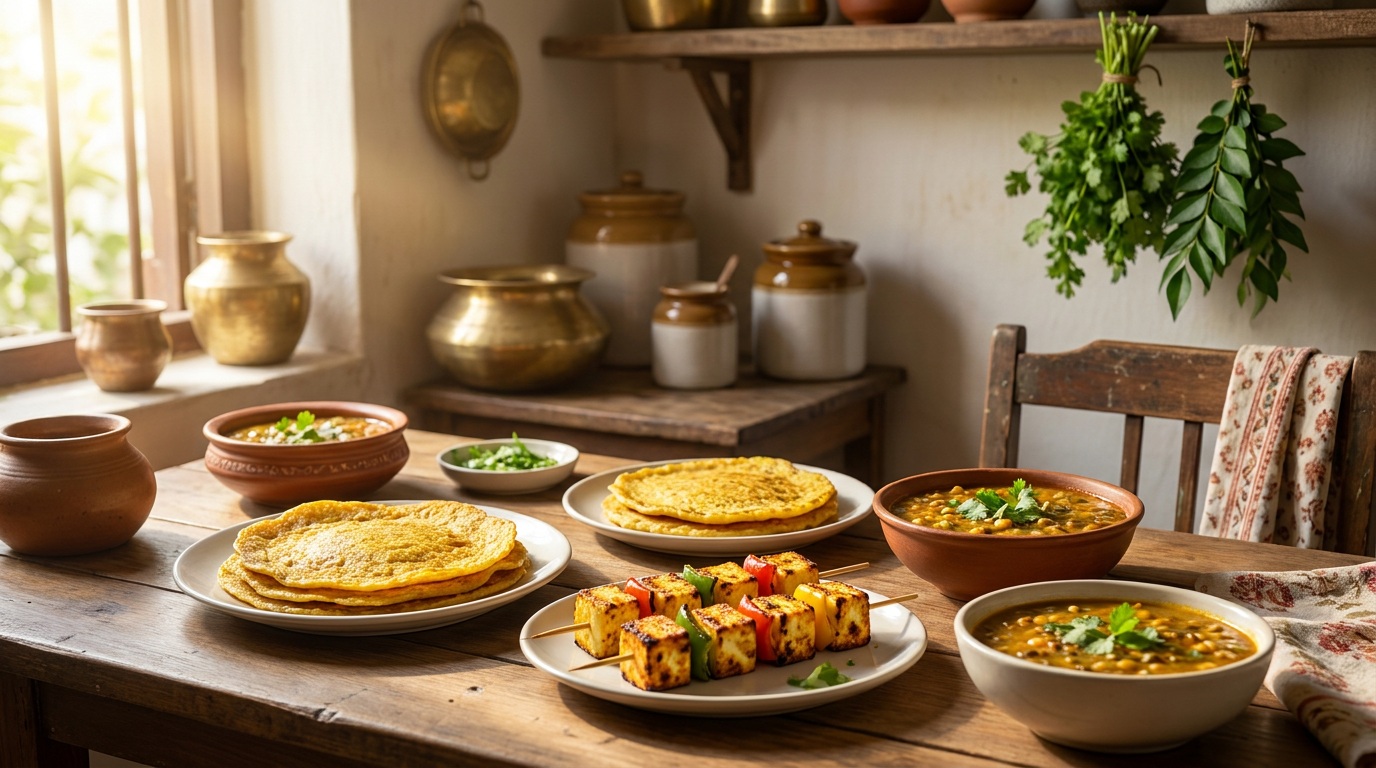
- Breakfast: Moong dal chilla with curd and a handful of almonds (30-35g protein)
- Mid-morning snack: Sprouts salad or Greek yogurt (8-10g protein)
- Lunch: Rajma curry with brown rice, roti, and a vegetable (25-30g protein)
- Evening snack: Roasted chana or paneer cubes (10-12g protein)
- Dinner: Tofu stir-fry with quinoa khichdi or dal palak (25-30g protein)
Total? Around 100-115 grams. And you ate actual Indian food. Nothing fancy. Nothing impossible to sustain.
The Vegetarian Protein Challenge (It’s Not That Hard)
Honestly, the biggest myth is that vegetarians can’t hit high protein targets. You absolutely can. It just requires more planning than most people realize.
Your protein arsenal includes dals (all varieties), chickpeas, soya chunks, paneer, tofu, Greek yogurt, nuts, seeds, and yes—protein supplements if needed. Mix and match throughout the day. Don’t rely on just paneer for every meal because you’ll get bored fast, and boredom kills consistency.
Where People Actually Mess Up
Want to know the real mistakes? Skipping carbs completely because you think high protein means zero carbs. It doesn’t. Your body needs carbs for energy, especially if you’re working out. The trick is choosing the right ones—brown rice over white, whole wheat roti, quinoa, oats.
Another issue? Not drinking enough water. Protein metabolism creates waste products your kidneys need to flush out. Eight glasses minimum. More if you’re sweating.
And here’s what drives me crazy: people ignoring sustainability. A diet plan you can follow for three weeks but abandon by week four is useless. The best high protein Indian diet is the one you’ll stick with for months, not days.
Making It Work Long-Term
Quick note: meal prep is your friend. Spend Sunday afternoon soaking sprouts, boiling eggs, grilling paneer. When hunger hits on Tuesday evening, you’ve got options ready. That’s when discipline becomes easy.
Plus, variety matters more than perfection. Rotate your proteins. Try besan chilla one week, protein paratha the next. Experiment with lentil soups, mixed dal, soya chunks masala. Your taste buds—and your commitment—will thank you.
Bottom Line
A high protein Indian diet isn’t about deprivation or eating like you’re training for the Olympics. It’s about smart choices, consistent portions, and understanding what your specific body needs. When you work with someone who knows how to customize these plans—taking your body type, your lifestyle, your actual preferences into account—you’re setting yourself up for real, sustainable results.
Not next month. Not after some magic transformation. But steady progress that lasts. And honestly? That’s the only kind worth pursuing.
Frequently Asked Questions
Can I get enough protein on a pure vegetarian high protein Indian diet?
Absolutely. Dals, paneer, tofu, soya chunks, Greek yogurt, nuts, seeds, and legumes provide ample protein. The key is combining different sources throughout the day to meet your daily requirements of 1.2-2.0 grams per kilogram of body weight.
How long does it take to see results on a high protein Indian diet?
Most people notice increased energy levels within 2-3 weeks. Visible changes in body composition typically appear after 4-6 weeks of consistent adherence, depending on your goals and activity level.
Do I need protein supplements or can I rely on whole foods?
Whole foods should be your primary source. However, protein supplements can be convenient for busy schedules or if you struggle to meet daily targets through food alone. A certified dietitian can assess your specific needs.
Will eating high protein cause kidney problems?
For healthy individuals, high protein intake is safe when accompanied by adequate hydration. If you have existing kidney conditions, consult your healthcare provider before making significant dietary changes.
How much does it cost to follow a high protein Indian diet?
It’s quite affordable. Dals, eggs, paneer, and soya chunks are economical protein sources. You don’t need expensive imported foods—traditional Indian ingredients work perfectly well for meeting your protein goals.
Not sure where to start?
Take the 7 day Nutri Trial and see what a plan built around your own kitchen actually feels like.
Start your trial