
Wedding season hits different when you’re the one with a slightly moody stomach. You know the drill. Five-course meals that start at 10 PM. Buffets stretching longer than the vows. Aunties watching your plate like hawks, ready to pile on another serving the moment you blink. And somewhere between the third gulab jamun and that second glass of wine, your gut starts sending you angry little signals.
Here’s the good news: you don’t have to pick between joining in and feeling decent the next morning. With some smart choices, a bit of planning, and knowing which healthy food for winter actually works for your system, you can show up to every sangeet and reception without that heavy, bloated regret. This guide pulls together what actually helps — before, during, and after the feast — so your gut stays on your side all season long.
Why Winter Weddings Are Especially Rough on Your Gut
Think about what a typical winter wedding looks like. Late dinners. Travel. Irregular sleep. Cold weather that makes you drink less water. Rich, fried, spicy foods layered one after another. Alcohol mixed with fizzy drinks. Long hours of standing or sitting without much movement.
Each of these alone can nudge your digestion off balance. Stack them together over three or four events in a week? Your gut’s basically running a marathon it didn’t sign up for.
The Gut Health Doctor points out that stress and sleep deprivation around wedding seasons can noticeably worsen symptoms, especially for anyone managing IBS. So it’s not just the food. It’s the whole package.
Eat Before You Eat (Seriously)
This is probably the most underrated move. Arriving at a wedding ravenous is a recipe for disaster. You’ll eat too fast, grab whatever’s closest, and overshoot your comfort zone before the main course even arrives.
Have something small and familiar about an hour before you leave. A bowl of curd rice. A few dates with nuts. Some fruit with yogurt. The goal isn’t to fill up — it’s to take the edge off so you can actually make choices at the venue instead of attacking the first chaat station you see.
This is especially useful if you’ve got a sensitive stomach or you know certain dishes don’t agree with you. A pre-event snack gives you permission to skip the risky stuff without feeling deprived.
Walk the Buffet Before You Fill Your Plate
Buffets are a trap if you don’t have a plan. Everything looks good when you’re hungry and holding an empty plate.
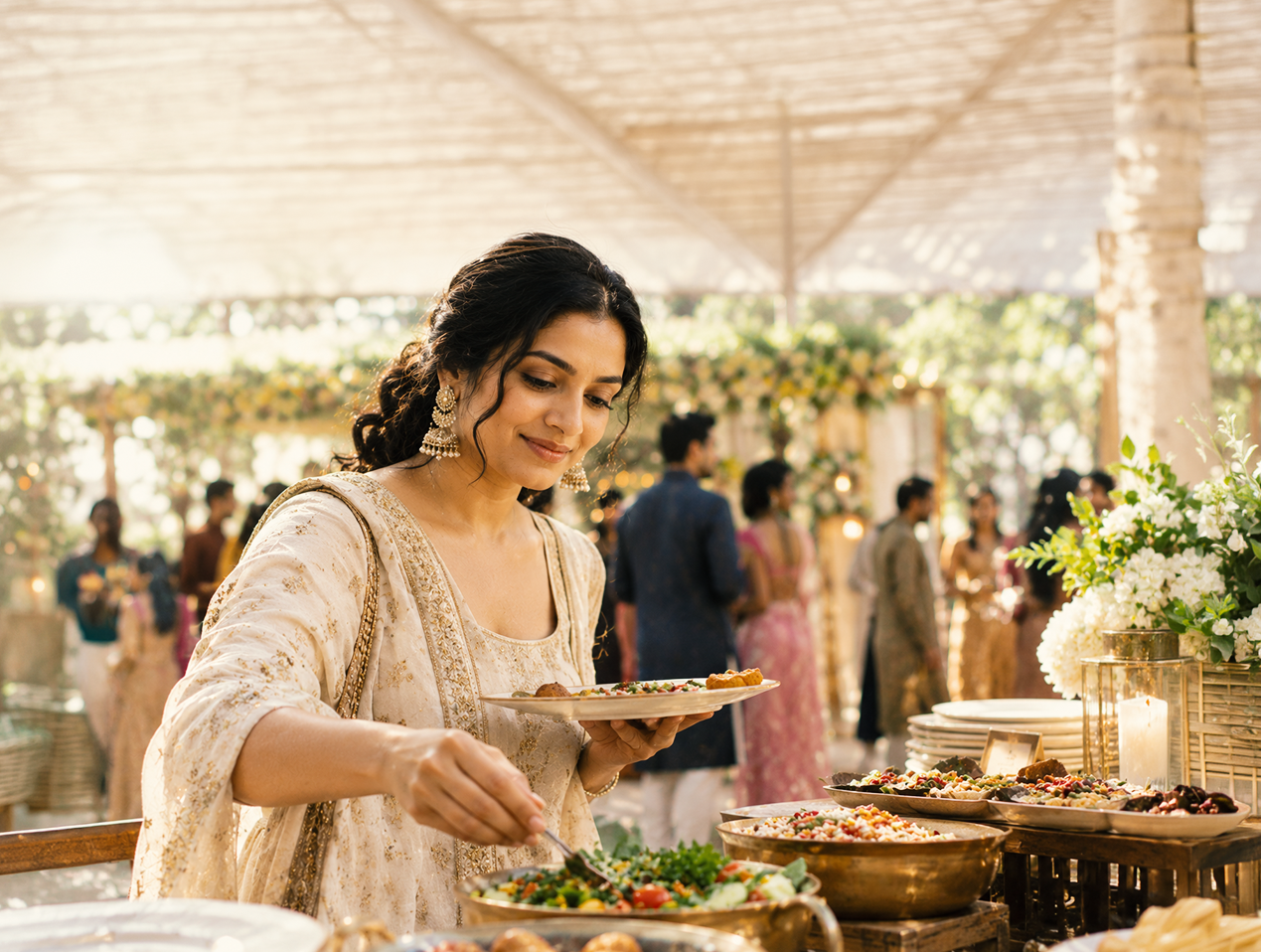
Do a lap first. Just scan. See what’s there. Then build a plate that actually makes sense for your body — some protein, a decent portion of vegetables, a moderate amount of carbs, and one or two of the indulgent things you really want to try. Not all of them. The ones you actually want.
The University of Alabama at Birmingham recommends slowing down and paying attention to fullness cues, which is hard to do when you’re piling eight different things onto one plate without thinking.
Smart Plate Combinations for Winter Feasts
- Grilled or tandoori proteins paired with sautéed greens or a salad
- Dal with a small portion of rice or roti, plus vegetables
- One fried item (because life’s short) balanced with lighter sides
- Curd or raita on the side — it helps with spice and adds a bit of probiotic support
- One dessert, eaten slowly, after a small pause
Slow Down — Your Stomach Needs a Minute
Your brain takes roughly 20 minutes to register that you’re full. Twenty. That’s a long time when you’re inhaling biryani while catching up with cousins you haven’t seen in years.
Put your fork down between bites. Actually taste the food. Talk, laugh, sip water. The slower you eat, the less likely you are to end up feeling like a stuffed samosa yourself.
This one habit alone cuts down bloating more than any fancy supplement will. Promise.
Hydration: The Boring Advice That Actually Works
Winter dehydration is sneaky. You don’t feel thirsty, so you drink less. Then you add alcohol, salty snacks, maybe some caffeine. By the end of the night, your gut is basically running on fumes.
Drink a glass of water before you leave home. Another when you arrive. Alternate every alcoholic drink with water — this one tip, backed by HealthCert Education, saves you from both digestive misery and the next-morning headache.
If you’re not into plain water, warm water with lemon, jeera water, or a mild herbal tea all count. Just skip the sugary mocktails pretending to be healthy.
What About Alcohol?
Real talk: alcohol and gut health don’t really mix. Excessive drinking can mess with your gut lining, inflame things, and shift the balance of good bacteria, as clinician-focused content from HealthCert notes.
Doesn’t mean you can’t drink. It means being thoughtful.
- Stick to one type of drink rather than mixing wine, spirits, and cocktails
- Avoid pairing alcohol with fizzy mixers if bloating is your issue
- Eat before and during drinking, not after
- Match each drink with a glass of water
- Know your limit and respect it, even if someone’s offering “just one more”
Fizzy Drinks and the Bloat Factor
Carbonated drinks are a common culprit people forget about. All those bubbles? They end up as gas in your stomach. If you’re already prone to bloating, soda and sparkling anything will make it worse.
Swap for still water, fresh lime without soda, or buttermilk. Buttermilk especially — it’s a traditional post-meal drink for a reason and genuinely helps digestion feel lighter.
Healthy Food for Winter That Keeps Your Gut Happy
Between events, what you eat on normal days matters just as much. Choosing healthy food for winter helps your system stay resilient so one rich meal doesn’t throw everything off.
Some of the most reliable options:
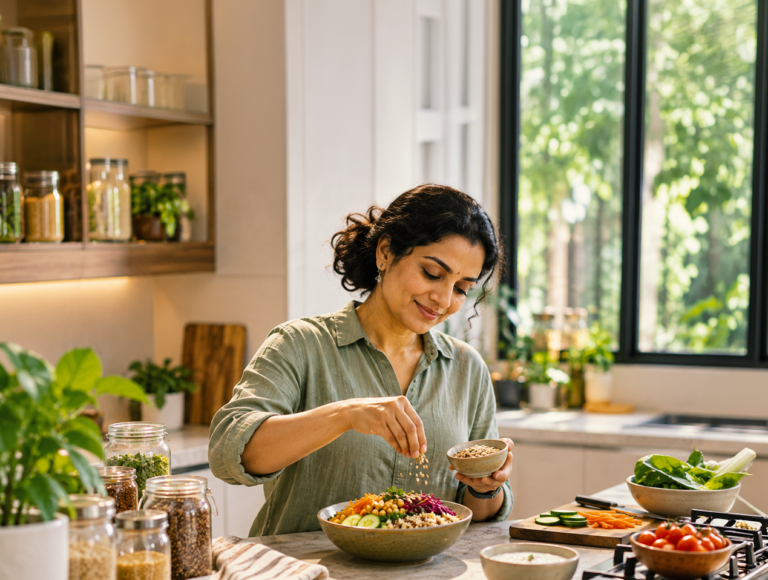
- Warm cooked vegetables — soups, stews, sabzis with seasonal produce like carrots, spinach, methi, and sweet potato
- Whole grains — millets, oats, brown rice, which give you fibre without being heavy
- Legumes and dals — great protein and fibre, assuming they agree with you
- Fermented foods — curd, kanji, idli batter, pickled vegetables in small amounts for natural probiotic support
- Seasonal fruits — oranges, guavas, pomegranates, apples
- Nuts and seeds — a handful a day for healthy fats and fibre
- Ginger, turmeric, cinnamon — warming spices that aid digestion naturally
Think of these as your baseline. When you build your everyday meals around this kind of healthy food for winter, your gut has the buffer it needs to handle an occasional indulgent night.
Move. Even a Little.
After a big meal, your instinct might be to flop onto a couch. Resist it, especially if you’re prone to reflux. Lying down right after eating makes acid reflux way worse and slows digestion.
A short walk — even ten minutes around the venue — helps move things along. UAB Medicine specifically recommends gentle post-meal movement as a simple way to reduce bloating and support digestion.
No need to do laps. Just don’t go horizontal immediately.
Managing IBS, Reflux, and Sensitive Stomachs at Weddings
If you’ve got a diagnosed condition, the usual advice needs some tweaks.
For IBS: identify your main triggers ahead of time. Keep safe snacks in your bag. Don’t test a new fermented food or supplement on an event day — that’s not the moment to experiment.
For reflux: avoid very spicy or fatty dishes, go easy on tomato-based gravies, skip the late-night coffee, and don’t lie down for at least two hours after eating.
For lactose intolerance: scan paneer-heavy dishes, creamy curries, and milk-based sweets. Have a plan B. A small enzyme tablet (if your doctor’s okayed it) can help with accidental exposure.
The point isn’t to white-knuckle through the evening. It’s to go in prepared so you can enjoy yourself.
Probiotics Aren’t a Magic Fix
Quick myth-buster. A probiotic drink or capsule right before a feast won’t cancel out overeating. Probiotics work over time, depend on specific strains, and affect everyone differently. Healthline notes that while probiotics, prebiotics, and postbiotics all have roles to play, none are instant solutions.
Include fermented foods regularly as part of your diet. Don’t treat them as a one-night insurance policy.
The Morning After: Skip the Detox Nonsense
You overate. It happens. Please don’t follow it with a 24-hour fast, lemon-cayenne cleanse, or three laxatives.
Your body knows what to do. Give it the basics:
- Warm water or herbal tea to start the day
- A light, fibre-rich breakfast — maybe oats with fruit, or khichdi
- Normal lunch and dinner, just lighter in portion
- Plenty of water
- A walk or gentle movement
- An early night if possible
That’s it. One heavy meal doesn’t wreck your gut microbiome permanently. Consistency over weeks matters way more than any single evening.
When Discomfort Becomes a Red Flag
Most post-feast discomfort passes within a day. But some symptoms deserve a doctor’s attention, not a home remedy.
Seek medical care if you experience severe or persistent abdominal pain, vomiting that won’t stop, blood in your stool or black tarry stools, trouble swallowing, unexplained weight loss, or diarrhoea lasting more than a couple of days. These aren’t “just indigestion” and shouldn’t be ignored because you were at a wedding.
Conclusion
Winter wedding season doesn’t have to end with your gut filing a complaint. Eat something small before you go. Walk the buffet before you serve yourself. Chew slowly, drink water between everything, and treat alcohol with a bit of respect. Build your regular days around healthy food for winter — warm vegetables, whole grains, dals, ferments, seasonal fruit — so your body has the resilience to handle the indulgent evenings without drama.
And ditch the guilt. One rich meal isn’t ruining anything. What matters is how you treat your gut across the whole season, not during three hours at a reception.
If you’re dealing with persistent symptoms or want a plan built around your specific body and conditions, the team at Anupama can help you work out a sustainable, non-restrictive approach — one that fits real life, including the wedding invitations stacking up on your fridge. Enjoy the feast. Your gut will thank you for the little things you did around it.
Frequently Asked Questions
What should I eat before attending a winter wedding?
Have a light, familiar snack about an hour before the event. Good options include curd rice, a few dates with nuts, fruit with yogurt, or a small bowl of khichdi. This prevents you from arriving too hungry and helps you make better food choices at the buffet.
How can I avoid bloating at wedding feasts?
Eat slowly, chew thoroughly, and avoid carbonated drinks. Walk the buffet before filling your plate, choose one or two indulgent items rather than everything, and take a short walk after eating instead of sitting or lying down immediately. Drinking water throughout the meal also helps.
What are the best healthy food for winter to support gut health?
Focus on warm cooked vegetables like carrots, spinach, and sweet potato, whole grains such as millets and oats, dals and legumes, fermented foods like curd and kanji, seasonal fruits including oranges and guavas, and warming spices like ginger, turmeric, and cinnamon.
Can I drink alcohol at weddings without upsetting my stomach?
Yes, but be strategic. Stick to one type of drink, avoid mixing with carbonated beverages, eat before and during drinking, alternate each alcoholic drink with a glass of water, and know your personal limit. These steps minimize gut irritation.
What should I do the morning after overeating at a wedding?
Start with warm water or herbal tea, have a light fiber-rich breakfast like oats or khichdi, eat normal but lighter portions for lunch and dinner, stay hydrated, take a gentle walk, and get adequate rest. Avoid extreme detox measures or fasting.
How do I manage IBS symptoms during wedding season?
Identify your trigger foods beforehand, carry safe snacks, don’t experiment with new foods on event days, stick to familiar dishes at the buffet, and maintain your regular medication routine. Planning ahead is key to managing symptoms while still enjoying celebrations.
Are probiotics helpful before attending a big feast?
Taking a probiotic right before a feast won’t prevent overeating consequences. Probiotics work over time with consistent use. Instead, include fermented foods like curd, kanji, or pickled vegetables regularly in your diet for long-term gut health benefits.
When should I see a doctor for post-wedding digestive issues?
Seek medical attention if you experience severe or persistent abdominal pain, continuous vomiting, blood in stool, black tarry stools, difficulty swallowing, unexplained weight loss, or diarrhea lasting more than a few days. These symptoms require professional evaluation beyond home remedies.
Not sure where to start?
Take the 7 day Nutri Trial and see what a plan built around your own kitchen actually feels like.
Start your trial