
So your report came back with a slightly high fasting sugar. Maybe an HbA1c nudging past 5.7. The doctor used the word “prediabetes” and now you’re wondering if rice is off the table forever. Here’s the good news: it isn’t. Not even close.
India has roughly 15.3% of adults living with prediabetes, according to the ICMR-INDIAB study. That’s a huge number of people stuck in the same confusion you’re in right now. Can I still eat idli? Is jaggery okay? Will millets save me? This guide cuts through the noise. We’ll walk through what a real prediabetes diet looks like for Indian households, which foods to lean on, which ones to pull back from, and how to actually build a plate that keeps your blood sugar steady without turning every meal into a sad affair.
What Prediabetes Actually Means (And Why Food Matters So Much)
Prediabetes is that in-between zone. Your blood sugar is higher than normal, but not high enough to be called type 2 diabetes. Think of it as your body waving a flag. Insulin resistance is creeping in. The pancreas is working overtime.
Here’s the part most people miss. Prediabetes isn’t a life sentence. Research from a Pune urban-slum field study found that lifestyle changes, especially combining diet shifts with activity and modest weight loss, can delay or prevent progression to full-blown diabetes. The American Diabetes Association recommends at least a 7% weight reduction and 150 minutes of moderate activity per week for people with prediabetes.
Translation? What you put on your plate matters. A lot.
The Indian Plate Method: Your New Best Friend
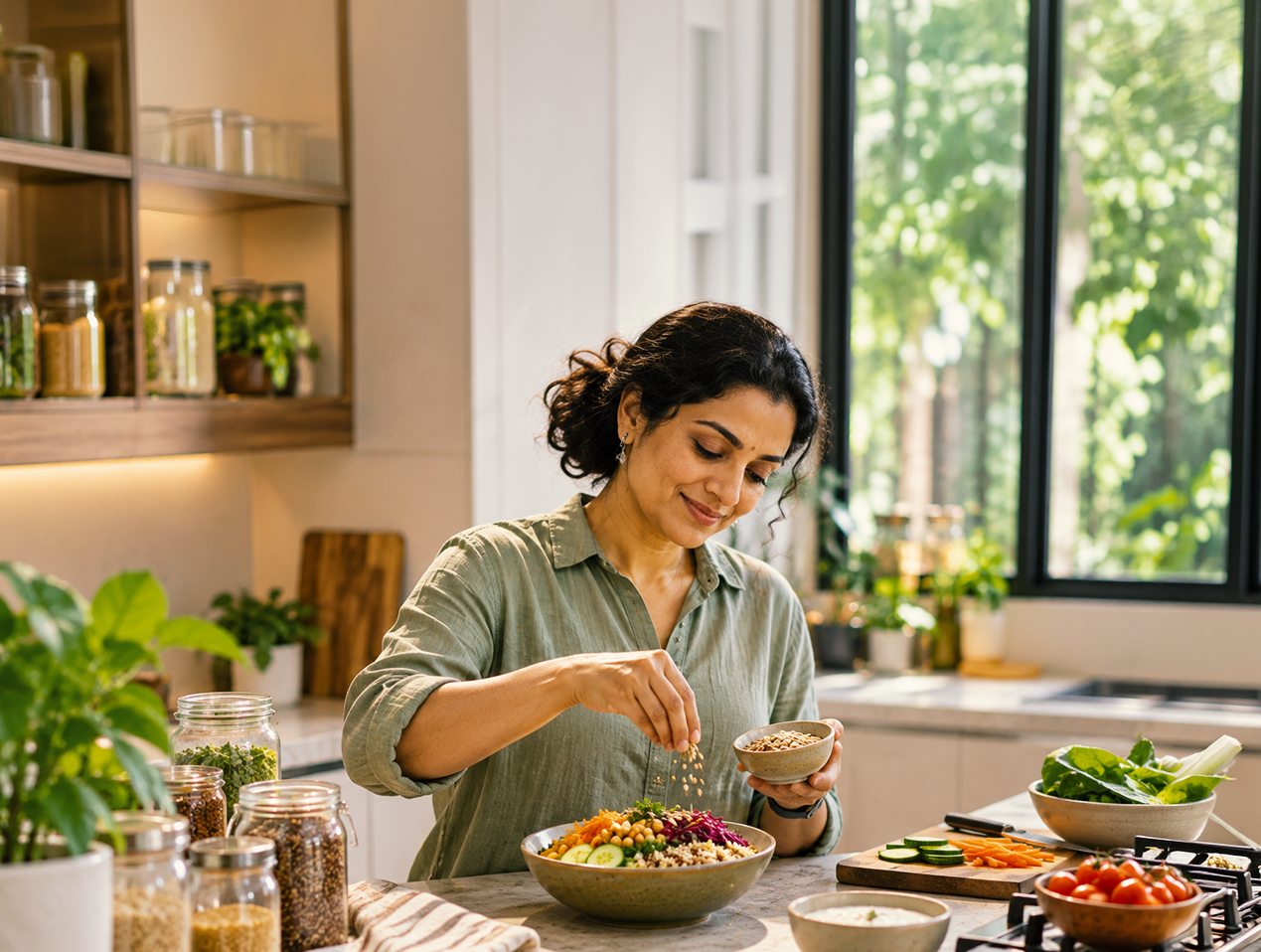
Forget calorie counting for a second. The simplest tool you’ll ever use is the plate itself. Dr. Mohan’s team and most Indian diabetologists suggest this ratio:
- Half the plate: Non-starchy vegetables (bhindi, lauki, palak, cabbage, cauliflower, beans, cucumber, tori, methi)
- One-quarter: Protein (dal, rajma, chole, paneer, curd, eggs, fish, chicken, tofu)
- One-quarter: Carbs (rice, roti, millets, poha — pick ONE, not three)
That last bit is where most people trip up. You’ve seen the classic thali, right? Rice AND two rotis AND aloo sabzi AND a sweet. That’s three carbs stacked together. Your pancreas isn’t going to love you for it.
The rule I give most of my clients: one carbohydrate per meal, measured. Build everything else around it.
Rice vs Roti: The Debate That Won’t Die
Short answer? Neither is villain. Neither is hero.
A cup of cooked white rice and two medium rotis end up with pretty similar carbohydrate loads. What changes the game is what you eat with them. Rice with just dal spikes sugar faster than rice with dal plus a big sabzi plus salad plus curd. Same food, different glycaemic response.
If you grew up on rice, keep your rice. Just measure it. One small katori (about 100g cooked) is plenty. Pair it with a protein source and fibre-heavy vegetables. The ICMR-INDIAB macronutrient research actually suggests Asian Indians benefit from slightly lower carb proportions (around 50-54%) and slightly more protein (18-20%). The exact rice-or-roti question? Secondary.
Millets: Great, But Not Magic
Ragi, jowar, bajra, foxtail — millets have had quite the comeback. And yes, they’re generally better than refined grains because of their fibre. But I want to be real with you here.
Millets are still carbs. A big bowl of ragi dosa with chutney isn’t a free pass. I’ve seen people double their millet portions thinking “it’s healthy” and then wonder why their sugar isn’t budging.
Use millets as a rotation. Bajra roti two nights a week. Jowar bhakri for lunch sometimes. Ragi dosa for weekend breakfast. Measured, paired with protein and veg. That’s the move.
Indian Breakfasts: What Works, What Backfires
Breakfast is where a lot of prediabetic patterns quietly unravel. Here’s the reality:
Backfires when eaten alone:
- Plain poha with just peanuts
- Upma with no side
- Two idlis with coconut chutney and nothing else
- White bread toast with jam
- Cornflakes with sweetened milk
- Paratha with pickle only
Works beautifully:
- Poha + boiled egg or a bowl of curd + extra veggies mixed in
- Two idlis + sambar loaded with vegetables + a side of curd
- Besan chilla with grated veggies + green chutney
- Vegetable oats upma + paneer bhurji on the side
- Moong dal dosa + chutney + curd
- Methi thepla + curd + salad
See the pattern? Protein shows up at breakfast. That’s the fix nobody talks about enough.
Fruits and the Mango Panic
“Can I eat mangoes?” is honestly the most asked question in Indian prediabetes consultations every summer.
Yes. You can. Just not three mangoes in one sitting after a plate of biryani.
Whole fruit is almost always fine in reasonable portions — one small-to-medium fruit at a time, between meals or paired with a handful of nuts. Guava, apple, pear, orange, jamun, berries, papaya, watermelon in moderation — all fair game. Bananas? Choose smaller ones and eat with peanuts or curd.
Fruit juice, though? That’s where the problem starts. Even “fresh” juice strips out the fibre and delivers a sugar hit your pancreas has to deal with fast. Skip juice. Eat the fruit.
Jaggery, Honey, and the “Natural Sugar” Myth
Let me say this plainly: jaggery is sugar. Honey is sugar. Coconut sugar is sugar.
Yes, they have trace minerals. No, those minerals don’t offset the glucose spike. The National Institute of Nutrition’s 2024 Dietary Guidelines for Indians recommend keeping total added sugar (including jaggery and honey) under 25-30 grams a day. One sweet tea in the morning plus one small ladoo and you’ve already crossed that line.
“Sugar-free” sweets and diabetic mithai aren’t an open buffet either. They’re often loaded with refined flour, ghee, and sugar alcohols that still affect blood sugar in some people. Occasional? Sure. Daily? No.
Foods to Pull Back From
Not “never eat again.” Just significantly less often:
- Sweet chai and coffee (if you drink 4 cups a day with 2 tsp sugar each, that’s your full day’s sugar budget gone before noon)
- Packaged fruit juice, aerated drinks, flavored milk
- Biscuits, rusks, namkeen, bhujia — the “small” snacks that sneak in multiple times a day
- Maida-based foods: samosa, kachori, bhatura, pizza, white bread, naan
- Deep-fried stuff: pakoras, puris, vadas as daily items
- Sweetened yoghurts and flavored lassis
- Mithai — reserve for genuine occasions, not Tuesday evenings
- Large portions of potato, sweet potato, and yam in the same meal as rice or roti
Vegetarian Protein: The Real Deal
This is where Indian vegetarians often struggle. Dal alone isn’t enough protein. Honestly.
Load up on a mix:
- Pulses: moong, masoor, chana, rajma, lobia — rotate them
- Paneer (grilled, not deep-fried) and tofu
- Curd and chaas, unsweetened
- Sprouts — moong, chana, methi sprouts in salads
- Soya chunks and soya milk (unsweetened)
- Nuts and seeds: almonds, walnuts, pumpkin seeds, flax, chia — a small handful daily
- Eggs if you’re ovo-vegetarian
Aim to get a visible protein source into every meal. Not just lunch. Breakfast, lunch, dinner. Snacks too.
The Habits That Multiply Your Results
Food alone does a lot. But paired with a few habits? Game-changer.
Walk after meals. Even 10-15 minutes after lunch and dinner can blunt the post-meal sugar spike noticeably. Not a brisk march — just a steady walk around the block or your terrace.
Eat your vegetables first, then protein, then the carb last. The order genuinely changes how your body handles the meal.
Don’t eat dinner at 10 PM. Earlier dinners (by 7:30-8) give your body a better overnight glucose profile.
Sleep matters more than you think. Poor sleep worsens insulin resistance. Seven hours, non-negotiable.
And weight. If you’re carrying extra kilos, even a 5-7% reduction can shift your numbers dramatically — research is pretty clear on this.
Can Prediabetes Actually Be Reversed?
Sort of. Let’s be honest about the language.
Your numbers can return to the normal range. Many of my clients have seen HbA1c drop from 6.2 back to 5.4 within 6-9 months of consistent eating changes and activity. That’s real.
But “reversed” doesn’t mean “cured forever.” The underlying tendency stays. Go back to old habits and the numbers creep back. A culturally tailored intervention study showed a 50% reduction in diabetes progression over a year when Indians increased fruit/vegetable intake and reduced total energy. The key word? Sustained.
Think of it like a dimmer switch, not an on-off button. You’re always managing. But managing well means you can live without medication for decades, maybe forever.
A Sample Day on a Real Prediabetes Diet
Morning: Warm water, soaked almonds (5-6), unsweetened tea or coffee
Breakfast: Besan chilla with grated carrot, onion, coriander + a bowl of curd + mint chutney
Mid-morning: One guava or apple + 8-10 walnuts
Lunch: One small katori rice OR two small jowar rotis + big bowl of palak sabzi + dal + cucumber-tomato salad + curd
Evening: Chaas (unsweetened) + roasted chana or a boiled egg
Dinner (by 8 PM): Grilled paneer or fish/chicken + sautéed mixed vegetables + one bajra roti
Post-dinner: 15-minute walk
Doable, right? No weird foods. No giving up Indian cooking. Just smarter choices.
Conclusion
A prediabetes diet for Indians isn’t about banning your favourites. It’s about portion awareness, meal pairing, and tipping the balance toward vegetables and protein. Keep your rice. Keep your rotis. Keep your dosa. Just measure them, pair them with protein and fibre, cut the sweet drinks and the maida snacks, and move after you eat.
The research keeps pointing to the same truth: small, sustained changes beat extreme diets every single time. You don’t need a separate kitchen. You don’t need expensive superfoods. You need a better plate.
If you’re newly diagnosed and feeling overwhelmed, consider working with a qualified nutritionist who understands Indian food culture and your specific numbers. A plan built around your routine, your preferences, and your medical history will always beat generic advice. At Anupama, that’s the kind of personalized, culturally rooted guidance we focus on — because sustainable change starts with meals you’ll actually want to eat tomorrow, next month, and ten years from now.
Start with one meal. Fix breakfast first. See what happens in three weeks. You’ll be surprised.
Frequently Asked Questions About Prediabetes Diet
Can I eat rice if I have prediabetes?
Yes, you can eat rice with prediabetes. The key is portion control — stick to one small katori (about 100g cooked) per meal and pair it with plenty of vegetables, dal or protein, and curd. The combination slows down sugar absorption. Choose brown rice or parboiled rice when possible, but even white rice is manageable when eaten correctly.
Is jaggery better than sugar for prediabetes?
No, jaggery affects blood sugar similarly to regular sugar. While it contains trace minerals, these don’t offset the glucose spike. The National Institute of Nutrition recommends keeping all added sugars (including jaggery and honey) under 25-30 grams daily. Use jaggery sparingly, just as you would white sugar.
What is the best breakfast for prediabetes in Indian diet?
The best prediabetes breakfast combines a moderate carb portion with protein and vegetables. Good options include besan chilla with vegetables and curd, two idlis with sambar and curd, vegetable oats upma with paneer, or methi thepla with curd and salad. Always include a protein source at breakfast to stabilize blood sugar.
Are millets good for prediabetes?
Millets like ragi, jowar, and bajra are beneficial for prediabetes due to their higher fibre content compared to refined grains. However, they’re still carbohydrates and need portion control. Use millets as a rotation — not as unlimited foods. Pair them with protein and vegetables for best results.
Can prediabetes be reversed with diet alone?
Many people can bring their blood sugar back to normal range with diet changes, but “reversed” doesn’t mean cured permanently. Research shows that combining a prediabetes diet with 150 minutes of weekly exercise and 5-7% weight loss can delay or prevent diabetes progression. The key is sustained lifestyle changes, not temporary dieting.
Which fruits should I avoid with prediabetes?
You don’t need to avoid whole fruits completely. Eat one small-to-medium fruit at a time, preferably between meals or with nuts. Good choices include guava, apple, pear, orange, and berries. Limit very sweet fruits like mango, chikoo, and grapes to small portions. Always avoid fruit juice — even fresh juice — as it spikes blood sugar quickly.
How much protein should I eat with prediabetes?
Indian prediabetes research suggests 18-20% of your daily calories should come from protein. Practically, this means including a visible protein source at every meal — dal, rajma, chole, paneer, curd, eggs, fish, chicken, or tofu. Vegetarians should especially focus on combining different protein sources throughout the day.
Is walking after meals really important for prediabetes?
Yes, walking for even 10-15 minutes after lunch and dinner can significantly reduce post-meal blood sugar spikes. You don’t need intense exercise — just a steady, comfortable walk. This simple habit, combined with a proper prediabetes diet, makes a measurable difference in your numbers over time.
Not sure where to start?
Take the 7 day Nutri Trial and see what a plan built around your own kitchen actually feels like.
Start your trial