
- What Intermittent Fasting Actually Is (Minus the Hype)
- Does It Work for Weight Loss? The Real Numbers
- What About Indian Women Specifically?
- Who Should Absolutely Skip Intermittent Fasting
- The Safest Starting Point
- Can You Do IF With Roti, Rice, and Chai?
- Signs You Need to Stop or Adjust
- Why Most Women Fail at Intermittent Fasting
- Frequently Asked Questions
Short answer? Sometimes yes, sometimes no. And honestly, that’s not the wishy-washy response you probably wanted to hear. But here’s the thing—intermittent fasting isn’t the magic pill Instagram makes it out to be, and it’s definitely not the hormonal disaster some doctors warn about either. For Indian women juggling chai mornings, late family dinners, PMOS, thyroid stuff, and the occasional “why won’t this belly fat move” frustration, the truth sits somewhere in the middle. Let’s talk about what actually works, what wrecks your cycle, and why your neighbour aunty lost 8 kilos while you gained two.
What Intermittent Fasting Actually Is (Minus the Hype)
Intermittent fasting is just eating within a set window. That’s it. The popular ones are 16:8 (fast 16 hours, eat in 8), 14:10, and the gentler 12:12. No exotic biology. No fat-melting sorcery.
Here’s what most influencers won’t tell you: according to clinical reviews of intermittent fasting studies, IF works mainly because you end up eating fewer calories. That’s the whole trick. A 2022 New England Journal of Medicine trial compared time-restricted eating with regular calorie restriction and found nearly identical weight loss after 12 months.
So no, skipping breakfast isn’t magic. But it can be useful.
Does It Work for Weight Loss? The Real Numbers
Yes—modestly. A review of 40 studies found IF can reduce body weight by 3–8% over 3 to 24 weeks, roughly 0.25 to 0.75 kg per week. Most women see 2–4 kg drop in the first month of 16:8, then it slows down. Nothing wild. Nothing miraculous.
Diabetic clients working with a nutritionist for weight loss and doing 14:10 with balanced Indian meals often show HbA1c drops of 0.5–1.5% in three months. That’s genuinely useful for metabolic health.
What About Indian Women Specifically?
The Hormonal Reality
This is where things get interesting. Female bodies are more sensitive to energy availability than male ones. Push too hard, too long, and your reproductive hormones start throwing tantrums.
Clinicians working with Indian women report a split experience: some improve insulin sensitivity, PMOS markers, and inflammation. Others get missed periods, hair loss, fatigue, and binge-restrict cycles that end in gaining weight. Same protocol. Very different bodies.
The Pattern That Matters
Aggressive fasting (16+ hours, daily, for months) tends to backfire in women with existing hormonal fragility—thyroid issues, PMOS, low BMI, high stress.
Who Should Absolutely Skip Intermittent Fasting
Real talk. IF is not for you if you are:
- Pregnant or breastfeeding
- Underweight or have a history of eating disorders
- Managing uncontrolled diabetes on insulin
- Dealing with severe hypothyroidism or unstable PMOS
- An adolescent still growing
Femina’s guidance for Indian women is pretty clear on this—overly restrictive patterns can mess with hormone and gut balance faster than you’d think.
The Safest Starting Point (What I’d Actually Recommend)
Start with 12:12. Finish dinner by 7:30 PM, first meal around 7:30 AM. That’s it. It’s basically a slightly disciplined version of what your grandmother already did.
If you feel good after 3–4 weeks—steady energy, regular cycles, decent sleep—try nudging to 13:11 or 14:10. Only push to 16:8 if your body’s clearly happy. And skip OMAD entirely. Seriously.
Can You Do IF With Roti, Rice, and Chai?
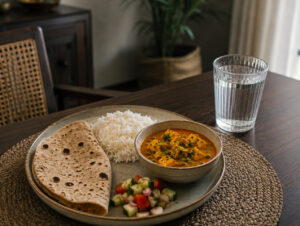
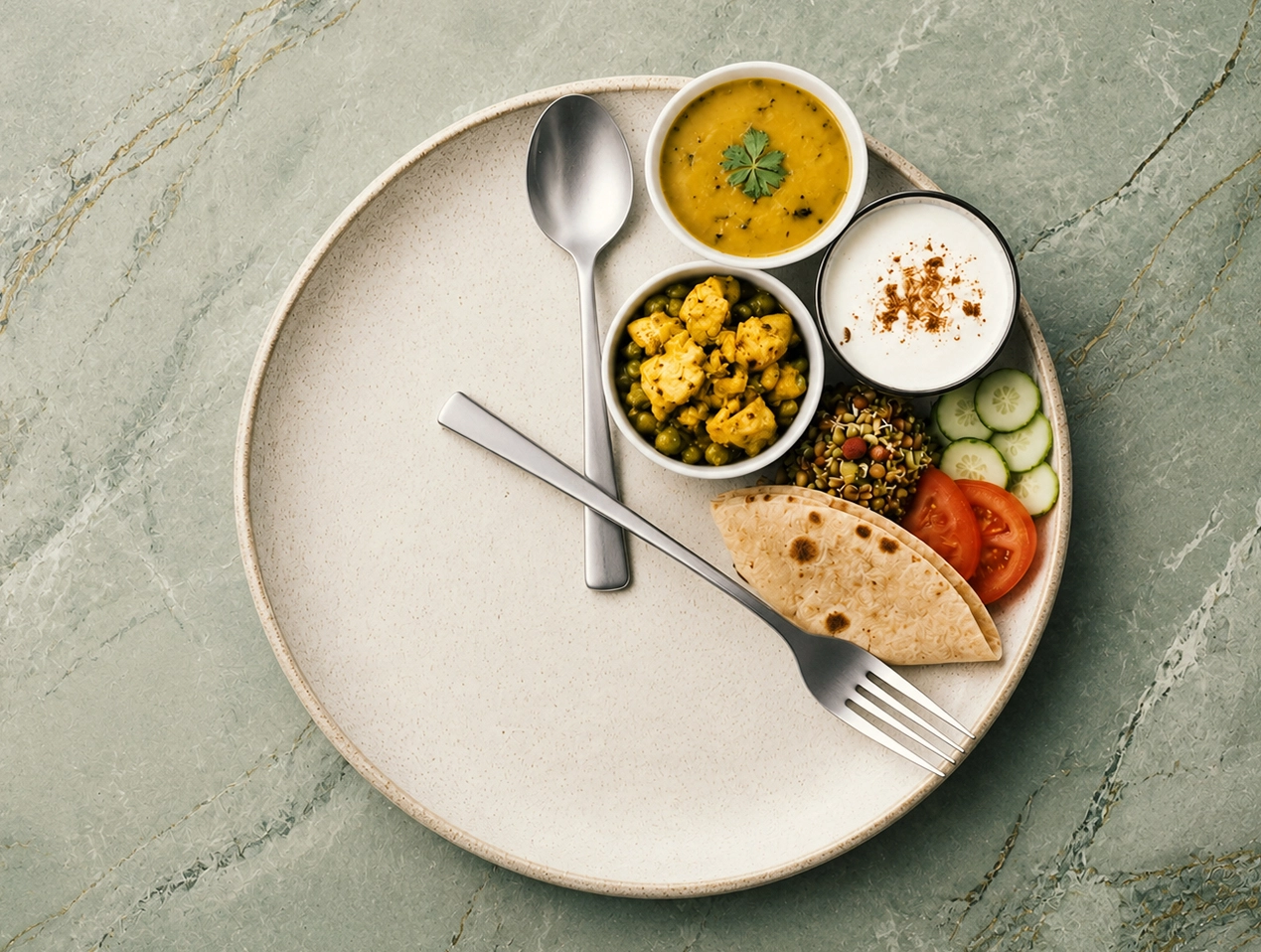
Yes. Please do. IF fails hardest when women think they need to swap dal-chawal for salads. You don’t. Eat your normal ghar ka khana—roti, sabzi, dal, rice, curd, some fruit, nuts. Just eat it within your window.
Quick note on chai: milk tea technically breaks a fast because it has calories. If your fast is 12–14 hours, honestly, one small cup won’t ruin anything. Black coffee, green tea, water, buttermilk without sugar—all fine.
Signs You Need to Stop or Adjust
Pay attention to this. If any of these show up, back off:
- Missed or irregular periods
- Hair falling more than usual
- Constant fatigue or brain fog
- Trouble sleeping
- Bingeing during your eating window
- Mood swings that feel new
Your body’s talking. Listen.
Why Most Women Fail at Intermittent Fasting
Two reasons, mostly. One—they overeat during the eating window, thinking the fast “cancels” the extra calories. It doesn’t. Two—they jump straight into 16:8 or OMAD because a YouTuber said so, without letting the body adapt.
Long-term adherence sits around 35–45% at 12 months. Same as any diet. Sustainability beats intensity every single time.
Key Takeaway
Intermittent fasting can work for Indian women—when it fits your life, your hormones, and your food culture. It’s not magic, it’s not evil. It’s a tool. Use gentle protocols, keep eating your normal Indian meals, protect your cycle, and stop before something breaks.
If you have PMOS, thyroid concerns, or you’re just tired of guessing what your body needs, working with a qualified nutritionist for weight loss matters more than any trending schedule. That’s exactly the kind of personalised guidance Anupama helps women figure out—because your body deserves a plan built for it, not a template borrowed from someone else’s Instagram reel.
Start slow. Watch how you feel. Adjust. That’s the whole game.
Frequently Asked Questions About Intermittent Fasting for Indian Women
Is intermittent fasting safe for women with PMOS?
It depends. Some women with PMOS see improved insulin sensitivity with gentle protocols like 12:12 or 14:10. However, aggressive fasting can worsen hormonal imbalances. Always consult your doctor before starting, especially if you have irregular cycles or are on medication.
Can I drink chai during my fasting window?
Technically, milk tea breaks a fast because it contains calories. However, if you’re doing a moderate fast (12–14 hours), one small cup won’t significantly impact results. For stricter fasts, stick to black coffee, green tea, or water.
How long does it take to see weight loss results with intermittent fasting?
Most women see 2–4 kg drop in the first month with 16:8 fasting, then weight loss slows to about 0.25–0.75 kg per week. Results vary based on your starting weight, eating habits, and consistency.
Will intermittent fasting affect my menstrual cycle?
It can, especially with aggressive fasting protocols. If you experience missed periods, irregular cycles, or other hormonal symptoms, reduce your fasting window or stop entirely. Your reproductive health is more important than weight loss.
Do I need to change my Indian diet to do intermittent fasting?
No. You can eat your regular roti, sabzi, dal, rice, and curd. The key is eating within your chosen time window, not changing what you eat. Just focus on balanced portions and avoid excessive processed foods.
What’s the best intermittent fasting schedule for beginners?
Start with 12:12 (12 hours fasting, 12 hours eating). It’s gentle, sustainable, and gives your body time to adapt. After 3–4 weeks, if you feel good, you can gradually extend to 14:10 or 16:8.
Not sure where to start?
Take the 7 day Nutri Trial and see what a plan built around your own kitchen actually feels like.
Start your trial