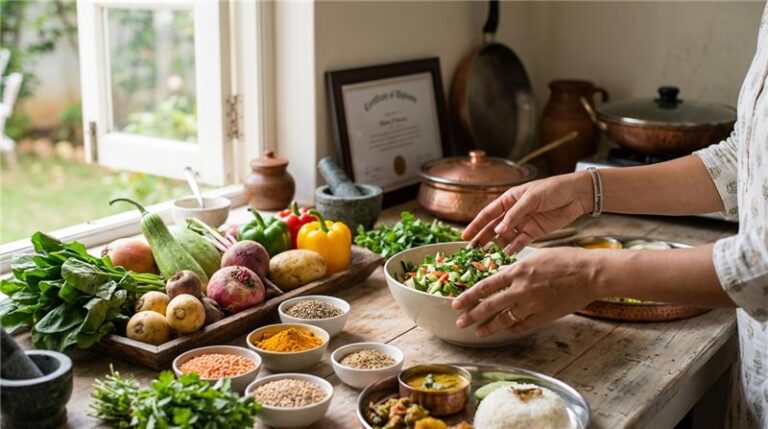
Discover 16 PCOS-friendly breakfasts and lunches by Anupama Menon designed to balance hormones using smart food combinations that improve insulin sensitivity, boost energy and support sustainable weight management.


Table of Contents
- Why Food Combinations Matter for Your PCOS Diet
- The Breakfast Formula That Works
- Complex Carbs: Your PCOS Diet’s Best Friend
- Lunch Ideas That Actually Keep You Full
- What Makes Anupama Menon’s Approach Different
- Simple Swaps for Better Hormone Balance
- Bottom Line on PCOS-Friendly Eating
- Frequently Asked Questions
If you’re dealing with PCOS, you already know the food struggle is real. One day you’re bloated, the next you can’t lose weight no matter what you try, and your energy levels? Forget about it. But here’s what most people don’t realize: the secret isn’t cutting out entire food groups or starving yourself. It’s about smart combinations that work with your hormones, not against them.
Anupama Menon has spent years helping women in Bangalore tackle PCOS through personalized nutrition plans, and her approach is refreshingly simple. No complicated recipes. No ingredients you can’t pronounce. Just real food that actually helps balance your hormones and keeps your metabolism humming along.
Why Food Combinations Matter for Your PCOS Diet
Think your body can handle rice, dal, sabji, papad, and pickle all in one meal? Think again. According to Anupama Menon’s nutrition approach, combining too many food groups actually makes digestion harder, not easier. Your body has to secrete different enzymes for each group, which slows everything down.
The fix? Stick to one carb, one protein, and one or two vegetables per meal. That’s it.
This isn’t some trendy diet hack. It’s about giving your digestive system a break so it can actually process nutrients efficiently. And when you have PCOS, efficient nutrient processing directly impacts insulin sensitivity and hormone balance.
The Breakfast Formula That Works
Mornings set the tone for your entire day, especially with PCOS. You need sustained energy without the blood sugar spike that’ll crash you mid-morning.
Here’s what a hormone-friendly breakfast looks like:
- Eggs (protein) + whole wheat toast (complex carb) + sautéed spinach (vegetable)
- Greek yogurt (protein) + oats (complex carb) + berries and cucumbers (vegetables)
- Moong dal chilla (protein) + brown rice (carb) + tomato salad
- Paneer bhurji (protein) + millet roti (carb) + bell peppers
Notice the pattern? You’re not eating just eggs or just oats. You’re combining them strategically so your body gets what it needs without overloading your system.
Complex Carbs: Your PCOS Diet’s Best Friend
Let’s clear something up right now. Carbs aren’t the enemy. Simple carbs—sugar, white bread, maida—yeah, those you want to limit. But complex carbohydrates? They actually help with weight loss when you have PCOS.
Complex carbs include brown rice, whole wheat, millets, quinoa, and vegetables. They digest slowly, keeping your blood sugar stable and your insulin levels in check. For women with PCOS, this is huge because insulin resistance is often part of the condition.
Pro tip: Eat your complex carbs earlier in the day. Save protein and vegetables for dinner to avoid storing excess energy as fat overnight.
Lunch Ideas That Actually Keep You Full
Ever notice how you’re starving hours after lunch? That’s probably because you’re not balancing your plate properly.
Try these combinations instead:
- Grilled chicken (protein) + brown rice (carb) + steamed broccoli (vegetable)
- Rajma (protein) + rotis (carb) + cucumber salad
- Baked fish (protein) + quinoa (carb) + roasted vegetables
- Tofu stir-fry (protein) + millet (carb) + mixed greens
- Chickpea curry (protein) + chapati (carb) + carrot and beetroot salad
The key here is portion control without feeling deprived. If you’re still hungry, add more of the same groups—like an extra roti with your dal—rather than piling on different food types.
What Makes Anupama Menon’s Approach Different
Anyone can throw together a list of “healthy” meals. What sets Anupama Menon’s personalized plans apart is the focus on sustainable eating that doesn’t feel like punishment.
She gets it. You want to eat normal food. You want variety throughout your week. You just don’t need that variety crammed into every single meal. Spread it out. Monday’s breakfast can look different from Tuesday’s, but each individual meal stays simple and focused.
This approach also means you can still enjoy your favorite foods occasionally. Healthy cheat meals become part of the plan, not something you feel guilty about.
Simple Swaps for Better Hormone Balance
You don’t need to overhaul your entire kitchen. Start with these easy switches:
- White rice → Brown rice or cauliflower rice
- Regular pasta → Whole wheat or chickpea pasta
- White bread → Whole grain or sprouted bread
- Sugary cereal → Steel-cut oats with nuts
Small changes add up, especially when you’re working on hormone balance. Your body will thank you with better energy, clearer skin, and more stable moods.
Bottom Line on PCOS-Friendly Eating
Managing PCOS through diet doesn’t mean eating boring food or following impossible rules. It means being smarter about how you combine foods on your plate. One carb, one protein, and one vegetable. Keep it simple, keep it consistent, and watch how your body responds.
The meal ideas outlined here give you a solid starting point, but remember—everyone’s PCOS journey is different. What works for your friend might not work exactly the same for you. That’s where personalized guidance from experts like Anupama Menon makes all the difference.
Start with these combinations. See how you feel. Adjust as needed. Your hormones will start finding their balance, and you’ll finally feel like you’re working with your body instead of fighting against it.
Frequently Asked Questions
What is the best PCOS diet for hormone balance?
The best PCOS diet focuses on combining one complex carb, one protein source, and one or two vegetables per meal. This simplifies digestion and helps regulate insulin levels, which is crucial for managing PCOS symptoms and achieving hormone balance.
Can I eat carbs if I have PCOS?
Yes, complex carbs like brown rice, whole wheat, millets, and quinoa are actually beneficial for PCOS. They digest slowly, stabilize blood sugar, and help manage insulin resistance. Avoid simple carbs like white bread, sugar, and maida instead.
How many meals should I eat per day with PCOS?
Most women with PCOS do well with three balanced meals per day, focusing on proper food combinations. The key is consistency and ensuring each meal contains the right balance of protein, complex carbs, and vegetables.
What breakfast is best for PCOS?
A PCOS-friendly breakfast includes a protein source, complex carbohydrate, and vegetables. Examples include eggs with whole wheat toast and spinach, or Greek yogurt with oats and berries. This combination provides sustained energy without blood sugar spikes.
Why is Anupama Menon’s approach effective for PCOS?
Anupama Menon’s approach focuses on sustainable, personalized eating plans that don’t feel restrictive. She emphasizes simple food combinations that work with your body’s natural processes, making it easier to stick with long-term and see real results in hormone balance and weight management.