
- Why Diet Matters More Than You Think
- Oats and Whole Grains: The Fiber Workhorses
- Methi Seeds: The Underrated Hero
- Garlic on an Empty Stomach
- Amla: The Indian Gooseberry That Rivals Statins
- Dals and Legumes: Your Daily Bowl
- Nuts and Seeds: Portion Is Everything
- Which Oil Should You Actually Cook With?
- Foods to Cut Back On
- A Simple Sample Day for the Best Cholesterol Lowering Diet Plan
- Frequently Asked Questions
Got your lipid report back and saw those LDL numbers creeping up? You’re not alone. Millions of Indians are dealing with the same thing right now, and most of them are wondering the same question: can I actually fix this with what’s already in my kitchen? Short answer, yes. Long answer, it takes a bit of strategy. The best cholesterol lowering diet plan isn’t about giving up dal-chawal or switching to bland Western meals. It’s about tweaking what you already eat. In this guide, I’ll walk you through Indian vegetarian foods that genuinely move the needle on cholesterol, how much to eat, and the small daily habits that actually work. No gimmicks. No 30-day miracle promises. Just food that does the heavy lifting.
Why Diet Matters More Than You Think
Cholesterol isn’t the villain we made it out to be. Your body needs it. The problem starts when LDL (the “bad” one) climbs too high and starts sticking to your artery walls. That’s where food comes in.
According to the National Lipid Association’s South Asian guidance, swapping ghee and butter for liquid oils like mustard, canola, or sunflower can meaningfully lower LDL. Small change. Big payoff.
Oats and Whole Grains: The Fiber Workhorses
Why Oats Work
If there’s one food I’d tell you to add tomorrow morning, it’s oats. A bowl of oats daily gives you beta-glucan, a soluble fiber that basically grabs cholesterol in your gut and shows it the door.
Adults need roughly 5 to 10 grams of soluble fiber daily to see LDL drop. That’s not much. A bowl of oats plus some fruit gets you close.
Indian Whole Grain Alternatives
Swap white rice for brown rice, ragi, jowar, or bajra a few days a week. Dalia upma for breakfast. Barley in your soups. Simple stuff.
Methi Seeds: The Underrated Hero
Here’s a trick from your grandmother’s kitchen that actually holds up scientifically. According to German Ten Hospitals, fenugreek’s soluble fiber can lower LDL by 14 to 18%.
How to use it? Soak one teaspoon of methi seeds overnight in water. Chew them first thing in the morning. Bitter? Yeah. Effective? Absolutely.
Garlic on an Empty Stomach
Real talk: raw garlic isn’t fun. But 1 to 2 cloves crushed and swallowed with warm water in the morning can lower LDL by 10 to 15%, per the same hospital source. The active compound is allicin, and it also helps with blood pressure.
Let the crushed garlic sit for about 10 minutes before eating. That activates the allicin. Little tip most people skip.
Amla: The Indian Gooseberry That Rivals Statins
This one honestly surprised me. A clinical trial published in the Indian Journal of Pharmacology found that amla showed cholesterol-lowering effects comparable to simvastatin in patients with high lipids.
Fresh amla in winter. Amla powder or juice year-round. One a day works.
Dals and Legumes: Your Daily Bowl
Rajma, chana, moong, masoor, chickpeas. Around one cup of legumes daily can drop cholesterol by up to 10% in six weeks. That’s massive for a food you were probably eating anyway.
Just watch the tadka. Heavy ghee and cream cancel out the benefits fast.
Nuts and Seeds: Portion Is Everything
A small fistful of almonds and walnuts daily gives you omega-3s, vitamin E, and unsaturated fats that help push LDL down. But here’s where people mess up. They eat half a packet and wonder why they’re gaining weight.
- 6 to 8 almonds daily
- 2 to 3 walnuts
- 1 tablespoon ground flaxseed in curd, roti dough, or smoothies
Which Oil Should You Actually Cook With?
The ghee-vs-oil debate is exhausting. Here’s my take: use ghee sparingly (a teaspoon here and there is fine), but do your daily cooking in mustard, groundnut, rice bran, or sunflower oil. Aster CMI notes that switching from butter and vanaspati to liquid vegetable oils directly helps lower LDL.
Cap your daily oil at about 3 to 4 teaspoons per person. Measure it. You’ll be shocked how much you were using.
Foods to Cut Back On (Not Necessarily Eliminate)
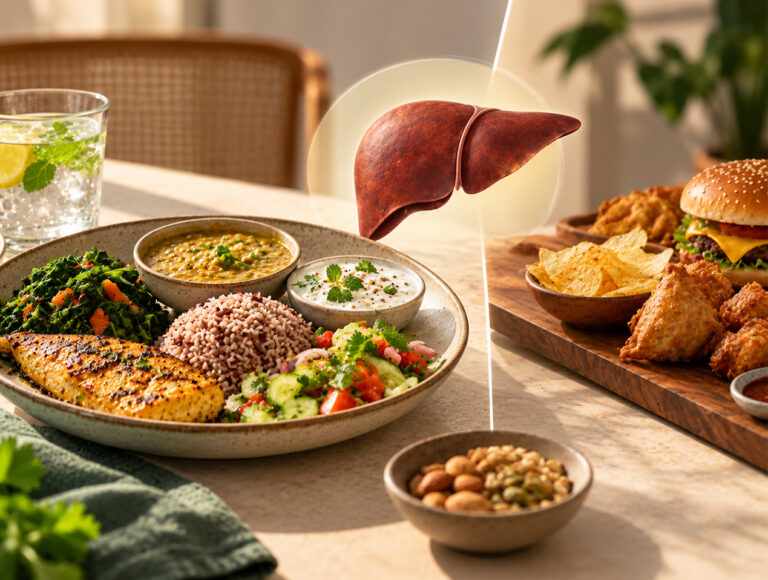
- Deep-fried snacks (samosa, pakora, bhujia)
- Vanaspati and dalda
- Bakery items with hidden trans fats
- Sugary drinks and packaged juices
- White bread, maida-based foods
- Full-fat paneer and cheese in excess
Nobody’s asking you to never eat a samosa. Just not three times a week.
A Simple Sample Day for the Best Cholesterol Lowering Diet Plan
Daily Routine
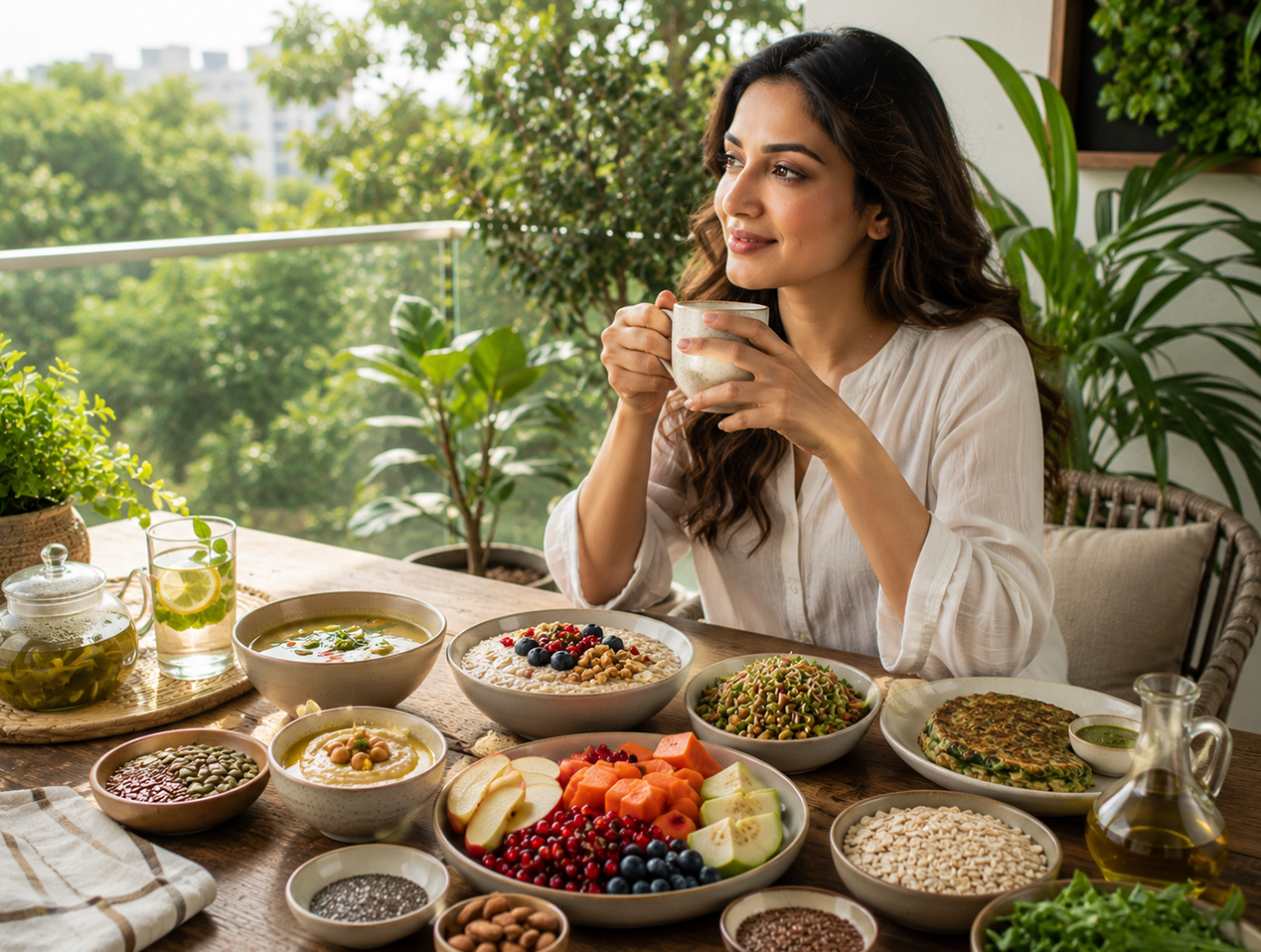
- Morning: Soaked methi seeds + 1 garlic clove + warm water
- Breakfast: Oats porridge with flaxseed and berries
- Mid-morning: Handful of almonds and walnuts
- Lunch: 1 roti + brown rice + dal + sabzi + salad
- Evening: Green tea + roasted chana
- Dinner: Millet roti + vegetable curry + curd
The Bottom Line
Fast results? Sure, some people see changes in 4 to 8 weeks. But cholesterol responds best to consistency, not crash diets. The best cholesterol lowering diet plan is the one you can actually stick with for years, built around foods your family already loves.
Combine these food swaps with 30 minutes of walking most days, and you’ll see your next lipid panel look very different. If you’re on statins, don’t stop them without talking to your doctor first. Food supports medicine, it doesn’t always replace it.
Need personalized diet plans built around your body, your kitchen, and your goals? That’s exactly what we do at Anupama. Our personalized diet plans are designed specifically for Indian vegetarian households. Your heart deserves food that works as hard as you do.
Frequently Asked Questions
Can I lower cholesterol in 30 days with Indian vegetarian food?
Yes, many people see LDL drop by 10 to 15% within 4 to 8 weeks by consistently following a vegetarian Indian diet rich in oats, dals, methi, garlic, and healthy oils. Results vary based on your starting levels and overall lifestyle.
Which Indian dal is best for lowering cholesterol?
All dals work well, but moong dal, masoor dal, and chana dal are particularly high in soluble fiber. Eating one cup daily can reduce cholesterol by up to 10% in six weeks.
Is ghee bad for cholesterol?
Ghee isn’t inherently bad, but it should be used sparingly—about 1 teaspoon per day. For daily cooking, switch to liquid oils like mustard, sunflower, or rice bran oil to help lower LDL levels.
How much garlic should I eat daily for cholesterol?
One to two raw garlic cloves crushed and consumed on an empty stomach can lower LDL by 10 to 15%. Let the crushed garlic sit for 10 minutes before eating to activate allicin.
Are nuts good for cholesterol even though they’re high in fat?
Absolutely. Almonds and walnuts contain heart-healthy unsaturated fats and omega-3s. Stick to 6 to 8 almonds and 2 to 3 walnuts daily. The key is portion control.
Can amla really replace cholesterol medication?
Amla has shown cholesterol-lowering effects comparable to some statins in clinical studies. However, never stop prescribed medication without consulting your doctor. Amla works best as a complementary food, not a replacement.
What’s the fastest way to lower cholesterol naturally?
Combine daily oats, methi seeds, garlic, one cup of dal, a handful of nuts, plenty of vegetables, and switch to healthy cooking oils. Add 30 minutes of daily walking. Most people see results within 4 to 8 weeks.
Not sure where to start?
Take the 7 day Nutri Trial and see what a plan built around your own kitchen actually feels like.
Start your trial