
- Why cutting rice and roti completely backfires
- The portion control revelation nobody talks about
- Can you really lose weight eating rice and roti?
- Why your mum’s cooking isn’t the enemy
- The balanced diet formula that actually sticks
- Frequently Asked Questions
Remember when everyone said you had to ditch rice and roti to lose weight? Yeah, about that. Turns out, thousands of Indians are finally shedding kilos without saying goodbye to their favorite dal-chawal or giving up Sunday parathas. The secret? It’s not about cutting out entire food groups or disappointing your mum by refusing her cooking. It’s about something way more practical—and honestly, way more sustainable.
Here’s what’s changed. People aren’t falling for those extreme “no carbs ever” diets anymore. They’re discovering that personalized diet plans that actually work with Indian food—not against it—are the real game-changer.
Why cutting rice and roti completely backfires
Let’s get real for a second. When you completely quit rice and roti, something weird happens. Sure, you might lose weight initially. But here’s the catch—you’re probably losing muscle, not fat.
According to research from Healthshots, when you drastically reduce carbs, your body doesn’t just magically start burning fat. Instead, it attacks your protein sites and breaks them down to get energy. That means muscle loss. And losing muscle? That’s linked with slower metabolism, decreased weight loss, and constant fatigue.
The portion control revelation nobody talks about
Want to know what actually works? Eating rice and roti in controlled portions while maintaining a calorie deficit.
Sounds too simple, right? But that’s exactly what makes personalized diet plans so effective. They don’t ask you to eliminate foods you’ve eaten your whole life. They teach you how much to eat.
Think about it this way. When you eat excess carb-rich foods, your body uses them for energy instead of tapping into fat reserves. The leftover energy gets stored as fat. But when you control portions and create a calorie deficit? Your body burns what it needs to.
What portion control actually looks like
- Half your usual serving of rice or two rotis instead of four
- Loading half your plate with vegetables and dal
- Adding adequate protein to every meal
- Not going back for seconds out of habit
Can you really lose weight eating rice and roti?
Absolutely. And you don’t need to take my word for it.
Dietitian Chhabra explained to Healthshots that there are no side effects of eating rice or wheat unless you’re allergic. The key? Control the portion size. It’s not the rice that’s making you gain weight—it’s eating three servings of it with minimal vegetables and protein.
Personalized diet plans take this into account. They calculate exactly how many calories you need based on your body type, activity level, and goals. Then they show you how to fit your favorite foods into that framework.
Why your mum’s cooking isn’t the enemy
Look, nobody wants to be that person who refuses homemade food because they’re “on a diet.” That’s miserable. Plus, it never lasts.
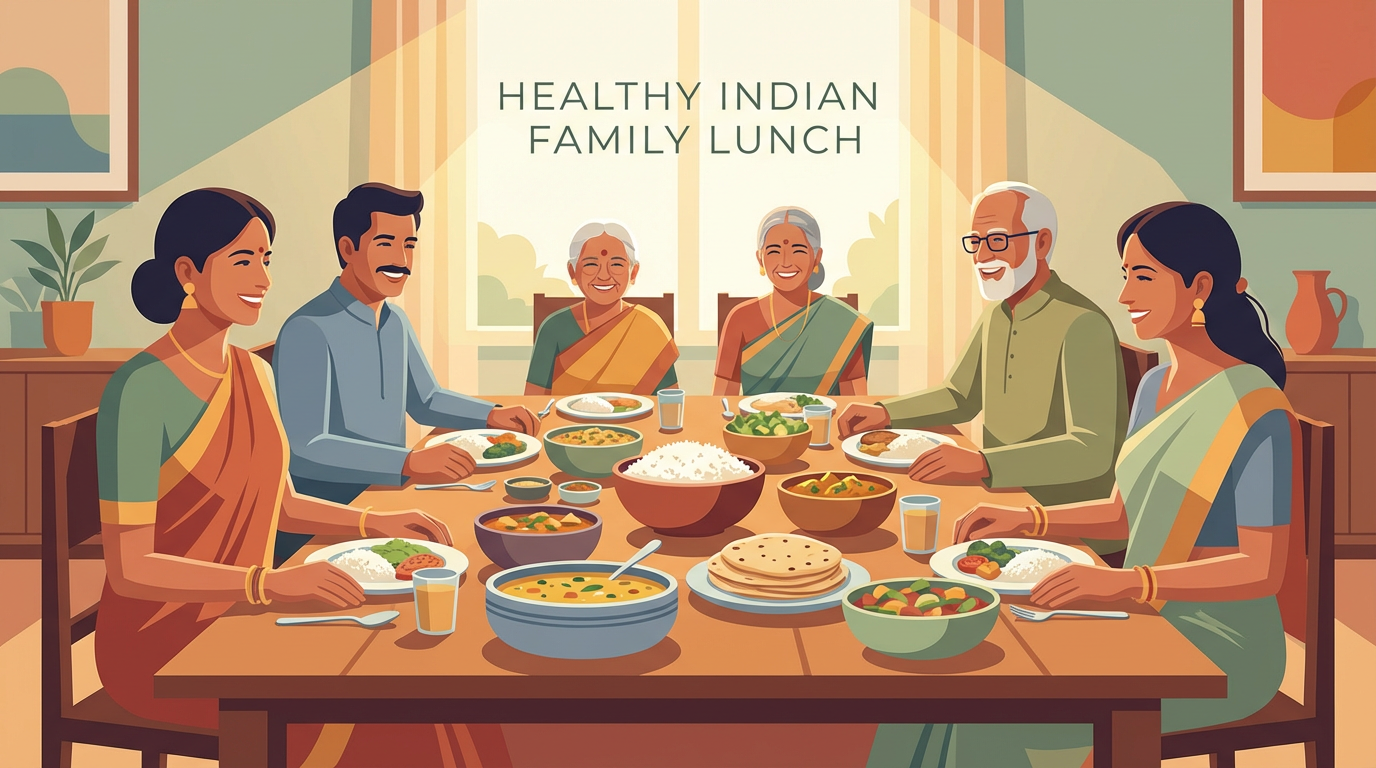
The beauty of a balanced approach? You can enjoy your mum’s rajma-chawal. Just maybe have one katori of rice instead of two. Fill up on the protein-rich rajma and add a side salad. You’re still eating the same meal. You’re just being smarter about proportions.
This is where personalized diet plans shine. They work with your actual lifestyle—family dinners, festivals, the occasional wedding where you’re definitely having biryani. They build flexibility into your eating pattern instead of demanding perfection.
The balanced diet formula that actually sticks
Here’s what sustainable weight loss looks like when you keep Indian staples in your diet:
- Maintain a calorie deficit through portion awareness, not food elimination
- Balance your macros—carbs from rice/roti, protein from dal/paneer/chicken, healthy fats from ghee/nuts
- Add regular workouts (even 30-minute walks count)
- Prioritize adequate sleep—your metabolism depends on it
- Stay active beyond formal exercise—take stairs, walk during calls
Notice what’s missing? Extreme restrictions. Suffering. Saying no to every food you actually enjoy eating.
Carbs aren’t evil. They’re literally your body’s preferred energy source. When you eat them in proper amounts alongside protein, fiber, and healthy fats, they fuel your workouts and keep your brain functioning. Personalized diet plans don’t just count calories—they ensure you’re getting nutrients in the right balance.
You don’t need to overhaul your entire life tomorrow. Start by measuring your current portions, gradually reduce rice/roti servings by 25-30%, double your vegetable intake, add protein to every meal, and move your body for 30 minutes daily. These aren’t huge changes, but they add up to significant results over time.
Frequently Asked Questions
Can I eat rice every day and still lose weight?
Yes, absolutely. The key is portion control and maintaining a calorie deficit. Eating rice in controlled amounts as part of a balanced meal with vegetables and protein supports sustainable weight loss without deprivation.
How much rice and roti should I eat for weight loss?
This varies based on your body type, activity level, and goals. Generally, one to two rotis or half a cup of cooked rice per meal works well when combined with adequate protein and vegetables. Personalized diet plans can determine your exact needs.
Will cutting carbs help me lose weight faster?
While you might see initial weight loss, cutting carbs completely often leads to muscle loss, fatigue, and decreased metabolism. A balanced approach with controlled carb portions is more sustainable and healthier long-term.
What’s better for weight loss: rice or roti?
Neither is inherently better. Both can be part of a weight loss diet when eaten in appropriate portions. Choose based on your preference and how your body responds to each.
How do personalized diet plans differ from generic diets?
Personalized diet plans account for your unique metabolism, food preferences, cultural eating patterns, and lifestyle. They customize portions and meal timing to fit your actual life, making them more sustainable than one-size-fits-all approaches.
Not sure where to start?
Take the 7 day Nutri Trial and see what a plan built around your own kitchen actually feels like.
Start your trial