
- Why This One Change Matters More Than You Think
- What Makes This an Easy Thyroid Diet Plan
- The Nutrient Boost You Get Automatically
- But What About Iodine? (Everyone Gets This Wrong)
- Should You Avoid Cruciferous Vegetables?
- Indian Vegetarian Foods for Your Thyroid Meal Plan
- What About Your Thyroid Medication?
- Simple Indian Vegetarian Swaps to Get Started
- How Long Before You Notice Changes?
- Frequently Asked Questions
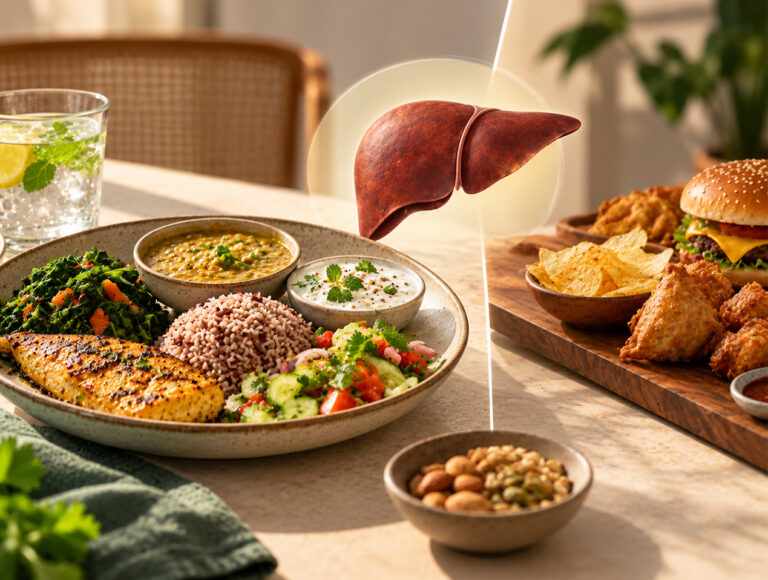
Your thyroid is working overtime to keep your metabolism running. Yet most people with hypothyroidism get handed a prescription and never hear about the simplest dietary change that could make a real difference. We’re not talking about some complicated elimination diet or expensive supplements. The easiest change? Swap ultra-processed foods for whole, minimally processed ones. That’s it. Sounds too simple to matter, right? But research from Precision Nutrition shows this single shift addresses most nutritional deficiencies that worsen thyroid symptoms.
Why This One Change Matters More Than You Think
Here’s the thing about your thyroid: it needs specific nutrients to produce hormones. When you’re eating mostly packaged, processed stuff, you’re missing out on iodine, selenium, zinc, and other key players. Plus, all that added sugar and refined carbs? They’re driving inflammation and messing with your blood sugar.
Ultra-processed foods are basically industrial formulations loaded with things your thyroid doesn’t recognize or need. According to clinical nutrition reviews, diets high in refined grains, saturated fats, and added sugars are directly linked to chronic inflammation. And inflammation makes hypothyroid symptoms worse—weight gain, brain fog, fatigue.
Whole foods, on the other hand, deliver nutrients in forms your body actually uses. Think vegetables, fruits, legumes, whole grains, and dairy. Simple ingredients you can pronounce.
What Makes This an Easy Thyroid Diet Plan
Look, nobody wants another restrictive protocol. You don’t need to cut out entire food groups or follow some “thyroid detox.” Start with one meal. Maybe breakfast.
Swap your usual sugary cereal or packaged snacks for poha with vegetables and peanuts. That’s real protein, fiber, and nutrients instead of empty calories. Cleveland Clinic emphasizes that people with hypothyroidism benefit most from balanced meals with adequate protein, plenty of produce, and healthy fats.
Once breakfast feels natural, move to lunch. Then dinner. No rush. Small changes stick better anyway.
The Nutrient Boost You Get Automatically
When you shift toward whole foods, you naturally increase your intake of thyroid-supporting nutrients:
- Selenium – found in Brazil nuts, sunflower seeds, and mushrooms. Your thyroid needs it to convert inactive T4 hormone into active T3.
- Zinc – present in legumes, nuts, seeds, and dairy. Essential for thyroid hormone synthesis.
- Iodine – the backbone of thyroid hormones. You’ll get adequate amounts from iodized salt, dairy, and fortified foods.
- Iron and vitamin D – both play supporting roles in thyroid function and immunity.
Research published in PMC confirms that adequate selenium and zinc intake supports thyroid hormone metabolism and may reduce antibodies in autoimmune thyroid disease.
But What About Iodine? (Everyone Gets This Wrong)
Real talk: iodine is complicated. You need it—your thyroid literally can’t make hormones without it. But too much can trigger or worsen autoimmune thyroiditis, especially Hashimoto’s.
The recommended daily amount is 150 micrograms for most adults. In India, most people get enough from iodized salt and dairy. You don’t need seaweed supplements or extra iodine pills unless you’re actually deficient (which your doctor can test for).
If you have Hashimoto’s, some experts suggest being cautious with added iodine sources. Stick with regular dietary amounts from whole foods and iodized salt in moderation. Mayo Clinic notes that excess iodine can worsen autoimmune thyroid conditions in susceptible people.
Should You Avoid Cruciferous Vegetables?
Short answer: No.
Cabbage, cauliflower, broccoli, and mustard greens contain goitrogens—compounds that can interfere with thyroid function in theory. But here’s what actually matters: cooking these vegetables significantly reduces goitrogenic activity. And if your iodine intake is adequate (which it likely is), normal amounts of crucifers won’t hurt you.
Nutrition research shows that cooking cruciferous vegetables makes them safe for people with hypothyroidism. Steaming or sautéing works best. You’d have to eat massive raw amounts daily to see any negative effect.
Don’t skip nutrient-dense vegetables out of fear. Just cook them.
Indian Vegetarian Foods for Your Thyroid Meal Plan
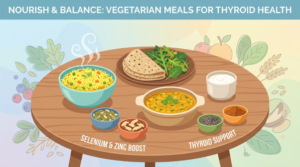
Want a framework that fits your lifestyle? Build your thyroid meal plan around traditional Indian vegetarian foods:
- Lots of colorful vegetables like spinach, carrots, tomatoes, bell peppers, and bottle gourd
- Legumes and dals—moong dal, masoor dal, chana, and rajma for protein and zinc
- Paneer and dairy for calcium, protein, and iodine
- Nuts and seeds—almonds, walnuts, pumpkin seeds, and Brazil nuts for selenium
- Whole grains like brown rice, ragi, jowar, and whole wheat instead of refined maida
- Ghee and cold-pressed oils as your main fats
This approach reduces inflammation, which is crucial for managing autoimmune thyroid conditions like Hashimoto’s.
What About Your Thyroid Medication?
Diet doesn’t replace medication. Let’s be clear on that. The British Thyroid Foundation states there are no specific foods that can treat thyroid disorders—you need your levothyroxine or other prescribed medication.
But diet can affect how well your medication works. High-fiber foods, calcium, and iron can interfere with thyroid hormone absorption if taken too close together. Cleveland Clinic recommends taking your medication on an empty stomach, waiting at least 30-60 minutes before eating, and avoiding coffee, calcium supplements, and iron for several hours.
That morning routine matters.
Simple Indian Vegetarian Swaps to Get Started
Making this easy thyroid diet plan stick is about practical substitutions:
- Trade packaged biscuits for homemade ragi porridge with jaggery and nuts
- Replace white bread sandwiches with multigrain roti wraps filled with paneer and vegetables
- Choose dal with brown rice and sabzi over instant noodles or packaged snacks
- Swap samosas and pakoras for roasted makhana or boiled chana chaat
- Pick fresh fruit or homemade ladoos instead of store-bought sweets loaded with refined sugar
Start with one swap this week. Add another next week. Small wins build momentum.
How Long Before You Notice Changes?
Honestly? It varies. Some people report better energy and less brain fog within a few weeks. Weight changes take longer—maybe months—especially with hypothyroidism.
Your body needs time to adjust, and diet works alongside medication, not instead of it. Track how you feel rather than obsessing over the scale. Better sleep, improved digestion, steadier energy—these matter just as much as pounds lost.
Your Easy Thyroid Diet Plan Starts Today
Bottom line: the easiest change to your diet for thyroid health is ditching ultra-processed foods in favor of whole, nutrient-dense options. No extreme restrictions. No expensive protocols. Just real food that gives your thyroid what it needs.
Start with one meal today. Make it simple—dal, sabzi, whole grain roti, and a bowl of curd. Build from there. And keep taking your medication as prescribed. Diet supports your thyroid; it doesn’t replace medical treatment.
This approach works because it’s sustainable. You can actually stick with it. And that consistency is what makes the difference long-term.
Frequently Asked Questions
Can I follow a vegetarian thyroid meal plan successfully?
Absolutely. Indian vegetarian diets can provide all necessary thyroid-supporting nutrients through dals, paneer, dairy, nuts, seeds, and vegetables. Focus on variety and include iodized salt, selenium-rich Brazil nuts, and zinc from legumes.
Should I avoid soy products like tofu if I have hypothyroidism?
Small amounts of whole soy foods are generally fine for most people. Just avoid consuming them within 3-4 hours of taking your thyroid medication, as they can interfere with absorption. Excessive amounts may be problematic, so moderation is key.
Are there specific Indian foods that boost thyroid function?
No single food “boosts” thyroid function, but nutrient-rich options support overall thyroid health: moong dal for zinc, Brazil nuts for selenium, dairy for iodine, spinach for iron, and whole grains for sustained energy. A balanced thyroid meal plan includes variety.
How much iodized salt should I use daily?
Most adults need about 150 micrograms of iodine daily, which you can get from regular use of iodized salt in cooking. There’s no need to oversalt your food—normal cooking amounts are sufficient. Avoid excessive iodine supplements unless prescribed by your doctor.
Can dietary changes help me reduce my thyroid medication?
Never adjust your medication without consulting your doctor. While a healthy diet supports thyroid function and may improve symptoms, it doesn’t replace prescribed medication. Your doctor will monitor your thyroid levels and adjust medication if needed.
Is intermittent fasting safe for people with hypothyroidism?
This depends on individual circumstances. Some people with hypothyroidism find intermittent fasting worsens fatigue and slows metabolism further. Consult your healthcare provider before trying any fasting protocol. Regular, balanced meals often work better for thyroid health.
Not sure where to start?
Take the 7 day Nutri Trial and see what a plan built around your own kitchen actually feels like.
Start your trial