
- That Food List is Missing the Most Important Part: You
- Indian Vegetarian Food Isn’t on That List
- You’re Probably Making These Mistakes Right Now
- The Three Phases Need a Guide, Not Just a List
- When Your Gut Problem Isn’t Just IBS
- The Bangalore Advantage: Accessible, Affordable, Expert Care
- Bottom Line: Lists Inform, Dieticians Transform
- Frequently Asked Questions
You’ve Googled “low FODMAP foods.” Downloaded a list. Maybe even printed it out and stuck it on your fridge. But three weeks in, you’re still bloated, still anxious about every meal, and honestly? More confused than when you started. Here’s the thing: that food list isn’t going to cut it. Not for IBS, not for real life in Bangalore, and definitely not if you want actual, lasting relief. Let me explain why working with a FODMAP dietician in Bangalore is the difference between spinning your wheels and actually getting your life back.
That Food List is Missing the Most Important Part: You
Generic FODMAP lists treat everyone the same. But your gut isn’t generic.
A FODMAP dietician personalizes the entire approach based on your symptoms, your eating patterns, and your lifestyle. According to research published by NCBI, the low FODMAP diet follows a structured 3-phase approach—elimination, reintroduction, and personalisation—that’s designed to identify your specific triggers, not eliminate half the food pyramid forever. Most people using just a list? They get stuck in phase one, over-restricting and missing the whole point.
Plus, those lists online contradict each other constantly. One says tomatoes are safe, another flags them. Who’s right? A trained dietician uses evidence-based resources like the Monash FODMAP database—the actual research institution that developed this diet—to give you accurate, updated information. Not guesswork from a blog post written in 2016.
Indian Vegetarian Food Isn’t on That List
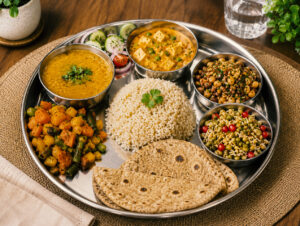
Let’s be real: most FODMAP lists are written for Western diets. They’ll tell you about sourdough bread and lactose-free milk. Great. But what about idli? Poha? That dal your mom makes?
The best dietician Bangalore has to offer understands Indian vegetarian food inside out. They know that moong dal is lower in FODMAPs than rajma, that you can use hing (asafoetida) instead of onion and garlic for flavor, and that garlic-infused oil gives you taste without the FODMAPs because they don’t dissolve in oil. Try finding that hack on a generic list.
They’ll also help you navigate portion sizes—critical because even “safe” foods become high FODMAP when you eat too much. Two idlis? Usually fine. Five? You’re gonna have a bad time. That nuance matters, especially when rice-based meals are your staple. Whether you need a specialized thyroid meal plan or IBS management, a dietician adapts Indian vegetarian staples like dosa, upma, and vegetable khichdi to work for your gut.
Eating Out Without Losing Your Mind
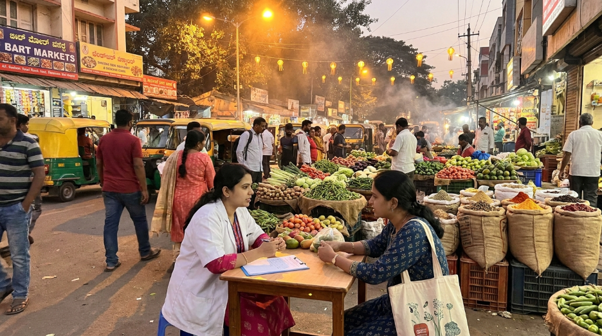
Bangalore’s food scene is incredible. It’s also a minefield when you’re managing IBS. A dietician teaches you how to order at Darshinis, what to ask for at office cafeterias, and how to handle wedding buffets without either starving or suffering later. You can’t get that survival skill from a PDF.
You’re Probably Making These Mistakes Right Now
Without guidance, most people:
- Stay on the elimination phase way too long—it should only last 4-8 weeks maximum, not forever
- Cut out entire food groups unnecessarily and end up nutrient deficient
- Never do the reintroduction phase correctly, so they never figure out what actually triggers them
- Give up because they’re overwhelmed and don’t see results
According to FODMAP experts, working with a trained dietician can save you months of trial and error. They’ve seen hundreds of cases. They know what works, what doesn’t, and how to troubleshoot when progress stalls.
The Three Phases Need a Guide, Not Just a List
Phase one (elimination) is the easy part. Kind of. You remove high FODMAP foods for a few weeks to see if symptoms improve. But phase two? That’s where it gets complicated.
Reintroduction means systematically testing individual FODMAP groups—one at a time, in controlled portions, over three days—to see which ones you actually react to. Clinical research shows this phase is crucial for long-term success, but it requires careful tracking and interpretation. You’re basically running science experiments on your gut, and you need someone who knows how to read the results.
Phase three is personalization: building a sustainable diet that includes all your tolerated foods while avoiding only your specific triggers. A dietician helps you get your diet as diverse as possible—crucial for gut health and mental health. That food list? It stops at phase one.
When Your Gut Problem Isn’t Just IBS
Here’s what that list doesn’t tell you: low FODMAP isn’t right for everyone with digestive issues. Before starting, you need to rule out serious conditions like celiac disease, IBD, or colon cancer. A qualified dietician works with your gastroenterologist to ensure you’re properly diagnosed first.
They’ll also identify if you have overlapping conditions—SIBO, hypothyroidism, or gastritis—that need different approaches. Sometimes low FODMAP helps. Sometimes it doesn’t. Sometimes you need modifications or even a comprehensive thyroid meal plan alongside gut management. You can’t figure that out from Google.
The Bangalore Advantage: Accessible, Affordable, Expert Care
Good news: seeing a FODMAP dietician in Bangalore won’t break the bank. Consultations typically range from Rs. 500 to Rs. 1,500 per session—way less than the ongoing costs of medications, tests, and missed workdays from IBS flare-ups.
Many dieticians now offer teleconsultations too, which means you don’t have to battle Bangalore traffic when you’re already feeling miserable. You get expert guidance from home, with follow-ups that fit your schedule.
What to Look For
Find someone with actual FODMAP training—ideally certified through Monash University or King’s College London. Ask if they have experience with Indian vegetarian diets specifically. Check if they understand the cultural context of eating in Bangalore—the festival foods, the social expectations, the vegetarian constraints. The best dietician Bangalore offers will combine FODMAP expertise with deep knowledge of local food culture. If you’re managing multiple conditions, ensure they can integrate a thyroid meal plan with your FODMAP protocol.
Bottom Line: Lists Inform, Dieticians Transform
That FODMAP food list? It’s a starting point. A tool. But tools don’t build houses by themselves.
A skilled FODMAP dietician takes that tool and uses it to construct a personalized plan that actually fits your life. They teach you to fish instead of just handing you a fish. They troubleshoot when things don’t go as expected. They keep you from giving up when week three hits and you’re craving your mom’s sambar.
Look, managing IBS through diet isn’t easy. But it’s a whole lot easier with someone in your corner who’s done this hundreds of times, understands your food culture, and can adapt the science to your real life in Bangalore. Stop fighting your gut alone with a printout. Get the expert support that actually works.
Frequently Asked Questions
Can I follow a low FODMAP diet with only Indian vegetarian foods?
Absolutely! Indian vegetarian cuisine offers plenty of low FODMAP options like rice, moong dal, potato, carrot, spinach, pumpkin, and paneer (in small amounts). A FODMAP dietician can help you adapt traditional recipes using hing instead of onion-garlic and choosing the right vegetables and pulses.
How long does it take to see results with a FODMAP dietician?
Most people notice symptom improvement within 2-4 weeks of the elimination phase. However, the complete process including reintroduction takes 2-3 months. A dietician ensures you move through phases correctly for lasting results.
Is the low FODMAP diet suitable if I have thyroid issues too?
Yes, but it requires careful planning. A qualified dietician can create an integrated approach that addresses both conditions, ensuring your thyroid meal plan doesn’t conflict with FODMAP restrictions and that you’re getting adequate nutrients for both conditions.
What’s the difference between a nutritionist and a FODMAP dietician?
A FODMAP dietician has specialized training in the low FODMAP protocol, typically certified through Monash University or similar institutions. They understand the three-phase approach, reintroduction testing, and how to personalize the diet—skills that general nutritionists may not have.
Can I do the FODMAP diet without giving up Indian festivals and social eating?
Yes! A FODMAP dietician familiar with Bangalore’s culture teaches you strategies for festivals, weddings, and social gatherings. They help you identify safe options, manage portions, and navigate traditional foods without feeling isolated or restricted.
Not sure where to start?
Take the 7 day Nutri Trial and see what a plan built around your own kitchen actually feels like.
Start your trial