
- Why Sunlight Alone Isn’t Cutting It Anymore
- Fatty Fish: The Undisputed Champion
- Egg Yolks Are Small But Mighty
- Mushrooms: The Vegetarian Secret Weapon
- Fortified Milk, Curd, and Paneer
- Fortified Plant Milks and Juices
- Cod Liver Oil: Old-School and Still Works
- A Realistic Day of Eating for Low-Sun Indians
- When Food Isn’t Enough
- Frequently Asked Questions
Here’s something wild. India gets sunshine almost year-round, yet vitamin D deficiency is practically an epidemic here. Blame it on desk jobs, apartment living, pollution blocking UVB rays, or the fact that most of us dodge midday sun like it’s the enemy. Whatever the reason, if you’re barely seeing sunlight and wondering how to fix your levels through diet, you’re in the right place. This guide breaks down the best vitamin d foods for Indian kitchens, what actually works for vegetarians, and how to read those confusing “fortified” labels. No fluff, no generic Western advice about salmon and cereal you can’t easily find. Just real food you’ll spot at your local kirana or supermarket.
Why Sunlight Alone Isn’t Cutting It Anymore
You’d think living in a sun-drenched country would sort this out. It doesn’t. NDTV Health notes that air pollution actively blocks UVB rays, which are the specific wavelengths your skin needs to make vitamin D. Add sunscreen, full-sleeve office wear, and AC-cooled indoor days, and your skin barely gets a chance.
Clinical research published in the Journal of Clinical and Scientific Research suggests that even 30 minutes of midday exposure on bare arms and face can meet daily needs. But let’s be real. Who’s doing that between 10 AM and 3 PM on a workday? Many corporate nutrition programs now recognize this workplace challenge and are incorporating vitamin D awareness into employee wellness initiatives.
Fatty Fish: The Undisputed Champion
Best Indian Fish Varieties for Vitamin D
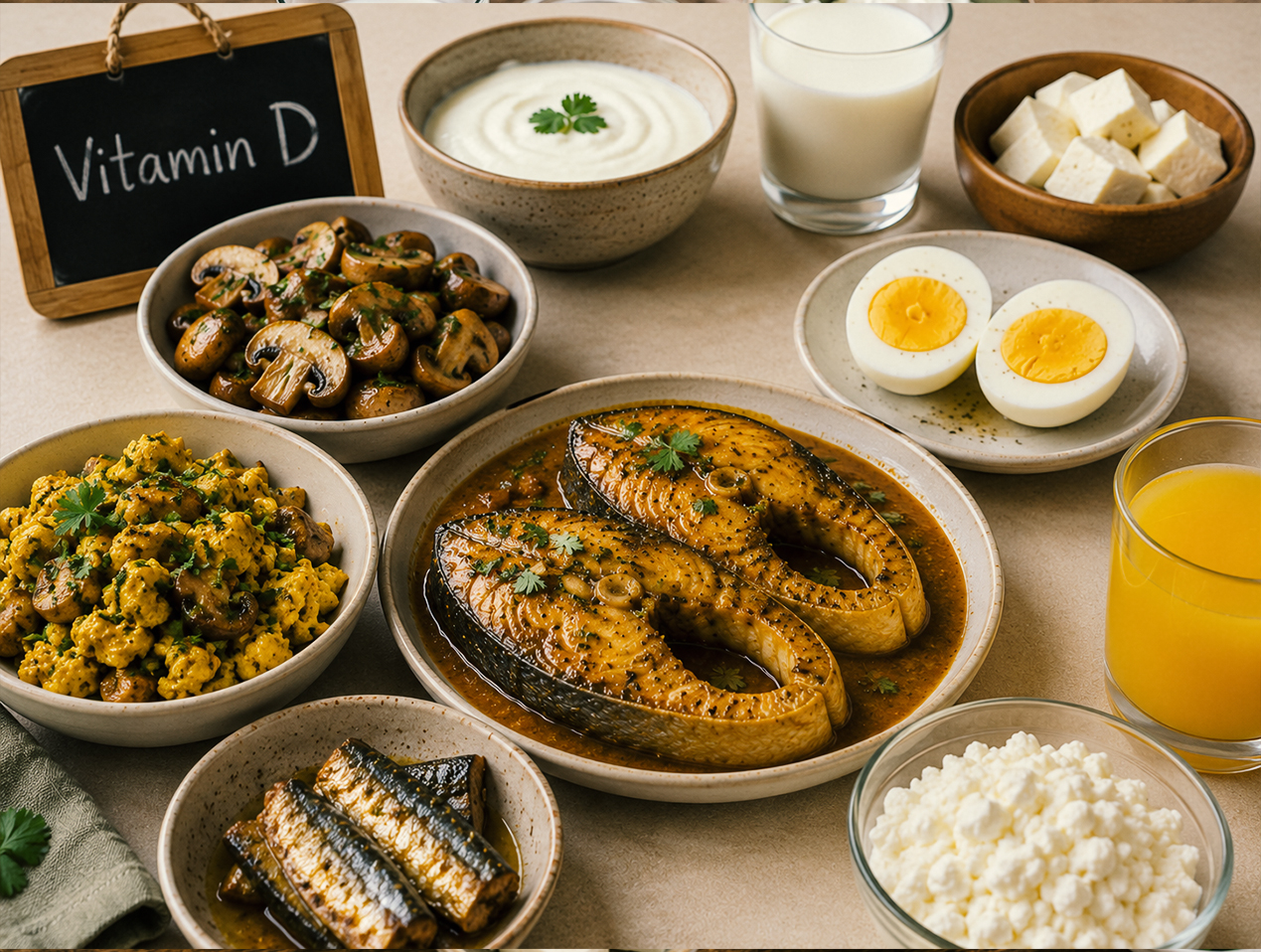
If you eat fish, this is your easiest win. Paras Hospitals data shows rohu delivers 150–250 IU per 100g, and hilsa clocks in even higher at 200–250 IU per 100g. Mackerel, sardines, and tuna work beautifully too.
One serving twice a week? You’re doing better than 90% of urban Indians.
Egg Yolks Are Small But Mighty
Don’t skip the yolk. That’s where all the vitamin D3 lives. According to Max Healthcare, one large egg yolk gives you around 40 IU. It’s not massive, but eat two eggs at breakfast most days and it adds up quietly.
Pro tip: pastured or free-range eggs tend to pack more D because the hens actually see sunlight. Ironic, right?
Mushrooms: The Vegetarian Secret Weapon
How to Sun-Dry Mushrooms at Home
Here’s what most people get wrong. Regular button mushrooms sitting in a dark crate? Barely any vitamin D. But sun-exposed or UV-treated mushrooms? Different story entirely.
Paras Hospitals reports that sun-dried mushrooms can deliver 230–450 IU per 100g, which is honestly incredible for a vegetarian food. The hack? Buy fresh mushrooms, slice them, lay them gill-side up on a plate, and leave them in direct sunlight for a couple of hours before cooking. Their ergosterol converts to vitamin D2. Kitchen chemistry that actually works.
Fortified Milk, Curd, and Paneer
Plain cow’s milk in India isn’t naturally loaded with vitamin D. The trick is picking fortified versions. Healthline notes fortified cow’s milk can offer up to 120 IU per cup, and fortified yogurt around 52 IU per 100g. Paras adds that fortified curd sits at 80–100 IU per 150g serving.
Check the label. If it doesn’t say “fortified with vitamin D” clearly, assume it isn’t.
Fortified Plant Milks and Juices
Vegan or lactose-intolerant? Soy milk, almond milk, and even some orange juice brands come fortified with up to 100 IU per cup. Tofu, when fortified, throws in another 100 IU per 100g. That’s a solid stack for anyone skipping dairy.
Just don’t assume every carton on the shelf is fortified. Some are. Most aren’t. Read carefully.
Cod Liver Oil: Old-School and Still Works
Your grandmother wasn’t wrong. A single tablespoon of cod liver oil packs over 1,300 IU, plus omega-3s as a bonus. One teaspoon daily can genuinely move your levels. Taste isn’t for everyone, though. Capsule form exists for a reason.
A Realistic Day of Eating for Low-Sun Indians
- Breakfast: Two eggs with sun-exposed mushroom bhurji, plus a glass of fortified milk
- Lunch: Rohu or hilsa curry with rice, or paneer bhurji if vegetarian
- Snack: Fortified curd with fruit
- Dinner: Tofu stir-fry or grilled fish, side of mushroom sabzi
Do this consistently, and you’re pulling in real amounts, not just theoretical numbers. Progressive corporate nutrition programs are now integrating these practical vitamin d foods into office cafeteria menus and employee meal planning workshops.
When Food Isn’t Enough
Real talk. If you’ve had chronic fatigue, bone aches, hair fall, or low mood, get your 25(OH)D levels tested. Food helps maintenance. Severe deficiency usually needs supplementation under medical guidance. Don’t self-prescribe high-dose D3.
Final Thoughts
You don’t need to move to a beach town to fix your vitamin D. The right mix of vitamin d foods, fortified staples, and a few smart kitchen habits (hello, sun-dried mushrooms) can carry most Indians through even the most indoor-heavy lifestyle. Prioritize fatty fish if you eat it, load up on egg yolks, embrace UV-exposed mushrooms, and always, always check labels for fortification.
And if you’re not sure whether your diet’s actually working? Get tested. Numbers don’t lie. For personalized nutrition guidance built around your Indian kitchen, lifestyle, and preferences, Begin Your Health Journey with Anupama. Because generic advice only gets you so far. Real change starts with a plan that fits your plate.
Frequently Asked Questions
Which Indian food has the highest vitamin D?
Fatty fish like hilsa and rohu top the list with 200–250 IU per 100g. For vegetarians, sun-dried mushrooms deliver 230–450 IU per 100g, making them the richest plant-based source.
Can I get enough vitamin D from food alone in India?
It’s challenging but possible with consistent intake of vitamin d foods like fatty fish, fortified dairy, eggs, and sun-exposed mushrooms. However, severe deficiencies typically require supplementation alongside dietary changes.
Are fortified foods really effective for vitamin D?
Yes, when consumed regularly. Fortified milk provides up to 120 IU per cup, and fortified plant milks offer similar amounts. Always check labels to confirm fortification before purchasing.
How do I prepare mushrooms to increase their vitamin D content?
Slice fresh mushrooms and place them gill-side up in direct sunlight for 2–3 hours before cooking. This UV exposure converts ergosterol to vitamin D2, significantly boosting their nutritional value.
Should vegetarians take vitamin D supplements?
Vegetarians should get tested first. If levels are low despite eating fortified foods, mushrooms, and eggs, supplementation under medical guidance may be necessary, especially during winter months or for those with limited sun exposure.
Not sure where to start?
Take the 7 day Nutri Trial and see what a plan built around your own kitchen actually feels like.
Start your trial