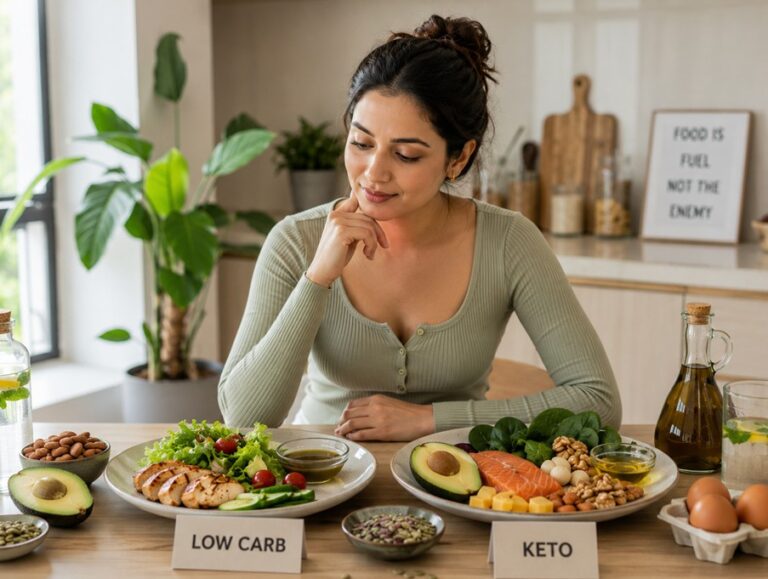
Discover the difference between low carb and keto diets. Learn which approach is safer, more sustainable, and how low carb Indian foods support healthy weight loss and better nutrition.


Ever stood in a grocery store aisle, staring at a “keto-friendly” label and wondering if you should just cut carbs the normal way instead? You’re not alone. The confusion between low-carb and keto is real, and honestly, most people use these terms like they mean the same thing. They don’t. One’s a flexible way of eating that plenty of people stick with for years. The other’s a strict metabolic reset that can feel like a full-time job. So which one actually works for weight loss, and more importantly, which one won’t wreck your health along the way? Let’s break it down.
Table of Contents
- What Actually Separates Low Carb from Keto?
- How Many Carbs Are We Talking About?
- Which One Works Better for Weight Loss?
- Is Keto Safe? The Honest Answer
- Who Should Skip Keto Entirely?
- The Keto Flu Nobody Warns You About
- Which Is Actually Safer?
- What About Practical Day-to-Day Eating?
- Frequently Asked Questions
What Actually Separates Low Carb from Keto?
The difference comes down to one thing: how aggressively you cut carbs.
A low carb diet for weight loss usually means eating between 50 and 150 grams of carbs a day, or roughly 10 to 30% of your total calories, according to Healthline. Keto goes way further. You’re looking at fewer than 50 grams of carbs daily, sometimes as low as 15 to 20 net carbs, per U.S. News.
The goal on keto isn’t just fewer carbs. It’s ketosis, a state where your body switches from burning glucose to burning fat for fuel.
How Many Carbs Are We Talking About?
Here’s a quick side-by-side to make this less confusing:
- Low carb: 50–150g carbs/day, 25–40% of calories from carbs
- Keto: Under 50g carbs/day (often 20g), 70–80% of calories from fat, per Abbott Nutrition
- Protein: Low carb allows higher protein (40–50% of calories); keto keeps it moderate
Quick note on your brain: it typically runs on about 120 grams of carbs a day, according to Health.com. Keto drops you well below that, which is why the first two weeks can feel rough.
Which One Works Better for Weight Loss?
Both work. Really.
Keto tends to produce faster initial weight loss, mostly water weight in the first week, then real fat loss as ketosis kicks in. But a low carb diet for weight loss often wins the long game because people can actually stick with it. You can have a piece of fruit. You can eat rice at your cousin’s wedding. You can live your life.
And here’s the thing most people miss: sustainability beats intensity every single time. A diet you quit in six weeks does nothing for you at month twelve.
Is Keto Safe? The Honest Answer
Short-Term vs Long-Term Considerations
Short-term? Generally yes, for most healthy adults. Long-term? That’s where it gets murky.
A 2021 paper published in Frontiers in Nutrition flagged concerns with very low carb diets including increased cardiovascular disease risk, higher cancer risk, and neural tube defects in babies born to women on keto, even with folic acid supplementation.
Expert Opinions on Nutritional Concerns
Registered dietitian experts quoted by ThedaCare point out that keto “could lead to nutrient deficiencies, digestive issues, and poor bone health over time.”
That said, StatPearls (NIH) clarifies something important: nutritional ketosis is not the same as ketoacidosis. Very low carb intake is generally safe, even for people with type 2 diabetes, when done properly.
Who Should Skip Keto Entirely?
Pay attention to this list. If you fall into one of these categories, talk to a doctor before going keto:
- Pregnant or trying to conceive
- History of heart disease or high LDL cholesterol
- Kidney or liver conditions
- Type 1 diabetes (without close medical supervision)
- Anyone with a history of disordered eating
- For these folks, a moderate low carb approach is usually the smarter, safer play.
For these folks, a moderate low carb approach is usually the smarter, safer play.
The Keto Flu Nobody Warns You About
About three to five days in, you’ll probably feel awful. Headaches, brain fog, fatigue, cranky mood, the works. That’s keto flu. It happens because your insulin drops, your kidneys dump water and electrolytes, and your body’s basically freaking out about the lack of glucose.
Fix it with more salt, magnesium, potassium (think leafy greens and avocado), and enough water. Low carb diets rarely trigger this because you’re not going deep enough to fully switch fuel systems.
Which Is Actually Safer?
For most people, low carb wins on safety. You get the metabolic benefits, blood sugar improvements, and weight loss without the extreme restriction. Plus, you’re less likely to short yourself on fiber, vitamins, and minerals.
Keto has its place, especially for specific medical conditions like epilepsy (its original purpose in the 1920s) or under supervised protocols for insulin resistance. But as a lifestyle for the average person trying to lose 15 pounds? It’s overkill.
What About Practical Day-to-Day Eating?
Low Carb Approach
On low carb, focus on real food. Leafy greens, non-starchy veggies, quality protein, nuts, seeds, some berries, and healthy fats like olive oil and avocado. You can even fit in small amounts of whole grains or legumes. If you’re looking for low carb Indian foods, options like paneer, cauliflower sabzi, tandoori chicken, and dal in moderate portions work beautifully.
Keto Requirements
Keto is more rigid. You’re tracking macros, watching net carbs like a hawk, and skipping most fruit entirely. While some low carb Indian foods can fit into keto, you’ll need to be extremely careful with portions and preparation methods to stay within the strict carb limits.
Final Thoughts
Real talk: the best diet is the one you’ll actually follow six months from now. A low carb diet for weight loss offers flexibility, sustainable results, and a much gentler safety profile for most people. Keto can produce dramatic short-term results, but it comes with more restrictions, more risks, and a much steeper learning curve.
Before jumping into either approach, get personalized guidance. Your body, medical history, and lifestyle matter more than any generic meal plan pulled off the internet. If you’re ready to figure out what actually fits your life, book a consultation with Anupama for a nutrition plan built around you, not a trend. Because the goal isn’t just losing weight. It’s keeping it off, feeling great, and staying healthy for the long haul.
Frequently Asked Questions
Can I lose weight on a low carb diet without going full keto?
Absolutely. Many people achieve excellent weight loss results on a moderate low carb diet (50-150g carbs daily) without entering ketosis. The key is consistency and choosing whole, nutrient-dense foods.
How long does it take to see results on a low carb diet?
Most people notice initial changes within the first week, though this is often water weight. Real fat loss typically becomes evident after 2-3 weeks of consistent adherence to your chosen carb level.
Is keto safe for people with diabetes?
Type 2 diabetics may benefit from keto under medical supervision, as it can improve blood sugar control. However, type 1 diabetics should only attempt keto with close monitoring from their healthcare team due to ketoacidosis risk.
What’s the biggest difference between low carb and keto?
The main difference is carb restriction level and metabolic goal. Low carb (50-150g carbs) offers flexibility while still reducing carbs, whereas keto (under 50g carbs) aims to achieve ketosis, a specific metabolic state where your body burns fat for fuel instead of glucose.
Can I eat fruit on a low carb diet?
Yes, moderate amounts of lower-sugar fruits like berries fit well into a low carb diet. On strict keto, fruit is mostly eliminated due to natural sugar content, though small portions of berries are sometimes allowed.
Ready When You Are
We’re just a message away from getting started.