
- The Actual Difference Between the Two
- Does Brown Rice for Weight Loss Actually Work?
- White Rice Isn’t the Villain You Think It Is
- The Calorie Comparison Nobody Tells You About
- What About Blood Sugar and Cravings?
- When White Rice Might Actually Be Better
- How Much Rice Should You Actually Eat?
- Common Mistakes People Make
- A Practical Middle Ground
- Frequently Asked Questions
Ask ten people which rice to eat if you’re trying to lose weight, and nine will say brown. It’s practically gospel at this point. But is it actually true? Or is it one of those nutrition myths we’ve all just kind of accepted without questioning?
Here’s what I want to unpack with you today: the real difference between brown rice and white rice when it comes to fat loss, what the science actually says, and whether you need to swap your comforting bowl of white rice for something chewier to see results. Spoiler: the answer is more nuanced than Instagram would have you believe.
The Actual Difference Between the Two
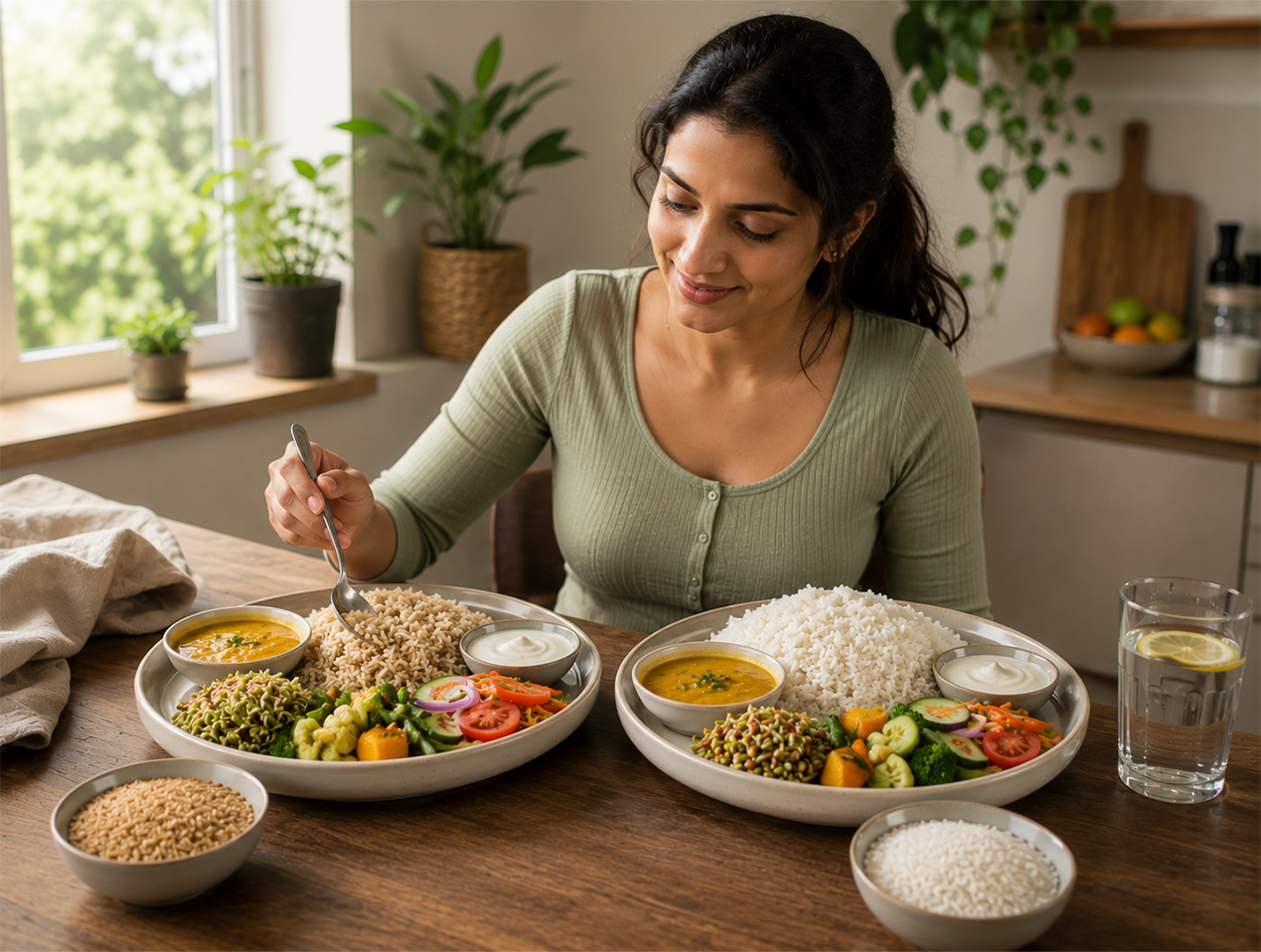
Brown rice is a whole grain. White rice isn’t. That’s really the crux of it.
When rice gets processed into white, the bran and germ layers get stripped away. Those layers? They hold most of the fiber, magnesium, and B vitamins. What’s left is mostly starchy endosperm. According to Harvard Health, brown rice keeps more nutrients and fiber, plus it has a lower glycemic index than its polished cousin. Interestingly, when you look at brown rice vs white rice calories, the two are actually quite close, so the real difference comes down to nutrient density and fiber rather than energy content.
Does Brown Rice for Weight Loss Actually Work?
Short answer: yes, but not magically. Brown rice for weight loss works because it’s higher in fiber, which keeps you full longer and slows down how quickly your blood sugar rises after a meal.
A meta-analysis on brown rice and body composition found that brown rice showed anti-obesity effects compared to white rice, with pre-germinated brown rice specifically reducing body weight and improving blood glucose markers. Real research. Real results.
But here’s where people get it twisted. As a dietitian for weight loss, I see clients obsess over rice type while ignoring the bigger picture of their overall eating patterns.
White Rice Isn’t the Villain You Think It Is
Real talk: white rice won’t wreck your progress. Healthline points out that while white rice has less nutritional value, studies haven’t found it to cause weight gain on its own.
What causes weight gain? Eating more calories than you burn. Consistently. That’s it.
So if you’re eating a mountain of brown rice thinking it’s “free” because it’s healthier, you’re going to be disappointed with the scale. Portion still matters. A lot.
The Calorie Comparison Nobody Tells You About
Get this: brown and white rice are almost identical in calories. Both hover around 210-220 calories per cooked cup. The magic isn’t in fewer calories. It’s in fiber content.
Nutritional Breakdown
- Brown rice: roughly 3 grams of fiber per cooked cup
- White rice: less than 1 gram per cooked cup
- Glycemic index: white sits around 72, brown around 68
See that GI gap? It’s smaller than most people assume. Which means switching rice alone won’t transform your body.
What About Blood Sugar and Cravings?
This is where brown rice quietly wins. Because it digests slower, you don’t get that sharp blood sugar spike and crash that white rice can trigger. And crashes mean cravings. Cravings mean snacking. Snacking means extra calories you didn’t plan for.
NDTV notes that brown rice stabilises blood sugar and promotes fullness, which is genuinely useful if you’re battling afternoon hunger, especially when paired with traditional Indian vegetarian meals like dal and sabzi.
When White Rice Might Actually Be Better
Not everyone should be forcing down brown rice. Honestly.
Digestive Considerations
If you have IBS, gut inflammation, or you’re recovering from a stomach bug, the high fiber in brown rice can make things worse. Harvard specifically mentions white rice can be the better pick during digestive flare-ups.
Cultural context matters too. If white rice is central to your meals and you enjoy it with your daily dal-chawal or curd rice, ripping it out completely usually backfires. Sustainable beats perfect. Every single time.
How Much Rice Should You Actually Eat?
A reasonable portion sits around 1/2 to 3/4 cup cooked per meal for most people trying to lose weight. Fill the rest of your plate with:
Ideal Indian Vegetarian Plate Composition
- A palm-sized portion of protein (dal, rajma, chole, paneer, moong)
- Half a plate of non-starchy vegetables (bhindi, palak, baingan, lauki)
- A small amount of healthy fat (ghee, olive oil, nuts)
That plate structure does more for weight loss than any rice swap ever will.
Common Mistakes People Make
I see these patterns constantly with clients:
- Switching to brown rice but doubling the portion because “it’s healthy”
- Ignoring protein completely and blaming rice for stalled progress
- Quitting brown rice after three days because it’s “boring”
- Eating white rice with just curry and no vegetables or protein
- Obsessing over GI numbers while overeating in general
Fix these, and rice type becomes a footnote.
A Practical Middle Ground
Try mixing 50-50. Half brown, half white. You get some fiber benefits, better satiety, and the texture doesn’t feel like eating cardboard. Millets like ragi and bajra, hand-pounded rice, and even small portions of quinoa also deserve a rotation in your kitchen. Variety helps with nutrients and reduces arsenic exposure (yes, that’s a real concern with rice, particularly brown, as Healthline highlights).
The Verdict
Brown rice edges out white for weight loss because of fiber, satiety, and blood sugar control. But it’s not a miracle food. Your total calorie intake, protein consumption from sources like dal and paneer, sleep, stress, and movement matter more than whether your rice is beige or white.
Pick the rice that fits your body, your gut, your culture, and your life. Then focus on the plate around it.
Bringing It All Together
Here’s what I want you to take away:
- Brown rice for weight loss works better if the rest of your diet is dialed in
- White rice isn’t fattening; overeating anything is
- Portion size and meal composition matter more than rice type
- Sustainability beats optimization; eat what you’ll actually stick with
- Mix rice varieties, add protein-rich dals, load up on Indian vegetables
If you’re tired of guessing what to eat and want a plan built around your body, your goals, and yes, your love for rice, working with a dietitian for weight loss can make all the difference. That’s exactly what we do at Anupama. No food shaming. No cookie-cutter meal plans. Just real nutrition that fits real life.
Frequently Asked Questions
Is brown rice better than white rice for weight loss?
Yes, brown rice for weight loss has a slight advantage due to higher fiber content, which promotes satiety and better blood sugar control. However, portion size and overall diet quality matter more than rice type alone.
Can I eat white rice every day and still lose weight?
Absolutely. Weight loss depends on total calorie intake, not individual foods. You can include white rice daily as part of a balanced Indian vegetarian diet with dal, vegetables, and controlled portions.
How much brown rice should I eat per day for weight loss?
For weight loss, aim for 1/2 to 3/4 cup of cooked brown rice per meal, paired with protein sources like dal or paneer and plenty of vegetables like palak or bhindi.
Does brown rice cause gas or bloating?
Brown rice contains more fiber, which can cause digestive discomfort in some people, especially those with IBS. If you experience bloating, try white rice or soak brown rice before cooking to improve digestibility.
Can I mix brown and white rice together?
Yes, mixing half brown and half white rice is an excellent practical approach. You get some fiber benefits while maintaining better taste and easier digestion, making it more sustainable long-term.
Which Indian dishes work best with brown rice?
Brown rice pairs well with dal tadka, rajma masala, chole, mixed vegetable curry, and paneer dishes. The robust flavor of brown rice complements spiced Indian vegetarian preparations beautifully.
So the next time someone tells you rice is the enemy? Smile, portion it properly, and keep going.
Not sure where to start?
Take the 7 day Nutri Trial and see what a plan built around your own kitchen actually feels like.
Start your trial