
Here’s something that catches most people off guard: you can have a flat stomach, a “normal” BMI, and still walk out of a radiology lab with a Grade 1 fatty liver diagnosis. Happens all the time. And if you’ve just been told your ultrasound shows fat deposits on your liver, you’re probably sitting there wondering what on earth you’re supposed to eat now. Rice? No rice? Ghee? No ghee? Can mangoes stay or do they have to go?
Let me walk you through what actually works, Indian-kitchen style. We’ll cover the foods that help, the ones to pull back on, and the strange phenomenon of lean fatty liver that nobody warned you about. No scary food bans. No detox nonsense. Just a practical fatty liver diet you can live with, based on current clinical guidance and real Indian meals.
First, What Is Fatty Liver (and Why Should You Care)?
Fatty liver, now officially called MASLD (metabolic dysfunction–associated steatotic liver disease), is basically fat buildup inside your liver cells. A little fat is normal. Too much isn’t.
Left unchecked, it can slowly progress from simple fat deposits to inflammation, scarring (fibrosis), and in some cases, cirrhosis. The good news? Early-stage fatty liver is often reversible. A 2025 review in peer-reviewed literature confirms that dietary changes combined with physical activity can reverse early liver damage.
The not-so-good news? Most people have no symptoms until things get serious.
Why Lean People Get Fatty Liver Too
This is the part Indian doctors are increasingly worried about. You don’t need to be overweight to have fatty liver. South Asians are genetically predisposed to store fat around their organs rather than under the skin, so a slim-looking person can carry significant visceral fat.
It’s sometimes called “thin outside, fat inside.” Your BMI says normal. Your ultrasound says otherwise.
Lean MASLD is often linked to:
- Insulin resistance (your cells stop responding well to insulin)
- High triglycerides, even when total cholesterol looks fine
- A diet heavy in refined carbs, sugar, and fried food
- Low muscle mass (think desk jobs, no strength training)
- Family history of diabetes
- Poor sleep and chronic stress
So if your doctor dismissed your concerns because you “look fine,” push for a proper metabolic workup. Fasting insulin, triglycerides, waist circumference, and liver enzymes tell a story your weighing scale won’t.
What to Eat on an Indian Fatty Liver Diet
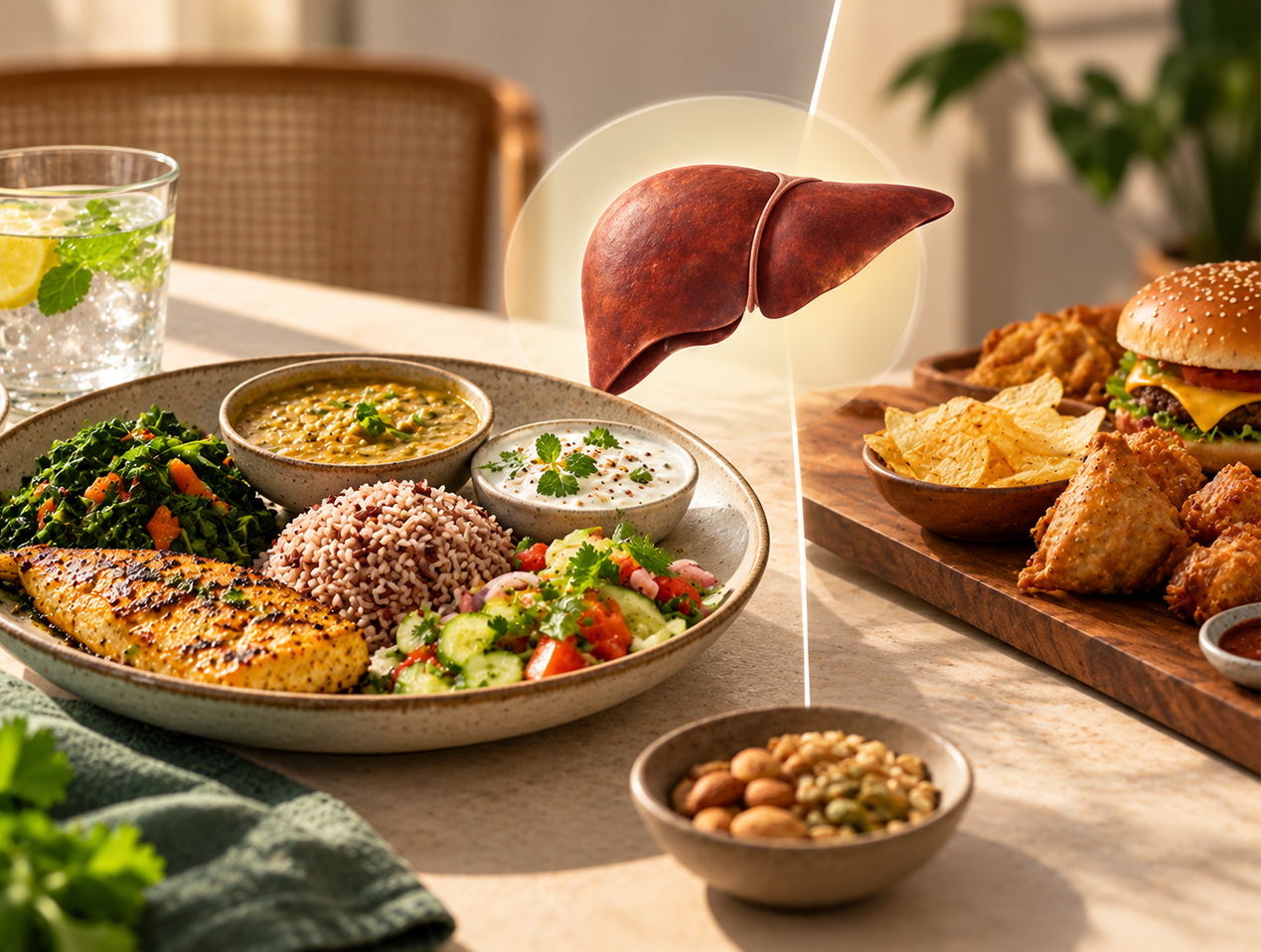
Forget the idea that you need imported superfoods. Your dadi’s kitchen already has most of what works. The Ministry of Health and Family Welfare operational guidance for NAFLD recommends balanced meals built around complex carbs, legumes, and vegetables, with unsaturated fats and lean protein.
Vegetables (The Non-Negotiable Base)
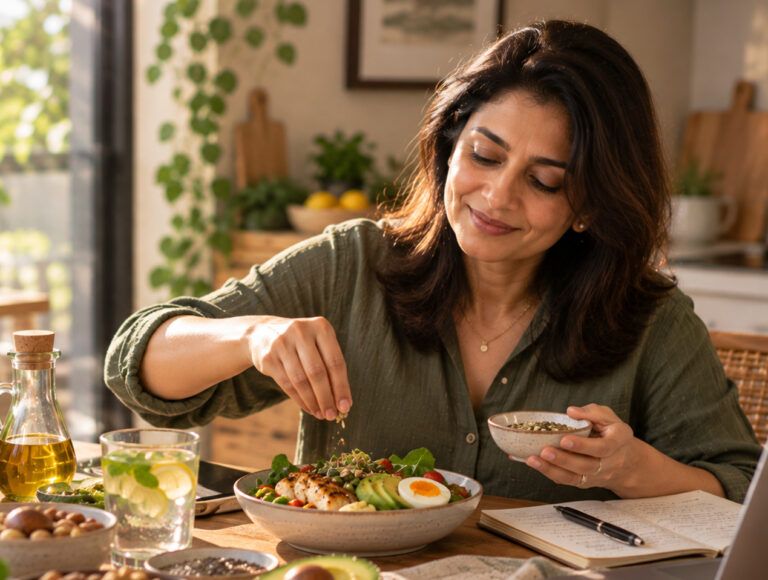
Fill half your plate. Seriously, half. Palak, methi, lauki, karela, bhindi, cabbage, cauliflower, beans, carrots, tomatoes, cucumber. Cooked, raw, sabzi-style, salad-style, whatever works. Fibre feeds your gut and slows down sugar spikes, which is exactly what a fatty liver needs.
Whole Grains in Right-Sized Portions
Yes, you can eat rice. No, you don’t need to swear off chapati. But swap maida and polished white rice for:
- Hand-pounded or brown rice (smaller portions)
- Whole wheat roti
- Ragi, jowar, bajra rotis or dosas
- Oats, dalia, broken wheat
- Red rice or millets like foxtail and kodo
The trick isn’t banning grains. It’s portioning them and pairing them with protein and vegetables so your blood sugar doesn’t go on a rollercoaster.
Protein (This Is Where Most Indians Fall Short)
Protein helps you hold onto muscle while losing liver fat. And most Indian plates? Woefully low on it.
Good options:
- Dals and legumes: moong, masoor, chana, rajma, lobia
- Paneer and tofu (in moderation)
- Curd and buttermilk (preferably low-fat)
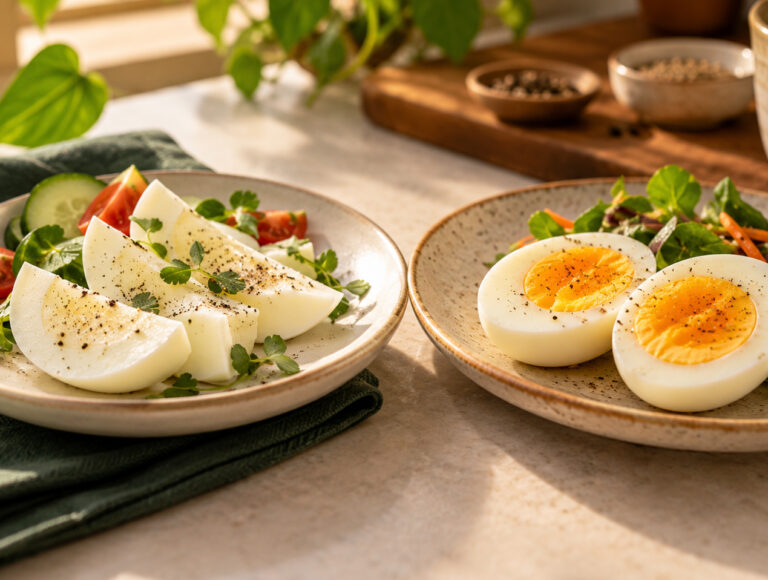
- Eggs
- Fish, especially fatty fish like mackerel or sardines for omega-3s
- Skinless chicken
- Sprouts, chickpeas, soya chunks
Vegetarians, aim to combine two protein sources per meal. Dal plus curd. Roti plus paneer. It stacks up.
Healthy Fats, in Reasonable Amounts
Fat isn’t the villain here. The type and amount matter. Mustard oil, groundnut oil, rice bran oil, and olive oil are solid cooking choices. Add a small handful of nuts (almonds, walnuts, pistachios) and seeds (flax, chia, pumpkin) daily. Walnuts particularly deserve a spot on your plate because of their omega-3 content.
About ghee: a teaspoon or two a day is fine for most people. But drowning your roti in it or spooning it into every dal is where things go sideways.
Fruits (Yes, Including the “Scary” Ones)
Whole fruit is fine. Juice is not. Berries, guava, apple, pear, papaya, orange, and watermelon are great. Mango, banana, chikoo, and grapes? Have them, just watch the portion. One small mango isn’t the problem. Four mangoes plus a sweet lassi after dinner is.
What to Limit (And Why)
This is where real change happens. According to NIDDK guidance, cutting back on simple sugars (especially fructose) is one of the most impactful dietary moves for fatty liver.
Added Sugar and Sugary Drinks
Pull the plug on soft drinks, packaged juices, flavoured yogurts, energy drinks, and the four spoons of sugar in your chai. Jaggery and honey? Still added sugars. Sweets and mithai are for occasions, not everyday.
Refined Carbs and Maida
White bread, biscuits, pav, naan, samosa, kachori, pakoras, instant noodles, bakery items. The Mayo Clinic specifically lists white bread, baked goods, and sugary cereals among foods to limit for MASLD. These spike blood sugar and feed liver fat storage.
Fried and Ultra-Processed Foods
Chips, namkeen, deep-fried snacks, pakoras, bhujia, store-bought sweets, processed meats. Occasional indulgence is human. Daily consumption is a problem.
Alcohol
Even if your fatty liver is classified as “non-alcoholic,” alcohol pours more fuel on the fire. Ideally, zero. If you can’t go completely dry, keep it minimal and infrequent.
Saturated and Trans Fats
Reduce red meat, butter overload, cream-based gravies, vanaspati, and anything with “partially hydrogenated oils” on the label. These push up liver inflammation.
A Sample Day on a Fatty Liver Diet (Indian Style)
Nothing fancy. Just a feel for how a day could look:
- Early morning: Warm water, soaked almonds and walnuts
- Breakfast: Vegetable oats upma, or 2 moong dal cheela with mint chutney, or 2 egg whites with multigrain toast
- Mid-morning: One fruit (guava, apple, orange)
- Lunch: 1-2 rotis, half a bowl of brown rice, dal, sabzi, salad, curd
- Evening: Green tea with a handful of roasted chana or makhana
- Dinner: Grilled fish or paneer bhurji, jowar roti, vegetable, soup
- If needed: Buttermilk
Portions get personalised. A 50-year-old sedentary accountant and a 25-year-old gym-goer don’t need the same quantities. This is where working with a dietitian pays off.
Can Fatty Liver Be Reversed?
Yes, especially at Grade 1 and 2. Studies suggest:
| Body weight lost | What it can do |
| 5-7% | Can meaningfully reduce liver fat |
| 10% | You may see improvements in inflammation and early fibrosis too |
But reversal isn’t just about food. Exercise matters almost as much. Aim for:
| Activity | Target |
| Moderate aerobic activity (brisk walking, cycling, swimming) | 150 minutes weekly |
| Strength training | 2-3 sessions a week (muscle burns through excess glucose) |
| Daily movement | Even 10-minute walks after meals |
Lean folks especially need resistance training. More muscle equals better insulin sensitivity.
The Mistakes I See Most Often
Pay attention to this bit. These derail more diets than anything else:
- Replacing sugar with jaggery or honey and calling it healthy (it’s still sugar)
- Drinking fruit juice thinking it’s the same as fruit (it’s not)
- Eliminating all carbs instead of fixing the quality
- Going on “liver detox” tea or green juice cleanses (your liver detoxes itself)
- Buying supplements marketed as liver cleansers
- Ignoring sleep and stress (both affect insulin resistance)
- Thinking that because you’re thin, you don’t need to change anything
What About Ghee, Coconut, and Those Diet Debates?
Honestly? The internet is loud about this stuff. A teaspoon of ghee on your dal isn’t going to wreck your liver. A ladleful every meal might. Same with coconut oil and coconut-heavy curries. Moderation, not elimination.
Millets are great, but they’re not magic. If you eat ragi dosa drenched in oil with coconut chutney and sugar-loaded sambar, you’ve just defeated the purpose. The pattern of eating matters more than any single hero ingredient.
When to See a Specialist
Diet is powerful, but it isn’t everything. See a hepatologist or endocrinologist if:
- Your liver enzymes (ALT/AST) are elevated
- You have diabetes, high triglycerides, or metabolic syndrome
- Imaging shows Grade 2 or 3 fatty liver
- You’ve been diagnosed as lean MASLD but have strong family history
- You’re on medications that affect the liver
A FibroScan or specific blood markers can check whether fibrosis is building up. That’s the thing we actually need to prevent.
Bringing It All Together
Fatty liver isn’t a life sentence. For most people, it’s a wake-up call that the metabolic engine needs some care. Build your plate around vegetables, legumes, whole grains in sensible portions, lean protein, and good fats. Pull back on sugar, maida, fried stuff, and alcohol. Move your body most days. Lift something heavy a few times a week. Sleep like it matters, because it does.
And if you’re lean? Don’t let anyone wave off your diagnosis because of your dress size. Lean fatty liver deserves the same seriousness as any other metabolic condition.
If you’d like a plan tailored to your test reports, lifestyle, food preferences, and family routine, connect with Anupama Menon. One generic diet chart doesn’t fit every liver, every schedule, or every kitchen. Yours shouldn’t either.
Start with one meal. Fix breakfast first. See how you feel in a week. Progress compounds faster than you’d think.
Frequently Asked Questions About Fatty Liver Diet
Can I eat rice if I have fatty liver?
Yes, but choose the right type and portion. Brown rice, hand-pounded rice, or red rice are better options than polished white rice. Keep portions moderate (half a bowl) and pair with plenty of vegetables, dal, and protein to balance blood sugar.
How can a thin person have fatty liver?
Body weight doesn’t tell the whole story. Lean individuals can have high visceral fat (fat around organs), insulin resistance, poor diet quality, or genetic predisposition. South Asians are particularly prone to storing fat internally even with normal BMI.
Is ghee bad for fatty liver?
Not necessarily. A teaspoon or two of ghee daily is generally fine for most people with fatty liver. The problem arises when ghee is consumed excessively or used to fry foods regularly. Focus on overall fat quality and quantity rather than eliminating ghee completely.
Which fruits should I avoid with fatty liver?
You don’t need to avoid fruits, but watch portions of high-sugar ones like mango, banana, chikoo, and grapes. Stick to one serving at a time. Never drink fruit juice—whole fruit with fiber is always better. Berries, guava, apple, and papaya are excellent choices.
Do I need to lose weight if I’m lean and have fatty liver?
Not necessarily. If you’re already at a healthy weight, focus on improving body composition through strength training, fixing diet quality, and addressing insulin resistance. The goal is metabolic health, not weight loss.
Can coffee help with fatty liver?
Some research suggests moderate coffee consumption (2-3 cups daily, without sugar or cream) may have protective effects on the liver. However, it’s not a treatment. Focus on comprehensive dietary changes rather than relying on coffee alone.
How long does it take to reverse fatty liver through diet?
With consistent dietary changes and exercise, many people see improvements in 3-6 months. Grade 1 fatty liver responds faster than advanced stages. Regular follow-ups with imaging and blood tests help track progress. Individual timelines vary.
Are detox drinks and liver cleanses helpful?
No. Your liver is already a detox organ. Commercial detox teas, juices, and supplements don’t “cleanse” your liver and may even be harmful. Focus on whole foods, adequate hydration, and avoiding toxins like alcohol instead.
Bringing It All Together
Fatty liver isn’t a life sentence. For most people, it’s a wake-up call that the metabolic engine needs some care. Build your plate around vegetables, legumes, whole grains in sensible portions, lean protein, and good fats. Pull back on sugar, maida, fried stuff, and alcohol. Move your body most days. Lift something heavy a few times a week. Sleep like it matters, because it does.
And if you’re lean? Don’t let anyone wave off your diagnosis because of your dress size. Lean fatty liver deserves the same seriousness as any other metabolic condition.
If you’d like a plan tailored to your test reports, lifestyle, food preferences, and family routine, connect with Anupama Menon. One generic diet chart doesn’t fit every liver, every schedule, or every kitchen. Yours shouldn’t either.
Start with one meal. Fix breakfast first. See how you feel in a week. Progress compounds faster than you’d think.
Not sure where to start?
Take the 7 day Nutri Trial and see what a plan built around your own kitchen actually feels like.
Start your trial