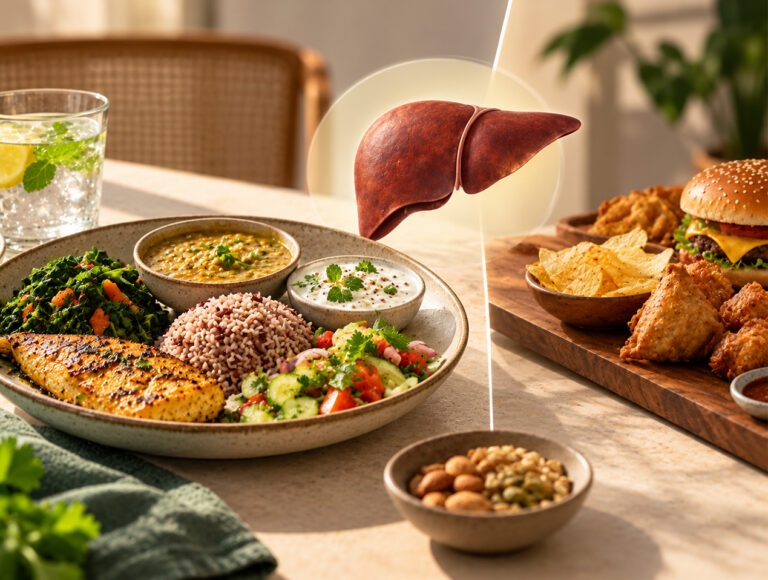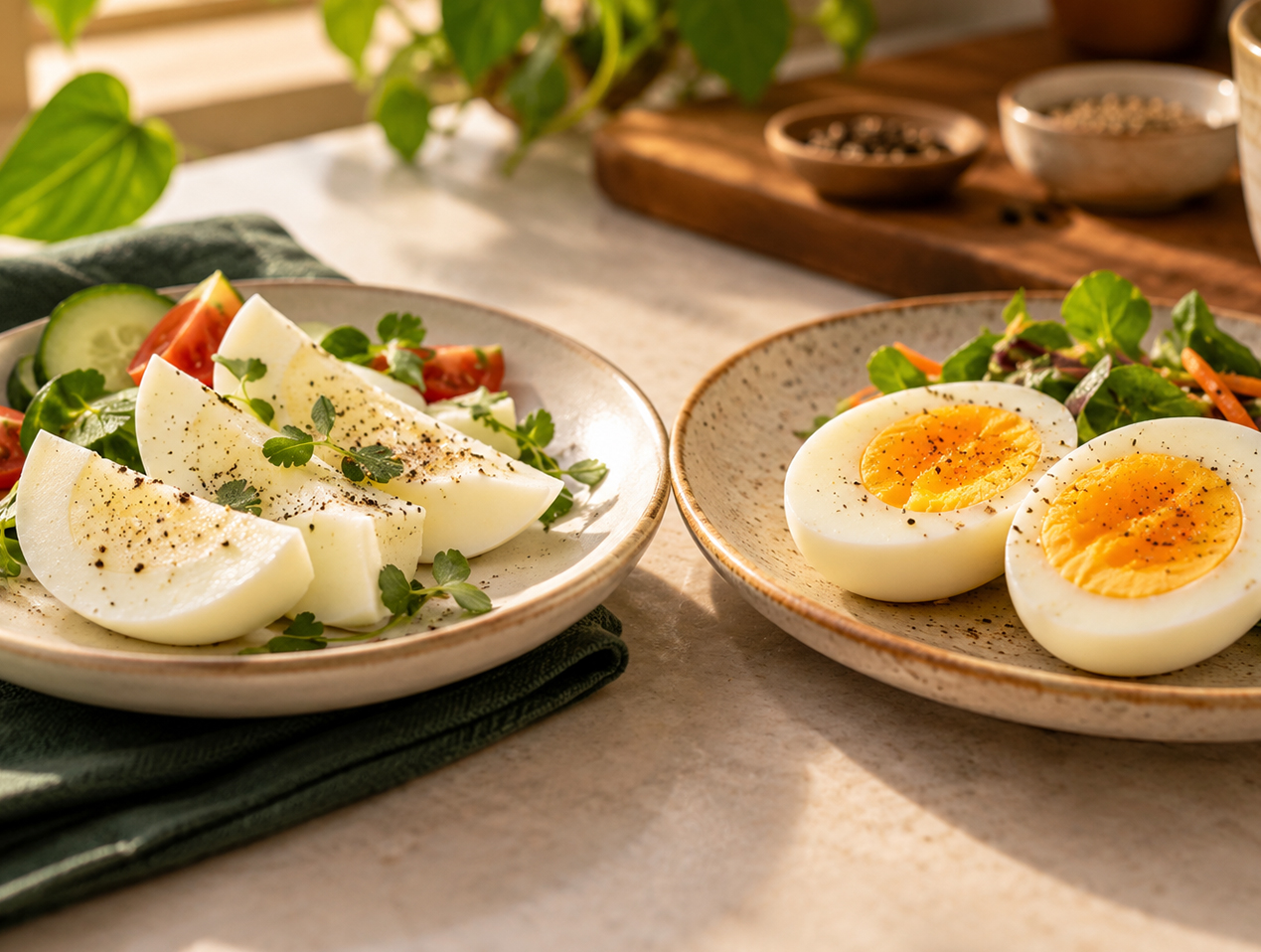

Quick question. How many times have you cracked an egg, stared at the yolk, and wondered if you should toss it? Yeah, same. If you’re trying to lose weight in India, eggs probably show up in your meal plan daily. Boiled, bhurji, omelette, half-fry with your morning chai. But there’s this constant tug-of-war in your head: is egg white better, or should you just eat the whole thing? Here’s the honest truth. Both work. The right choice depends on your calorie budget, your protein target, and what else is on your plate. In this guide, we’re breaking down exactly how much egg protein you actually get from one egg, how whites compare to whole eggs, and how to make eggs genuinely useful for Indian weight loss. No fluff. Just numbers, meal examples, and real guidance you can use tomorrow morning.
How Much Protein Is in One Egg, Really?
Let’s settle this first. One large whole egg gives you roughly 6.3 grams of protein, according to data cited by PubMed Central’s review on egg proteins. That’s not a lot. But it’s also not nothing.
Of that total, about 3.6 grams come from the white and 2.7 grams come from the yolk. So the yolk isn’t just fat and vitamins hanging out doing nothing. It’s carrying almost half the protein. Something most people get completely wrong.
| Part of the egg | Protein |
| Whole egg (large) | ~6.3 g |
| Egg white | ~3.6 g |
| Egg yolk | ~2.7 g |
Healthline’s detailed breakdown confirms the same range: roughly 6.3 g in a raw or boiled large egg, and 6.26 g in a fried one. Cooking barely dents the protein. What changes everything? The oil you fry it in.
Egg White vs Whole Egg: The Numbers You Need
Here’s the comparison that actually matters when you’re counting calories:
| Protein | Calories | Fat | |
| One whole egg | ~6.2 g | ~74 | ~5 g |
| One egg white | ~3.6 g | ~18 | 0 g |
Those figures come from Economic Times’ nutrition comparison and align with Verywell Health’s data showing 6.24 g for a whole egg and 3.64 g for its white.
Now look at what jumps out. A whole egg gives you nearly double the protein of a white—but at roughly four times the calories. So if you’re asking “which has more protein per egg,” the whole egg wins. If you’re asking “which gives me more protein per calorie,” egg whites take it.
Two different questions. Two different answers. Most articles mash them together and confuse everyone.
Does the Yolk Really Have Protein?
Yes. Repeat it with me. The yolk has protein. About 2.7 grams of it in a large egg.
I’ve had so many clients tell me their trainer said “yolk mein toh sirf fat hai.” That’s just wrong. The yolk packs protein, choline, vitamin D, vitamin A, lutein, zeaxanthin, and most of the egg’s fat-soluble vitamins. Toss five yolks a day and you’re flushing real nutrition down the drain.
So Which One’s Better for Weight Loss?
Honestly? Neither. Both work. It depends.
India Today puts it well: both whole eggs and whites fit a healthy weight-loss plan. Whites just help if you’re squeezed on calories but still need to hit a protein number.
Here’s the simple decision framework we use with clients:
| Choose | When |
| Whole eggs | You want satiety, nutrient density, and a satisfying meal. Breakfast is usually this moment. |
| Egg whites | You’ve already eaten your fats for the day and need more protein without extra calories. Post-workout or late-evening meal fits here. |
| A mix of both | You want the best of both. One or two whole eggs plus two to four whites is a popular combo. UltraFit360 recommends this exact ratio for people who want decent protein without blowing their calorie budget. |
Example: 2 whole eggs + 3 whites = roughly 23 g protein for about 200 calories. That’s a legit protein meal.
How Many Eggs Should You Eat Daily for Weight Loss?
No universal number. Sorry if that’s annoying.
For most sedentary to moderately active Indian adults aiming for weight loss, 2-4 eggs a day works beautifully. If you’re training hard or chasing a higher protein target, mix in extra whites. People with high LDL, kidney issues, or diabetes need to talk to a clinician before going egg-heavy—that’s non-negotiable.
And please don’t rely on eggs as your only protein source. Dal, paneer, chicken, fish, curd, soy, and lean meats all deserve a spot. Variety matters.
Does Cooking Method Change the Protein?
Barely. The egg protein content stays almost identical whether you boil, poach, scramble, or fry.
What changes is calories:
| Preparation | Calories |
| Plain boiled egg | 74 |
| Egg fried in 1 tablespoon ghee | 170+ |
| Egg bhurji with 2 teaspoons oil, onions and tomatoes | 250 easily |
The egg didn’t betray you. The oil did.
Smart Cooking Tips for Indian Weight Loss
- Measure your oil. One teaspoon, not “andaaza se.”
- Non-stick tawa cuts oil needs by half.
- Load bhurji with onions, tomato, spinach, capsicum—volume without calories.
- Skip cheese in omelettes unless you’ve budgeted for it.
- Boiled eggs are the easiest to track. Lazy girl’s best friend.
Indian Meal Combinations That Actually Work
Theory is fine. Real meals are better.
- Breakfast: 2 boiled eggs + 1 multigrain toast + sautéed veggies. Around 280 calories, 18 g protein.
- Egg bhurji roll: 1 whole egg + 3 whites scrambled with onion-tomato, wrapped in 1 jowar roti. ~320 calories, 22 g protein.
- Post-workout: 4 egg whites + 1 whole egg omelette with palak. ~180 calories, 20 g protein.
- Dinner light: Egg curry (2 whole eggs, light gravy) with half a cup of brown rice. ~400 calories, 18 g protein.
Pair eggs with fibre and veggies. That’s where the real fullness comes from.
Common Mistakes People Make
I see these on repeat:
- Assuming one egg white = one whole egg in protein. It doesn’t. It’s about 57% of the protein.
- Chucking every yolk for years and missing out on choline and vitamin D.
- Ordering an “egg white omelette” at a cafe that’s cooked in half a cup of butter. Defeats the point entirely.
- Using “large US egg” nutrition data when Indian eggs are often smaller. Metropolis India notes Indian eggs typically fall in the 5.5-6.5 g protein range.
- Treating eggs as the whole weight-loss strategy. They’re one tool. Not the toolbox.
Is Egg Protein a Complete Protein?
Yes. Both the white and the yolk give you all nine essential amino acids. Eggs are often used as the reference protein in nutrition science—meaning other proteins get compared to eggs, not the other way around. That’s a big deal.
So whether you eat the white, the yolk, or both, you’re getting high-quality protein. The difference is in calories and micronutrients, not quality.
What You Should Do Next
Here’s what matters. One whole egg gives you about 6.3 g of egg protein. One white gives you 3.6 g. Whole eggs win on nutrients and satiety. Whites win on protein-per-calorie. The smartest move for most Indians chasing weight loss? Mix them. One or two whole eggs for the yolk’s benefits, plus a few whites when you need extra protein without the extra calories.
Watch your oil. Pair eggs with vegetables and fibre. Don’t treat them as your only protein source. And please—keep the yolk. It’s not the villain Instagram made it out to be.
If you want a personalised plan that factors in your body, your activity, your health markers, and your actual Indian kitchen, that’s exactly what I do at Anupama Menon’s practice. Weight loss isn’t about banning food groups. It’s about using them smartly. Start with one meal tomorrow. Build from there.
Frequently Asked Questions About Egg Protein
How much protein is in one egg?
One large whole egg contains approximately 6.3 grams of protein. The egg white provides about 3.6 grams, while the yolk contributes around 2.7 grams.
Is egg white better than whole egg for weight loss?
Neither is universally better. Egg whites offer more protein per calorie (3.6 g protein for 18 calories), making them useful when calories are tight. Whole eggs provide better satiety, more nutrients, and nearly double the protein (6.3 g for 74 calories). Most people benefit from mixing both.
Can I eat eggs every day while losing weight?
Yes, for most people. Two to four eggs daily fits well within a balanced weight-loss diet. However, individuals with high cholesterol, kidney conditions, or specific health concerns should consult a healthcare professional before making eggs a daily habit.
Does eating egg yolk cause weight gain?
No, not by itself. Weight gain happens when total calorie intake consistently exceeds energy expenditure. One egg yolk contains about 55 calories and 4.5 g of fat. When part of a balanced diet, it won’t cause weight gain and provides valuable nutrients like choline, vitamin D, and vitamin A.
Are boiled eggs good for weight loss?
Absolutely. Boiled eggs are one of the best options because they contain no added oil or butter. One boiled egg gives you 6.3 g of protein for just 74 calories, making it an efficient, portable, and easy-to-track protein source.
How many egg whites equal one whole egg in protein?
You’d need about 1.75 egg whites to match the protein in one whole egg. Since one white has roughly 3.6 g protein and a whole egg has 6.3 g, two egg whites (7.2 g protein) slightly exceed one whole egg’s protein content.
Is egg protein enough for breakfast?
Eggs provide quality protein, but a complete breakfast should include fibre, healthy fats, and vegetables for sustained energy and satiety. Pair eggs with whole-grain roti, sautéed veggies, or a small portion of fruit for a balanced meal.
What’s the best way to cook eggs for weight loss?
Boiling, poaching, or scrambling with minimal oil are the best methods. These preserve the protein content while keeping calories low. Avoid deep-frying or adding excessive butter, cheese, or cream, which significantly increase calorie counts without adding nutritional value.
Not sure where to start?
Take the 7 day Nutri Trial and see what a plan built around your own kitchen actually feels like.
Start your trial