
Feeling wiped out by 3 pm? Losing more hair than usual? Getting winded climbing one flight of stairs? Here’s the thing—most women I work with blame their schedule, their sleep, or just “getting older.” But nine times out of ten, the real culprit is sitting on their plate (or missing from it). A healthy diet plan for women’s health isn’t about kale smoothies or cutting carbs. It’s about three nutrients that quietly run the show: iron, calcium, and protein. Miss any one of them, and your body lets you know. Loudly. This guide breaks down how much you actually need, where to get it from Indian vegetarian sources, and the small tweaks that make a big difference—whether you’re 25, pregnant, perimenopausal, or somewhere in between.
- Why These Three Nutrients Matter More for Women
- How Much Iron Does a Woman Actually Need?
- Calcium: It’s Not Just About Milk
- Protein: The Nutrient Women Chronically Underestimate
- Can You Take Iron and Calcium Together?
- Frequently Asked Questions
Why These Three Nutrients Matter More for Women
Women lose iron every single month. That’s just biology. Add pregnancy, breastfeeding, or heavy periods to the mix, and your needs jump higher than most people realise. Calcium? Bone density peaks in your late 20s and quietly slides after menopause. Protein keeps your muscles, hair, nails, and hormones functioning—but most women fall short of it daily.
The tricky part is these three don’t work in isolation. They lean on each other. Skimp on one and the others struggle too.
How Much Iron Does a Woman Actually Need?
According to WebMD, adult women between 19 and 50 need 18 mg of iron daily, and pregnant women should aim for 27 mg. Indian guidelines cited by andMe suggest 21 mg/day for women across sedentary to heavy activity levels.
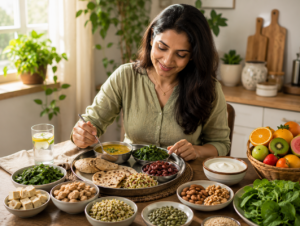
Best vegetarian iron sources? Lentils (masoor, moong, toor dal), chickpeas, rajma, pumpkin seeds, sesame seeds, ragi, amaranth, beetroot, and fortified cereals. Pumpkin seeds pack about 4.2 mg of iron per ounce—a solid snack move.
The Absorption Trick Most Women Miss
Plant iron (non-heme) doesn’t absorb as well as animal iron. But pair it with vitamin C—lemon on your dal, tomato in your salad, orange after breakfast, or amla chutney—and absorption jumps significantly. Also? Don’t sip chai or coffee with meals. Tannins block iron. Wait an hour.
Calcium: It’s Not Just About Milk
The Academy of Nutrition and Dietetics recommends women get at least 1,000 mg of calcium daily, jumping to 1,200 mg after 51. A well-planned nutrition program ensures you hit these targets consistently.
Indian vegetarian calcium sources include:
- Paneer and dairy products (milk, curd, buttermilk)
- Ragi (finger millet)
- Sesame seeds and til laddoos
- Leafy greens like methi, amaranth, drumstick leaves
- Calcium-set tofu
- Fortified plant milks
Quick note—calcium needs vitamin D to actually get into your bones. Twenty minutes of morning sun most days handles a chunk of that.
Protein: The Nutrient Women Chronically Underestimate
Real talk: “I had dal-chawal” isn’t the same as “I hit my protein target.” Indian data from andMe pegs protein needs at 55 g/day for the average woman, 78 g/day during pregnancy, and 74 g/day in the first six months of breastfeeding.
Load your plate with paneer, Greek yogurt, tofu, sprouts, moong dal cheela, besan chilla, quinoa, soya chunks, and legumes. Aim for a protein source at every meal—not just dinner. A personalized nutrition program can help structure these portions based on your specific needs.
Can You Take Iron and Calcium Together?
Short answer: no, not ideally. Calcium blocks iron absorption. If you’re supplementing both, space them at least two hours apart. Iron with breakfast (plus a squeeze of lemon), calcium with dinner. Simple.
Life Stages Change the Rules
Your 20-year-old self and your 50-year-old self need very different plates. Pregnancy pushes iron and protein way up. Perimenopause is when calcium and protein become non-negotiable for bones and muscle. A Singapore expert from CNA Lifestyle notes that women over 51, pregnant, or breastfeeding often benefit from a 500–600 mg calcium supplement since Asian diets lean low on dairy.
Common Mistakes I See All the Time
- Eating spinach and assuming iron is sorted (bioavailability is low without vitamin C)
- Skipping protein at breakfast, then wondering about cravings by 4 pm
- Taking calcium tablets without vitamin D or weight-bearing movement
- Drinking tea right after meals
- Cutting calories so aggressively that protein tanks and muscle disappears
Building a Simple Daily Plate
You don’t need a spreadsheet. Try this: one protein source per meal, one calcium source twice a day, one iron-rich food paired with vitamin C daily. That’s the whole formula.
Breakfast: moong dal cheela with paneer stuffing and tomato chutney. Lunch: rajma, brown rice, sabzi, curd. Snack: handful of nuts and til laddoo. Dinner: palak paneer with ragi roti and methi greens.
The Bottom Line
A healthy diet plan for women’s health doesn’t need to be complicated. It needs to be intentional. Iron keeps your energy up, calcium protects your bones for decades to come, and protein holds everything else together—muscle, mood, metabolism, hair, all of it. Get these three right, and most of your fatigue, hair fall, and stamina issues quietly resolve themselves.
Start small. Add one protein source to breakfast tomorrow. Squeeze lemon on your dal. Swap that post-lunch chai timing. These aren’t overhauls—they’re tiny shifts that compound.
If you’d like a plan built around your body, your cycle, and your goals, that’s exactly what we do at Anupama. Because generic advice only takes you so far. The right diet plan for women’s health should feel like it was made for you—not the internet.
Frequently Asked Questions
What are the best vegetarian sources of iron for Indian women?
Lentils (masoor, moong, toor dal), chickpeas, rajma, pumpkin seeds, sesame seeds, ragi, amaranth, and beetroot are excellent vegetarian iron sources. Always pair them with vitamin C-rich foods like lemon, tomato, or amla for better absorption.
How can I get enough protein on a vegetarian diet?
Focus on paneer, Greek yogurt, tofu, sprouts, moong dal cheela, besan chilla, quinoa, soya chunks, and various legumes. Aim to include at least one protein source at every meal to meet your daily requirements of 55g or more.
Should I take calcium and iron supplements together?
No, calcium interferes with iron absorption. Space them at least two hours apart—take iron with breakfast (with vitamin C) and calcium with dinner for optimal absorption.
How much calcium do women need daily?
Women need at least 1,000 mg of calcium daily, increasing to 1,200 mg after age 51. Indian vegetarian sources include dairy products, ragi, sesame seeds, leafy greens like methi, and fortified plant milks.
Why do I feel tired even after eating well?
You might be missing key nutrients like iron, calcium, or protein, or not absorbing them properly. Common issues include drinking tea with meals (blocks iron), inadequate vitamin C intake, or insufficient protein distribution throughout the day. A personalized healthy diet plan for women’s health can address these gaps effectively.
Not sure where to start?
Take the 7 day Nutri Trial and see what a plan built around your own kitchen actually feels like.
Start your trial