Discover a balanced diet plan to gain weight with healthy calorie-rich foods, meal planning, protein tips, and strength training strategies for lasting, healthy weight gain.


Table of Contents
- Why “Just Eat More” Is Terrible Advice
- Understanding Your Calorie Needs
- Building Your Balanced Diet Plan to Gain Weight
- Practical Eating Strategies
- Beyond Diet: Supporting Your Weight Gain
- When to Seek Professional Guidance
- Frequently Asked Questions
“I eat everything I can find and still can’t gain a kilo.” Sound familiar? If you’re stuck at the skinny end of the scale, chances are someone’s told you to just “eat more butter” or chug mass gainers. Please don’t. Gaining weight the right way isn’t about stuffing yourself with ghee-drenched everything. A proper balanced diet plan to gain weight focuses on quality calories that build muscle, energy, and long-term health, not just a bigger belly. In this guide, you’ll learn how much to eat, what to eat, how to time meals when your appetite is small, and why exercise matters more than most weight gain articles admit. No junk. No shortcuts. Just food that actually works.
Why “Just Eat More” Is Terrible Advice
Being underweight isn’t harmless. According to Mayo Clinic, it can lead to weakened immunity, osteoporosis, fertility issues, and nutrient deficiencies. So the goal isn’t just heavier. It’s healthier.
Here’s where people mess up: they treat weight gain like a free pass to eat cake and fries. You’ll gain, sure. Mostly fat around the middle, plus cholesterol problems you didn’t ask for.
Understanding Your Calorie Needs
How Many Extra Calories Do You Actually Need?
The NHS suggests adding around 300 to 500 extra calories a day for gradual, sustainable gain. Want it faster? Healthline notes a surplus of 700–1,000 calories can push things quicker, though slower is usually smarter (your body absorbs it better and you don’t balloon).
A simple starting point: aim for half a kilo to one kilo of gain per week. Anything faster and you’re probably storing fat, not building muscle.
Building Your Balanced Diet Plan to Gain Weight
The Essential Food Groups
A balanced diet plan to gain weight still follows normal healthy eating rules. You’re just eating bigger portions of higher-calorie versions of good food. Here’s the plate:
- Starchy carbs (about 30–35%): rice, roti, paratha, poha, dosa, idli, upma, sweet potato, whole-grain bread
- Protein (20–25%): paneer, dal (moong, masoor, chana), rajma, chole, Greek yogurt, tofu
- Healthy fats (25–30%): nuts, seeds, avocado, nut butter, olive oil, ghee (yes, in moderation)
- Fruits and vegetables: at every meal, ideally different colours
- Full-fat dairy: milk, curd, cheese, paneer
The Academy of Nutrition and Dietetics makes one thing clear: skip the “lite” and “low-calorie” versions. Go full-fat. This is one of the few times a dietitian will actually tell you to.
Nutrient-Dense vs Empty Calories: The Difference That Matters
500 calories of almonds and 500 calories of biscuits are not the same. One gives you protein, fibre, magnesium, and healthy fats. The other gives you sugar and regret.
Prioritise these calorie-dense, nutrient-packed Indian vegetarian foods:
- Nuts and seeds (almonds, walnuts, cashews, chia, flax, pumpkin seeds)
- Nut butters (peanut, almond)
- Avocado, olive oil, coconut
- Bananas, dates, dried figs, raisins, chikoo
- Full-fat milk, paneer, cheese, curd, khoya
- Legumes and pulses (rajma, chole, moong dal)
Practical Eating Strategies
How to Eat When Your Appetite Is Small
Poor appetite is the number one reason people can’t gain. The fix isn’t force-feeding. It’s frequency.
WebMD recommends eating six times a day, roughly every three hours, with meals around 500 calories and snacks between 100–200. That’s 3 meals + 2–3 snacks. Way easier than three giant plates you can’t finish.
Also: stop chugging water right before meals. It fills you up and leaves no room for actual food. Sip liquids after eating or between meals instead.
A Sample Day That Actually Works
- Early morning: Glass of full-fat milk with soaked almonds and a banana
- Breakfast: Two parathas with ghee, paneer bhurji, and curd
- Mid-morning snack: Greek yogurt with honey, walnuts, and berries
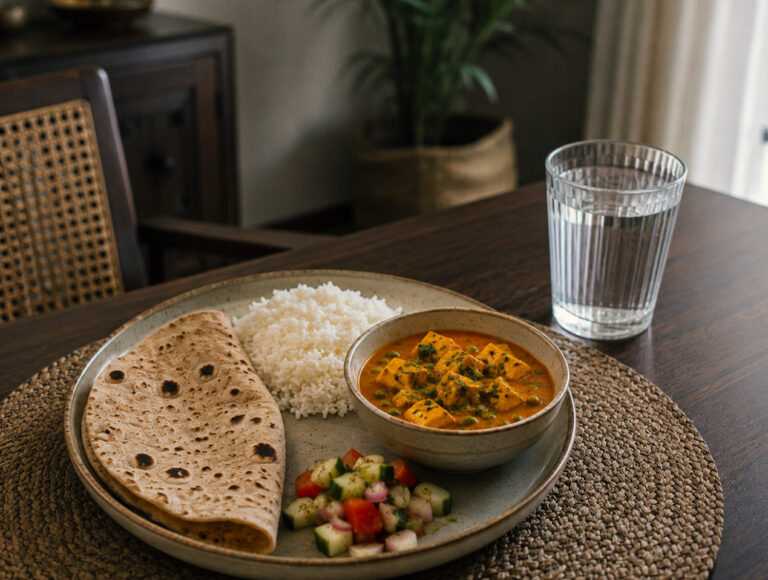
- Lunch: Two rotis, rice, dal, paneer sabzi, raita, salad with olive oil
- Evening snack: Homemade smoothie (milk, banana, oats, dates, peanut butter)
- Dinner: Vegetable pulao, dal makhani, paneer tikka, sautéed vegetables in ghee
- Before bed: Warm milk with a spoon of almond butter
Enrich Your Meals (The Sneaky Calorie Trick)
According to NHS guidance on food fortification, adding 2 to 4 tablespoons of skimmed milk powder to 1 pint of milk boosts calories and protein significantly. Use this enriched milk in oats, smoothies, curries, and soups.
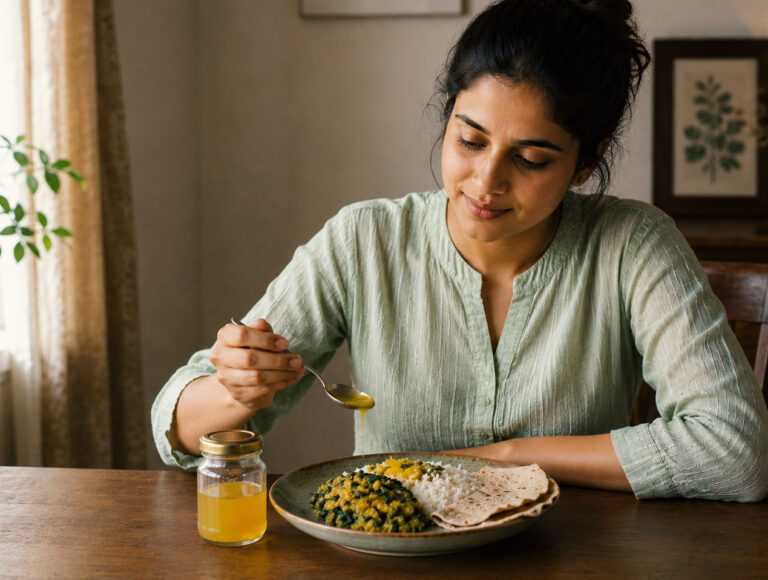
Other easy add-ons: a spoon of ghee in your dal, cheese grated over vegetables, nut butter stirred into oatmeal, olive oil drizzled on rice, khoya in sweets.
Beyond Diet: Supporting Your Weight Gain
Don’t Skip Strength Training
Eating alone builds fat. Lifting builds muscle. The Memorial Hermann sports medicine team emphasises that resistance training is what turns those extra calories into arms, shoulders, and legs, not just a rounder waistline.
Aim for 3–4 strength sessions weekly. Compound moves like squats, lunges, push-ups, and planks work best. And sleep 7–9 hours. Muscle grows when you rest, not when you train.
Mistakes That’ll Sabotage You
- Loading up on sugary drinks and fried snacks for “quick calories”
- Drinking two glasses of water before meals
- Skipping breakfast and trying to catch up at dinner
- Ignoring protein (you’ll gain, but no muscle)
- Weighing yourself daily and panicking
When to Seek Professional Guidance
If you’ve eaten more consistently for 6–8 weeks and the scale won’t budge, or if there’s an underlying issue like digestion problems, diabetes, thyroid, or a history of disordered eating, talk to a qualified dietitian for weight gain. A personalised plan from Anupama, a trusted dietitian for weight gain, can address your specific metabolism, medical history, and food preferences, something no generic diet chart online can do.
The Bottom Line
A balanced diet plan to gain weight isn’t complicated, but it does require intention. Eat every 2–3 hours. Choose full-fat, nutrient-dense foods over empty ones. Add 300–500 extra calories daily to start. Enrich your meals with nut butters, milk powder, and healthy oils. Train with weights. Sleep well.
Give it 8–12 weeks of consistency before judging results. Weight gain done right is slow, and that’s a feature, not a bug. You’re building a body, not inflating one. If you want a plan tailored to your lifestyle, appetite, and health, that’s exactly what we do at Anupama, one balanced plate at a time.
Frequently Asked Questions
What is the best vegetarian diet plan to gain weight?
The best vegetarian diet plan includes calorie-dense foods like paneer, full-fat dairy, nuts, seeds, ghee, dal, rajma, and whole grains. Focus on eating 5–6 small meals daily with healthy fats and proteins at every meal.
How many calories should I add to gain weight healthily?
Start with an additional 300–500 calories per day for gradual weight gain. This typically results in gaining 0.5–1 kg per week, which is sustainable and healthy.
Can I gain weight without eating non-vegetarian food?
Absolutely. Indian vegetarian foods like paneer, dal, chole, rajma, nuts, seeds, full-fat dairy, and nut butters provide excellent protein and healthy calories for weight gain.
How long does it take to see weight gain results?
With consistent eating and strength training, you should notice changes within 4–6 weeks. Give yourself at least 8–12 weeks for significant, sustainable results.
Should I drink protein shakes to gain weight?
Homemade smoothies with milk, banana, oats, dates, and peanut butter work better than commercial shakes. They’re nutrient-dense, natural, and more affordable.
Is ghee good for weight gain?
Yes, in moderation. Ghee is calorie-dense and provides healthy fats. Add 1–2 teaspoons to dal, rice, or rotis to boost calories without feeling overly full.
Ready When You Are
We’re just a message away from getting started.